
Prabowo's Strategy in Navigating Foreign Policy
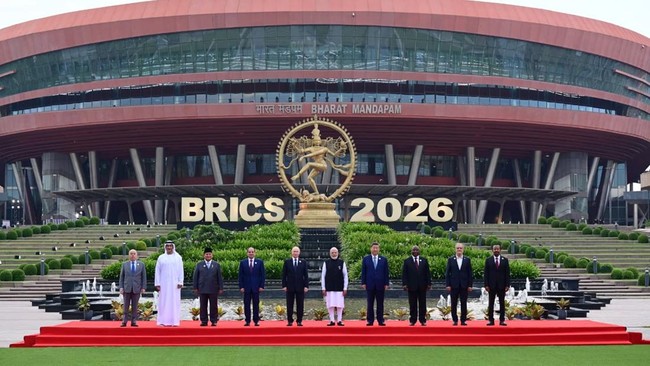
Since assuming the Presidency in November 2024, Prabowo Subianto has demonstrated a very high intensity of diplomacy. The President is recorded to have undertaken 56 overseas trips, covering 28 countries.
Several countries have been visited repeatedly due to urgent strategic interests. Malaysia was visited five times, the United Arab Emirates, France, and Russia four times, while the United States, the United Kingdom, and Egypt were each visited three times. China, South Korea, Japan, Jordan, and India were included in the list of repeat visits with a frequency of twice. Of the entire agenda, eleven visits were multilateral, while the remainder were bilateral visits with specific and targeted objectives.
This intensity raises fundamental questions regarding the direction and effectiveness of the foreign policy strategy currently being implemented. Does this high frequency reflect a productive active diplomacy, or is it instead a symbol of an overly broad approach lacking clear priorities? In an increasingly multipolar global context, such a strategy appears relevant, yet it still leaves significant room for critical scrutiny.
The most recent visit, from 11–14 September 2026, to India to attend the 18th BRICS Summit, reaffirmed Indonesia’s strategic plan to achieve national independence, particularly in food and energy. These two topics are consistently presented by Prabowo in every meeting with other world leaders, alongside Indonesia’s free and active foreign policy and global cooperation.
Previously, on 1 September 2026, he visited Vladivostok, Russia, to attend the 11th Eastern Economic Forum (EEF), marking his fourth visit to the country. This latest trip to Vladivostok was intended to strengthen Indonesia’s economic diplomacy and establish energy cooperation. During a previous visit to Moscow on 12 April 2026, discussions focused on geopolitics and energy security amidst the impacts of the Israel-USA vs Iran conflict. This visit serves as a concrete example of how Prabowo is attempting to play a role in global geopolitical dynamics.
In a situation where Middle East tensions trigger disruptions in the global energy supply chain, Indonesia’s move to explore cooperation with Russia, including strengthening its position within BRICS, can be understood as an effort to secure domestic needs. However, this step also opens the potential for diplomatic pressure from the United States and Western nations that hold different positions regarding Russia.
Indonesia has adhered to the principle of a free and active foreign policy from the outset. However, in practice, this principle cannot merely serve as a normative slogan. Foreign policy must be capable of providing tangible benefits for domestic interests.
In this context, Prabron’s policy to join the Board of Peace (BoP) on 26 January 2026 can be understood. The forum was established with the aim of promoting peace between Palestine and Israel.
The decision to join the BoP triggered diverse reactions domestically, ranging from support to sharp criticism. Some parties view the decision as a risk to the consistency of Indonesia’s long-standing position supporting Palestinian independence. Foreign policy is always intertwined with domestic perception, political legitimacy, and the ideological sensitivities of the community.
Prabowo appears to realise this, subsequently inviting religious figures to provide explanations and build mutual understanding. This step successfully mitigated some criticism, although it did not entirely eliminate the debate. Unfortunately, before the BoP could take any action regarding Gaza, the USA and Israel attacked Iran, a conflict that shows no signs of ending. Consequently, the BoP’s momentum dissipated before it could develop.
On the other hand, the visit to Russia also reveals a pragmatic dimension in foreign policy. As one of the world’s largest energy producers, Russia is a partner that is difficult to ignore, especially as the United States has begun to ease restrictions on Russian oil.
Nevertheless, this pragmatic approach is not without complex geopolitical risks. As Indonesia moves closer to Russia and BRICS, it must simultaneously maintain relations with the USA and Western nations that have differing interests.
This is where the primary challenge of the ‘rowing between two reefs’ strategy becomes evident. This metaphor accurately describes Indonesia’s foreign policy.
Prabowo appears to adopt a simple yet ambitious principle in conducting international diplomacy. He often conveys that ‘one enemy is too many and a thousand friends are still not enough.’ This principle reflects a desire to embrace as many partners as possible without creating unnecessary conflict. Domestically, a similar approach has been applied through the formation of a large coalition involving various political parties.
However, a major question arises when this principle is applied to international relations. Unlike domestic politics, relations between nations are not determined solely by pragmatic interests. There are factors of ideology, history, and strategic alliances. Great powers have interests that often conflict, making it difficult for a single nation to stand on all sides simultaneously without facing pressure.
Thus, Indonesia’s efforts to maintain good relations with all parties must be balanced with clear priorities and consistency in stance. For instance, relations with the United States cannot be separated from significant economic and security aspects. On the other hand, relations with China are vital in the context of investment and trade, while cooperation with Russia opens opportunities in the energy and defence sectors.