
Prabowo's Perpres 111/2025 Labels LGBTQ as Threat, DPR Responds
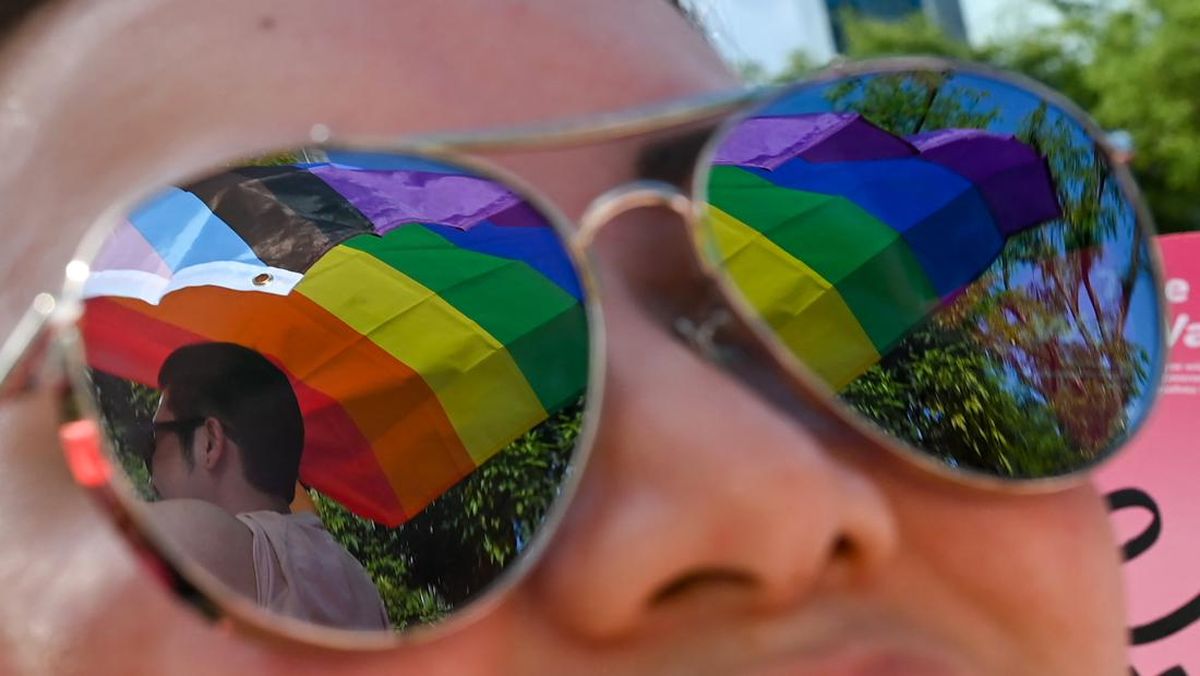
The government, through Presidential Regulation (Perpres) Number 111 of 2025 concerning the National Defence Policy 2025-2029, has established several classifications of threats to the state, including the spread of Lesbian, Gay, Bisexual, Transgender, and Queer (LGBTQ) culture, which is categorised as a non-military threat.
This regulation was enacted by President Prabowo Subianto on 24 October 2025. The decree defines non-military threats as efforts or activities conducted without weapons that endanger or threaten national sovereignty, territorial integrity, and the safety of the nation.
“These non-military threats encompass dimensions of ideology, politics, economy, social and culture, technology, public safety, and legislation,” the regulation states. Within the document, the government includes the spread of forbidden ideologies, separatism, terrorism, radicalism, online gambling, illegal online lending, illegal trade, narcotics abuse, and the spread of LGBTQ culture as part of these non-military threats.
Additionally, other threats listed include natural disasters, the risk of nuclear, biological, chemical, and radioactive installation leaks, cyber attacks, attacks on national vital objects, the impacts of global warming, and disease outbreaks. The regulation refers to Law Number 23 of 2019, which divides predicted threats to the state into three categories: military, non-military, and hybrid threats.
Meanwhile, Member of Commission I of the Indonesian House of Representatives (DPR), Oleh Soleh, expressed full support for President Prabowo Subianto’s move to establish Presidential Regulation Number 111 of 2025. The regulation, enacted on 24 October 2025, serves as a guideline for implementing national defence policy for the 2025-2029 period.
According to Oleh Soleh, the issuance of Perpres Number 111/2025 is an appropriate step that should be supported by all elements of the nation. He assessed that the spread of LGBT is becoming increasingly massive and has the potential to negatively impact the future of the nation’s generation.
“I fully support Presidential Regulation Number 111 of 2025. The issuance of this regulation is very appropriate because the spread of LGBT culture has indeed become a non-military threat that requires serious attention. This phenomenon is becoming more massive and poses a challenge to the future of the Indonesian nation,” stated Oleh Soleh in a statement quoted from the DPR website.
He also highlighted the emergence of various behaviours that he believes are inconsistent with the norms, culture, and values held by Indonesian society. He assessed that the state has an obligation to take preventive measures to protect the public from various influences deemed contrary to national values.
“Through Presidential Regulation Number 111 of 2025, the state demonstrates its commitment to protecting the Indonesian people from various cultural influences deemed deviant from the values living and developing within society,” said the PKB Faction politician.
Consequently, Oleh Soleh urged parents to increase supervision and guidance for their children to ensure they are not easily influenced by content and information related to LGBT.
Similarly, the Chairman of Commission VIII of the DPR, Marwan Dasopang, assessed that the prevalence of lesbian, gay, bisexual, and transgender (LGBT) behaviour could threaten the nation’s continuity due to its perceived impact on biological regeneration. Marwan explained that Indonesia has several regulations governing family life, including the Marriage Law, which regulates marriage between a man and a woman.
“The marriage law specifies a couple consisting of a man and a woman. Naturally, if LGBT provides space for same-sex marriage without a law, it would violate the marriage law,” said Marwan at the parliamentary complex, Jakarta, on Monday.
He also touched upon the Law on the Welfare of Mothers and Children, noting that if LGBT becomes widespread, the continuity of offspring is threatened. “Where will we get births from if there is same-sex marriage? Therefore, there is a great threat if LGBT becomes massive in Indonesia; the continuity of descendants is threatened. After all, what determines the continuity of a state if there are no descendants?” he said.
Marwan assessed that LGBT behaviour is a deviation that should not be displayed in public. “Because this is a deviation and a disease, it must, firstly, not be permitted. How can it not be permitted? Perhaps through legislation and supervision? If this is considered dangerous, then perhaps,” he said.
He added that handling such behaviour could also be achieved through medical and psychological approaches. “Since it is considered a deviation because it is a disease, healing must be carried out. What approach for healing? It can be medical, psychological, and various others, I think,” he said.
He noted it is natural for parties to propose legislation regulating LGBT, as such behaviour is increasingly being displayed in public. One of the recent proponents of an LGBT law is the Indonesian Ulema Council (MUI). “So, if it is a threat to the state, I believe that is the aspect. It is impossible for this country to continue if its people do not exist because there are no descendants,” he concluded.