
Prabowo's Order to Make State University Education Free to be Followed Up
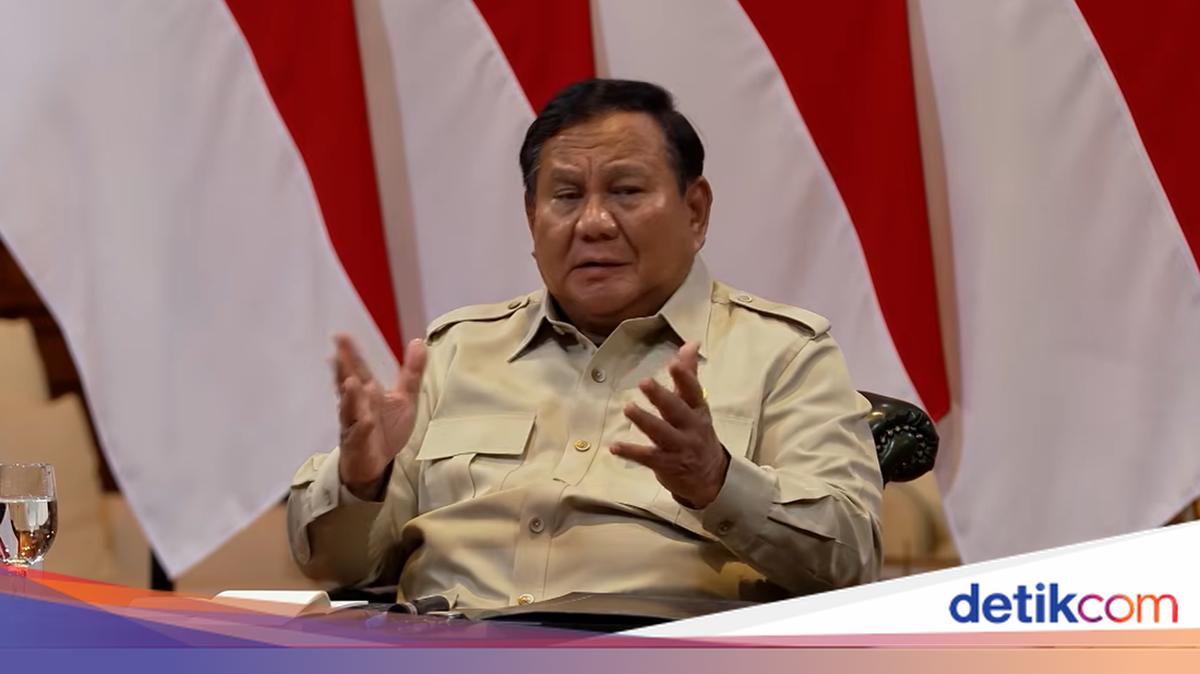
President Prabowo Subianto has stated that the costs for primary, secondary, and senior high school education, as well as state universities, must be made free. This instruction has been immediately responded to by several parties, including the Minister of Higher Education, Science, and Technology, Brian Yuliarto.
Prabowo made these remarks during his speech at the 28th anniversary of the PAN party at JCC, Jakarta, on Friday (18/9/2026). Prabowo initially noted that for the past two years, the government has been working continuously to address various issues faced by the people.
“Our success is due to our continuous work over these two years. We have been accused of lacking communication, but that is because we have been working non-stop to catch up with the people’s needs; we cannot wait,” said Prabowo.
He cited several issues that require urgent attention, ranging from the construction of village bridges to the renovation of schools.
“Children cannot wait; village bridges must be built. Schools must be repaired immediately where roofs have collapsed, and schools without proper toilets must be improved,” he said.
“Teacher salaries must be improved, and judges’ salaries must be improved. Because we want to eradicate corruption; we do not want our judges to be bribed, and we do not want our judges to be bought. Our nurses and doctors must also be looked after,” he added.
Prabowo then announced plans to hold a limited meeting to discuss free education in state schools and universities, emphasising that tuition must be free.
“I strongly agree, and I will immediately hold a meeting; essentially, the cost of state education must be free. Primary, secondary, senior high, and state university education must be free,” he stated.
Prabowo then addressed the source of the budget required to realise free education. He stated that funds lost to corruption must be recovered and redirected for the benefit of the people.
“Later, people will ask, ‘Where will the money come from?’ The money will come from what has been corrupted, stolen, and embezzled,” he remarked.
Minister of Higher Education, Science, and Technology to Follow Up
Minister Brian Yuliarto responded to Prabowo’s instruction regarding free university education, stating that the ministry will follow up on the President’s directive.
“We will certainly follow up on the President’s direction. In fact, some time ago, the President already requested us to conduct a study on the possibility of making university tuition at State Universities free,” Brian told reporters on Sunday (20/9/2026).
Brian mentioned that the study includes options for financing schemes. The results of the study will be reported to Prabowo once completed.
“Once the study is finished, we will report to the President to be discussed comprehensively with relevant ministries and agencies,” he said.
Brian added that the government has already provided financial support for university students through several programmes, such as the KIP Kuliah scholarship.
“In 2025, approximately 28.2 per cent of new students admitted to state universities received support through these various schemes, particularly those from underprivileged families,” he noted.
“The spirit is the same: how we can further expand access to quality higher education for all Indonesian children,” he added.
House Commission X Supports Plan
The Deputy Chairman of Commission X of the Indonesian House of Representatives (DPR RI), Lalu Hadrian, welcomed the plan. However, Hadrian reminded that the quality and standard of education must be maintained.
“We certainly welcome and support the President’s commitment to expanding access to free education in state educational units, including state universities,” Lalu Hadrian told reporters on Sunday (20/9/2026).
Hadrian stated that education is a right for every child in the nation, noting that children deserve decent and quality education.
“In principle, education is a right of the citizens, and cost should not become a barrier for Indonesian children to obtain a decent and quality education,” he said.
“For state universities, we believe that a free education scheme is very possible to promote, but it must be prepared thoroughly,” he added.
Lalu Hadrian warned that the policy of making tuition free should not lead to a reduction in service quality, the welfare of lecturers and educational staff, research, or university operations.
“Therefore, there needs to be a comprehensive calculation regarding the budget requirements, the financing mechanism for state universities once tuition fees (UKT) are no longer charged to students, and how to ensure universities still have sufficient space to develop,” he said.
Lalu Hadrian also touched upon budget readiness. He noted that the government must conduct a thorough simulation for the budgeting of free state education.
“Currently, the education budget is large, and for the 2027 Draft State Budget (RAPBN), the education allocation is planned at around Rp 819.44 trillion. However, that budget is spread across various ministries, agencies, and regional transfers, so not all of it can be directly allocated to fund free education in state universities,” he said.
“In fact, in the 2027 budget discussions, I see that the allocation for the Ministry of Higher Education, Science, and Technology still requires strengthening for various higher education programmes, scholarships, and the improvement of the ‘tridharma’ (teaching, research, and community service) quality,” he continued.
Lalu Hadrian reaffirmed his support for the free education policy up to the university level, but reminded that free education must align with the quality of state universities.
“So, in principle, we support the policy direction. However, its implementation must be measurable and based on the state’s fiscal capacity. It should not just be ‘free’ in the sense of not paying tuition, but the state must also ensure that university operational costs, learning quality, facilities, research, and lecturer welfare remain guaranteed,” he concluded.