
Prabowo's Meeting with Regional Heads Must Not Be a One-Way Briefing
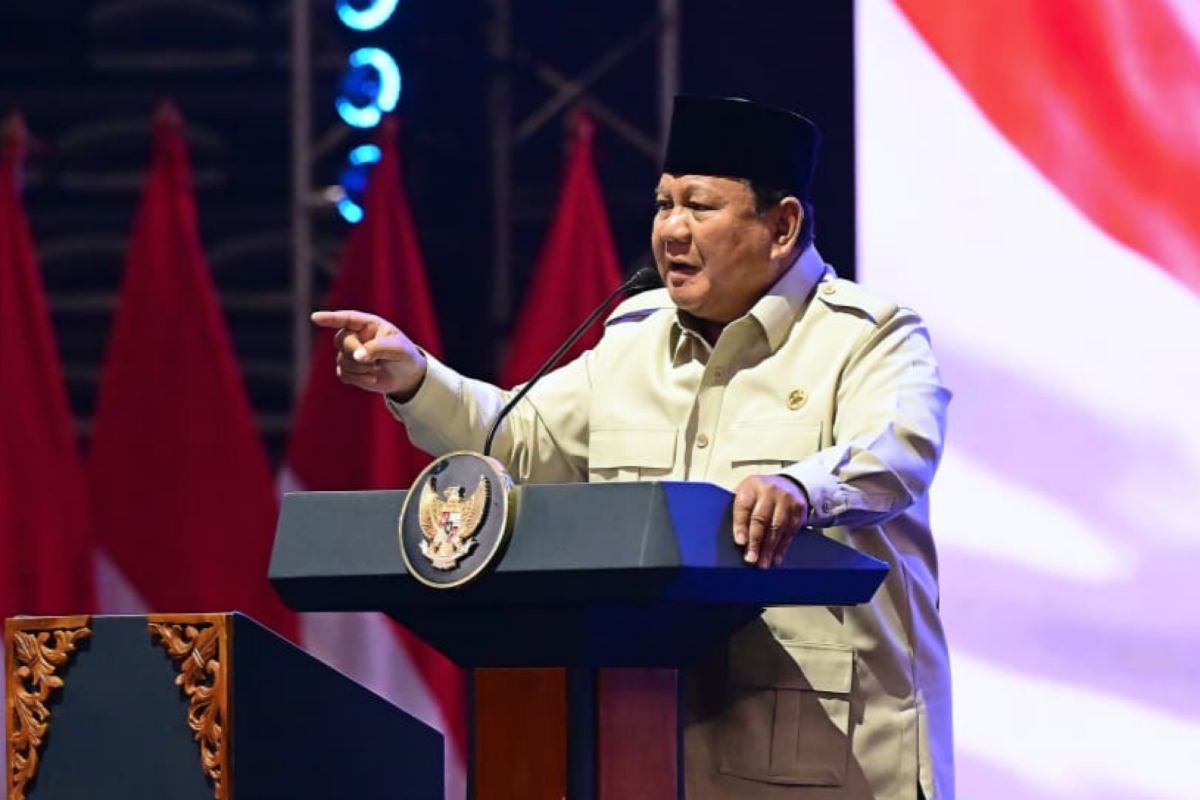
President Prabowo Subianto has been urged to make a planned special meeting with all regional heads a forum for dialogue to absorb the problems faced by local governments, rather than merely conveying directives from the central government. A two-way communication approach is considered essential so that the policies taken by the government truly answer the needs of the regions.
Political communication analyst from Esa Unggul University, M. Jamiluddin Ritonga, said the special meeting to be held by President Prabowo Subianto is indeed necessary given the many issues in the implementation of regional autonomy. “A special meeting with regional heads is necessary because of the many problems in the regions, especially those related to regional autonomy,” Jamiluddin said in a statement to Media Indonesia on Monday (3/8).
According to the former Dean of the Faculty of Communication at IISIP Jakarta, regions have so far understood that the central government’s authority is limited to six areas: foreign policy, defence, security, justice or law, monetary and fiscal matters, and religion. Outside these six areas, regional governments consider them to be under their authority. However, in practice, regions still feel that the central government often takes over authority that should belong to the regions. One example is the authority to grant mining permits.
In addition, Jamiluddin assessed that several central government programmes, such as the Free Nutritious Meals (MBG) and the Merah Putih Cooperatives, demonstrate a centralistic approach that is not in line with the spirit of decentralisation. He also highlighted the high dependency of regional governments on transfer funds from the central government. This condition means many regions are affected when the central government implements budget efficiency policies.
“Most districts and cities are still very dependent on transfer funds from the central government to run their administration. As a result, when the centre implements efficiency measures, the regions feel the impact significantly,” he said.
On the other hand, Jamiluddin noted that most regional budgets are also spent on personnel expenditure, leaving very limited fiscal space for development. The gap in fiscal capacity and welfare levels between regions remains high, making it difficult for many regions to achieve independence.
Beyond fiscal issues, Jamiluddin assessed that the rampant corruption cases in the regions should also be on the meeting’s agenda. He argued that corruption will further erode the already limited regional budgets. “If the problem of corruption is not addressed immediately, it will disrupt development in the regions. The already limited regional budgets will be further reduced because they are being corrupted by regional officials,” he said.
Therefore, he hopes the special meeting between the President and regional heads will take place as a two-way communication forum so that all problems can be mapped out comprehensively. “In this special meeting, President Prabowo should do a lot of listening, not just one-way communication, let alone lecturing the regional heads followed by orders,” Jamiluddin stated.
Furthermore, he stressed that by listening directly to the various problems faced by the regions, the President can obtain a more accurate picture as a basis for policy formulation. “By listening, President Prabowo is expected to map regional problems correctly and accurately. It is from this mapping that Prabowo should formulate policies as solutions to overcome problems in the regions,” he concluded.