
Prabowo's Major Overhaul Begins: SOEs to Be Slimmed Down, What Is the Scheme?
The government is preparing to carry out a large-scale streamlining of the state-owned enterprise (SOE) ecosystem. A total of 1,074 SOEs along with their subsidiaries and sub-subsidiaries will be reorganised into around 250 entities by the end of 2026.
The target of 250 companies is a work objective set by Danantara Asset Management. Meanwhile, President Prabowo Subianto has said the government is targeting a final number of no more than 300 companies. Thus, the figure of 250 remains within the government’s target range of around 200-300 entities.
Compared with the baseline of 1,074 companies, the target of 250 entities means around 824 companies, or 76.7% of the entire SOE ecosystem, will be reorganised. The government considers the current structure too bloated, with many layers of directors and commissioners, as well as duplication of functions and business activities.
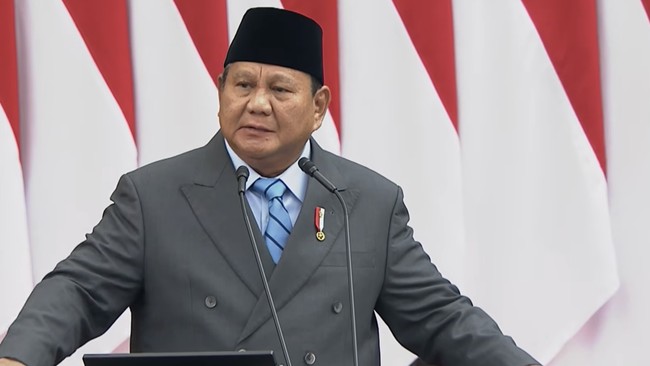
In the Annual Session of the People’s Consultative Assembly and the Joint Session of the House of Representatives and the Regional Representatives Council on 14 August 2026, Prabowo stressed that SOEs must be managed in the public interest.
The restructuring is said to have the potential to become one of the largest corporate reorganisation processes in the world. However, streamlining does not mean all companies will be closed.
Four Paths for SOE Streamlining
The government, through Danantara, will determine the fate of each company based on its financial condition, industry prospects, and relevance to the parent company’s core business.
The figures for each path still use the description “more than”. Therefore, all these figures cannot yet be considered final or directly added up as a definite number of companies that will disappear.
Some SOEs whose existence is specifically required by regulation are also not included in the final streamlining target.
Through vertical consolidation, for example, a subsidiary is not always dissolved along with its business activities. Its legal entity can be abolished, but its business, assets, and employees are retained as a unit under the parent company. The government can thereby reduce costs for directors, commissioners, offices, administration, and overlapping support functions.
Danantara has also stated that the consolidation is not directed at mass layoffs. Employees will be transferred or become part of the merged company. The target of reorganising into around 250 entities in 2026 has been confirmed by Danantara management.
Savings Targeted to Reach Rp70 Trillion
According to Prabowo, 290 companies have been closed or have entered the reorganisation process. Overall, more than 750 companies will be closed, merged, divested, or consolidated to achieve the maximum target of 300 entities.
The streamlining is claimed to have produced operational cost savings of around Rp50 trillion per year. The government is targeting the savings value to increase to around Rp70 trillion by 31 December 2026.
Budgets previously used to finance unproductive companies and multi-layered management structures will be redirected to investment, industrialisation, improved public services, and the construction of clinics, schools, and public housing.
Investment Managers, Hotels, and Logistics Begin to Be Merged
A number of consolidations have entered the implementation stage. One of them is taking place in the investment management sector.
Mandiri Manajemen Investasi, BNI Asset Management, BRI Manajemen Investasi, and PNM Investment Management will be merged into a single SOE investment management company. Mandiri Manajemen Investasi has been designated as the surviving entity.
The four companies collectively manage funds of more than Rp170 trillion as of June 2026. The consolidation is directed at forming a domestic investment management company with stronger scale, capability, and global competitiveness.
Streamlining is also underway in the hotel sector. A total of 49 hotels previously spread across various SOE groups will be consolidated into the PT Hotel Indonesia Natour Group through InJourney Hospitality. Centralised management is expected to eliminate management duplication while strengthening the scale of the state-owned hotel business.
In the logistics sector, seven freight forwarding companies from a number of SOE groups will be merged into a single company temporarily called LogisticCo. These companies come from the ecosystems of Pos Indonesia, Pelindo, SIG, Krakatau Steel, Pelni, and Danareksa.
The process includes merging the companies as well as simplifying share ownership. The main shareholder of LogisticCo will still be determined after the legal and operational stages are completed.
In addition to these three sectors, Danantara’s work agenda also includes consolidation of construction SOEs, insurance, securities, shipyards, industrial estates, and digital infrastructure owned by Telkom and PLN.
SOE Profits and Dividends Soar
The government says governance improvements are beginning to show in the financial performance of state companies. Corrected SOE profits were recorded at Rp186 trillion in 2024, then increased by 75.3% to Rp326 trillion in 2025.
SOE dividends to the state also rose by around 67%, from Rp85.5 trillion to Rp142.3 trillion. After deducting state capital injections, net dividends increased from Rp53 trillion to Rp138 trillion, or grew by around 160%.
In 2026, the government projects SOE dividend receipts to reach Rp200 trillion without providing state capital injections. The value is almost four times the net dividends in 2024.
Prabowo stressed that profit improvements must be accompanied by improvements in the quality of financial reports. Danantara is currently examining accounting policies, asset recording, risk management, liquidity, and companies’ ability to meet financial obligations.
Prabowo has also floated the idea of establishing an ad hoc court to investigate alleged irregularities in the management of state companies going back up to 30 years. However, the idea is still under discussion.