
Prabowo's Four Major Energy and Mining Policies for 2027: Mineral Exchange and Fuel Reforms
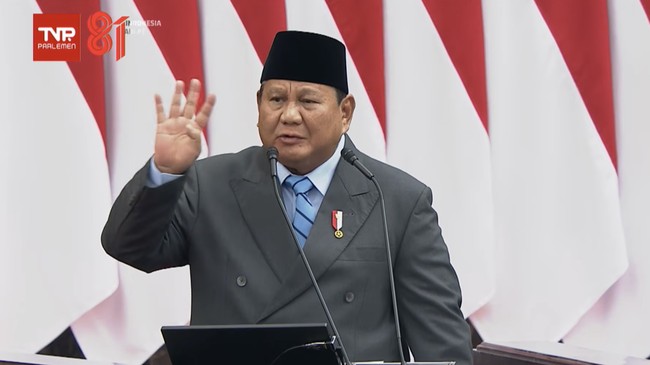
President Prabowo Subianto, in his speech on the 2027 State Budget Bill at the House of Representatives (DPR) on Friday, 14 August 2026, outlined several new policies that will shape the energy and mining sector in 2027. The policies include the establishment of a national Mineral and Strategic Commodities Exchange, the acceleration of the energy transition through the construction of 100 GigaWatts (GW) of solar power plants, the development of electric vehicles, and a significant reduction in fuel subsidies. These four agendas are interconnected, with the government aiming to increase the economic value of natural resources, reduce fossil fuel consumption, and strengthen national industries linked to strategic minerals.
One of the key announcements was the plan to establish a Mineral and Strategic Commodities Exchange. The exchange will be supervised by the Financial Services Authority (OJK) and is targeted to begin operations on 1 January 2027. This policy follows the formation of PT Danantara Sumberdaya Indonesia and the implementation of a single-door export policy. Commodities to be traded include palm oil, nickel, tin, coal, gold, coffee, rubber, and other strategic commodities. The government aims to build an ‘Indonesia Reference Price’ so that export commodity prices are determined domestically rather than referencing foreign exchanges. President Prabowo stated that for decades, Indonesia has been a major producer of global commodities but has lacked influence over pricing, preventing the nation from fully enjoying the added value of its trade.
Regarding energy subsidies, Prabowo linked the energy transition with fiscal reform, stating that the electrification of mobility will help reduce fuel consumption and gradually ease the burden on the state budget. He emphasised that fuel subsidies must be reduced significantly. This signals a shift in state spending from consumption subsidies towards energy infrastructure investment. The President noted that dependence on imported fuel remains a challenge for national energy security, and replacing fuel consumption with domestically sourced electricity will reduce pressure on foreign exchange reserves.
To support this transition, the government will provide substantial incentives to companies capable of mass-producing electric motorcycles domestically. The policy aims to lower public transportation costs, reduce imported fuel consumption, and expand the national electric vehicle industry and its supply chain. The President highlighted that Indonesia possesses almost all the raw materials needed for electric vehicle batteries, creating a significant opportunity to build the industry from upstream to downstream.
In the electricity sector, the government announced an acceleration of solar power plant construction to reach 100 GW. The initial phase targets 30 GW of solar power, accompanied by the decommissioning of 13 GW of diesel power plants. Prabowo argued that with abundant sunlight available year-round, it is inefficient to continue relying on diesel plants in remote areas due to high fuel distribution costs. The government estimates that the 100 GW solar programme could save at least Rp 73.9 trillion annually by reducing the basic cost of electricity production, while also decreasing the need for foreign exchange to import fuel.
Source: jawawa.id (https://jawawa.id/newsitem/prabowos-four-major-energy-and-mining-policies-for-2027-mineral-exchange-and-fuel-reforms-1786719102)
Originally published by CNBC Indonesia (https://www.cnbcindonesia.com/research/20260814165125-128-759467/4-gebrakan-prabowo-di-sektor-energi-tambang-2027-bursa-mineral-bbm), translated from Indonesian