
Prabowo's Foreign Visits: Criticism and Strategic Benefits
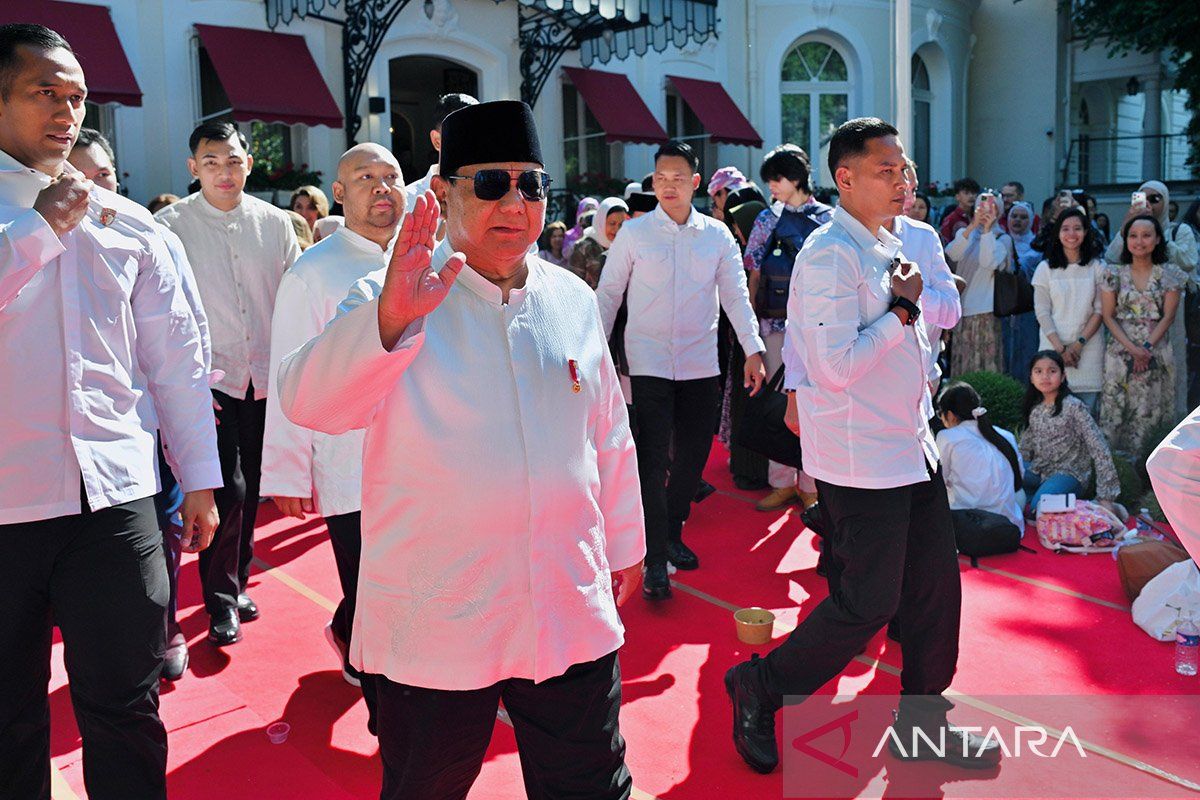
The Cabinet Secretary is the closest source for explaining the President’s decision-making management. Criticism from former Deputy Foreign Minister Dino Patti Djalal regarding the intensity of President Prabowo Subianto’s foreign visits is a natural occurrence within a democratic climate. In his critique, Dino highlighted the frequency of President Prabowo’s overseas trips, which he deems excessively high and unprecedented for the early stages of an administration. He also questioned whether all agendas attended by the President must be handled personally by the Head of State, suggesting that some could be delegated to the Minister of Foreign Affairs, Ambassadors, or other officials so that the President’s time could be more focused on domestic affairs.
There are several points to consider in response to this criticism. Firstly, this critique is incomplete if it only focuses on the number of visits. A more relevant critique would be to assess the strategic output of each trip. Through foreign visits, the President is directly present to open access, build trust, secure commitments, and raise Indonesia’s bargaining position on the global stage. In a multipolar era, Indonesia faces the US, China, Russia, the EU, the Middle East, India, and BRICS. The direct presence of the President as chief diplomat and chief negotiator is not merely symbolic, but an instrument to open access to energy, investment, export markets, defence, and food security.
Head-of-state diplomacy—summit diplomacy—carries the highest political weight. Investors and world leaders place more trust in commitments delivered directly by the President rather than by technical officials. Therefore, President Prabowo’s foreign visits are not an aberration, but part of the constitutional mandate of national diplomacy. In foreign relations, there is a concept known as summit diplomacy. This means the President meets directly with other world leaders because certain matters cannot be resolved through letters, video calls, or at the level of ambassadors or ministers. In global politics, the ‘face of the President’ serves as the highest political guarantee. Investors, monarchs, prime ministers, and presidents of other nations have greater confidence when commitments are conveyed directly by the President.
Secondly, President Prabowo appears to be engaging in hedging: avoiding alignment with the US bloc, refusing to become a satellite of China, and not antagonising Russia, while maintaining closeness to Japan and South Korea, expanding markets to Canada and Europe, and strengthening ties with ASEAN, the Islamic world, and the Middle East. This aligns with Indonesia’s ‘free and active’ foreign policy doctrine. Prabowo is not merely navigating between two rocks, but surfing among many reefs and waves. The objective is clearly for Indonesia’s national interest. In simple terms, the strategy is not to put all eggs in one basket, but to distribute them across many baskets to ensure Indonesia remains secure amidst global uncertainty.
By actively establishing bilateral relations at the head-of-state level, Prabowo aims to ensure that Indonesia is not merely an object of great power rivalry, but a subject that determines regional balance. Thirdly, regarding effectiveness and efficiency, concrete data shows tangible benefits. President Prabowo’s visits have yielded achievements such as progress with BRICS, the EU CEPA, investments, defence equipment (alutsista), Hajj matters, Palestine, and the release of Indonesian citizens abroad.