
Prabowo’s Flagship Programme Could Revive Indonesia’s Industrialisation
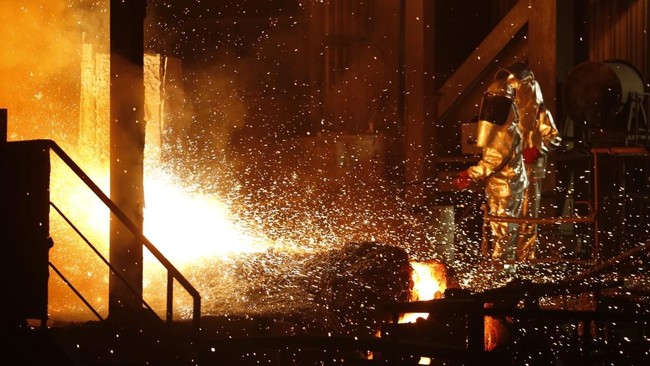
Jakarta, CNBC Indonesia — The Ministry of Energy and Mineral Resources (ESDM) says the success of downstream processing in the mining sector should help drive industrialisation in Indonesia.
Tri Winarno, Director General of Minerals and Coal at the ministry, said downstreaming should help Indonesia return to an era of industrial prosperity.
He said that, based on the experience of several developed countries, two important factors were making use of the demographic dividend and pursuing industrialisation. In his view, no developed country had failed to capitalise on both.
“My first point is industrialisation: downstreaming should help make our country industrialised,” Tri said at CNBC Indonesia’s Coffee Morning event, titled “Downstreaming Advances, Mining Industry Grows Stronger?”, as quoted on Thursday (29 October 2026).
“Second, regarding the demographic dividend, it is clear that Indonesia will experience one from 2021 to 2040. By 2030, it is estimated that nearly 70% of the population will be of working age. If that is not supported by strong industries, workers could end up unemployed. In that case, the demographic dividend would not be a bonus; it would become a burden for the country,” he said.
“So if we want to achieve industrialisation and fulfil our aspiration to become a developed country, we should agree that downstreaming is a step we must take, because developed countries industrialise,” he added.
Tri explained that downstreaming was important because mines generally have relatively short lifespans and finite reserves, which should be used to benefit the Indonesian public. Processing minerals further, he said, would make better use of mining resources.
“We know that mines have shorter lifespans. We must not waste them, and we need to work out how to obtain the best possible returns from the mining industry. One way is through downstreaming,” Tri said.
Although progress has been made in nickel, he acknowledged that other commodities, including bauxite and tin, still face challenges in developing downstream industries.
“Over the past two years, I think industrialisation through downstreaming has developed quite well, although some products have yet to reach the final stages. For example, bauxite has not yet been processed into alumina; alumina has not yet become aluminium, and aluminium has not yet been turned into finished products. Tin is another example: 95% of it is exported, so only 5% is consumed domestically,” he said.
Downstreaming would focus industry more on mining-derived products and finished goods, allowing the public to benefit more from the multiplier effects, he said.
“We need to rethink how these industries can move further downstream, all the way to finished products and their derivatives. Those products can generate multiplier effects and strengthen the demographic dividend expected in Indonesia in 2030,” he said.
President Prabowo Subianto has made downstreaming a flagship programme across several sectors, including mining, agriculture, plantations, fisheries and marine industries.
Source: jawawa.id (https://jawawa.id/newsitem/prabowos-flagship-programme-could-revive-indonesias-industrialisation-1793256647)
Originally published by CNBC Indonesia (https://www.cnbcindonesia.com/news/20261029122938-4-780539/program-andalan-prabowo-ini-bisa-bikin-industrialisasi-ri-bangkit-lagi), translated from Indonesian