
Prabowo's 5 Strategies to Safeguard Energy Security in 2027: B50 and Electric Motorcycle Conversion
Jakarta, CNBC Indonesia - The administration of President Prabowo Subianto continues to regard energy security as a crucial pillar in maintaining national economic stability and supporting sustainable development. Energy security is assessed through four main dimensions: availability, affordability, accessibility, and acceptability.
According to the 2027 State Budget Financial Note, national energy security performance shows an improving trend. The Energy Security Index was recorded at 7.13 in 2025, surpassing the 2025 Government Work Plan target of 6.77 and up from a baseline of 6.64 in 2023. In line with the 2025-2029 National Medium-Term Development Plan, this achievement is directed to be maintained with a target of 8.36 by 2029, alongside an increase in the share of New and Renewable Energy in the primary energy mix from 13.3% in 2023 to 23% by 2029.
Amid evolving global geopolitical dynamics, the government acknowledges that challenges to national energy security are becoming increasingly complex. Suboptimal oil and gas lifting, energy sources still dominated by fossil fuels, dependence on imports of several energy commodities, uneven energy access, and a less than optimal transition towards clean and sustainable energy are the main challenges that need to be anticipated to maintain national energy security in the medium and long term.
The government considers it important to balance meeting short-term energy needs with the energy transition agenda towards a net zero emission target, so that affordability and security of supply remain priorities that are not sacrificed during the transition process.
In facing these challenges, the government has made energy security a priority agenda for 2027 and is providing fiscal support for energy security. The use of fiscal support for energy security is primarily directed at increasing oil and gas lifting, price stabilisation, and the development of new and renewable energy.
The government has outlined at least five policies to achieve energy security:
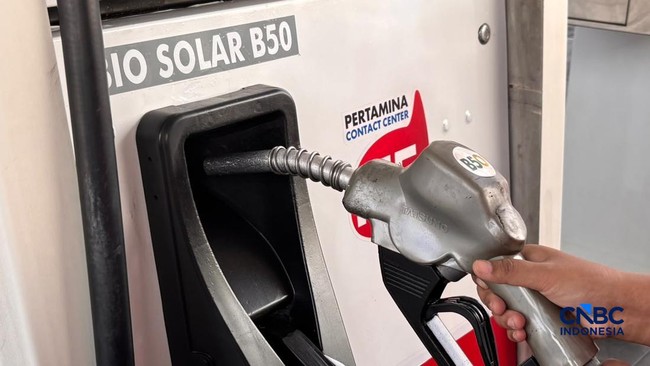
Acceleration of bioenergy through biodiesel and bioethanol mandates is directed at strengthening the substitution of fuel imports and increasing the renewable energy mix. In 2027, the policy is directed at strengthening the B50 biodiesel mandate, as well as the initial implementation of the bioethanol mandate (E20) with a blending target of 5% in 2027, increasing to 20% by 2029.
Development of water-based renewable energy power plants supported by the construction of large-scale integrated hydropower plants as a pillar of electricity system reliability.
Improvement of national energy efficiency through the implementation of Minimum Energy Performance Standards is directed at curbing energy demand growth without hampering economic activity.
Transformation of energy consumption in the transport and household sectors through the conversion of petrol motorcycles to electric motorcycles with a target of 63,000 units in 2027, rising to 6 million units by 2029; expansion of the city gas network with an additional target of 150,000 household connections in 2027, rising to 1 million household connections by 2029 from a cumulative achievement of 954,307 household connections up to 2025; and the use of electric stoves.
Strengthening energy security through the oil and gas sector is focused on increasing and maintaining national production levels during the energy transition period. The programme is implemented through optimisation of existing fields, development of new fields, acceleration of exploration, and the legal, safe, and sustainable arrangement and optimisation of old wells and community wells. In addition, the application of production enhancement technology and improved governance continues to be strengthened. This policy is based on a still significant supply gap, with national oil production at around 600 thousand barrels per day while demand reaches approximately 1.6 million barrels per day, and is supported by exploration of 10 new oil and gas blocks to expand the reserve base. Assuming oil lifting of around 610 thousand barrels per day and gas of around 954 thousand barrels of oil equivalent per day in 2027, this programme has the potential to support oil and gas non-tax state revenue of around Rp120.99 trillion per year and encourage upstream oil and gas investment of around US$20.5 billion in 2027.
To support the various policy strategies above, in 2027 the government is providing fiscal support for energy security, including tax incentives related to energy security, energy infrastructure, new and renewable energy, as well as energy subsidies and compensation.
Source: jawawa.id (https://jawawa.id/newsitem/prabowos-5-strategies-to-safeguard-energy-security-in-2027-b50-and-electric-motorcycle-conversion-1787050320)
Originally published by CNBC Indonesia (https://www.cnbcindonesia.com/news/20260818160323-4-760357/5-jurus-prabowo-jaga-ketahanan-energi-2027-b50-konversi-motor-listrik), translated from Indonesian