
Prabowonomics vs the 'Sell Indonesia' Narrative
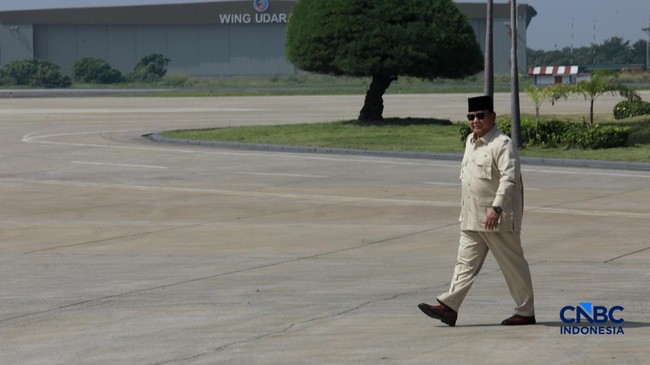
The ‘Sell Indonesia’ narrative was first raised by George Boubouras, head of research at hedge fund K2 Asset Management. Boubouras has divested all Indonesian financial assets since 2024 (The Straits Times, 5 June 2026). This narrative has the potential to disrupt President Prabowo Subianto’s plan to achieve 6.0%-8.0% growth between 2026 and 2029 due to a high saving-investment gap (SI-gap), the shortfall between investment and national savings. National savings over the past decade have been only 30%-35% of Gross Domestic Product (GDP). Meanwhile, accelerating economic growth towards 8.0% requires investment funds of Rp 11,000 trillion. There is an SI-gap of Rp 4,400 trillion that must be covered by foreign financing through various financial instruments, such as Government Securities (SBN) and shares, while national savings are only Rp 6,600 trillion.
The ‘Sell Indonesia’ narrative is triggered by a shift in the national economic development strategy from a liberal, market-based approach to a state-controlled market economy (state capitalism), popularly termed the constitutional economy in line with Article 33 of the Constitution of the Republic of Indonesia. Since his first day in office, President Prabowo has introduced a development strategy known as Prabowonomics, which goes beyond capitalism and beyond socialism. Prabowonomics shifts the national economic pendulum from a market mechanism controlled by an invisible hand to one controlled by a visible hand, the government. The core narrative of Prabowonomics centres on the state’s management of natural resource wealth for the people’s welfare. The state is no longer merely a spectator or referee, but becomes the prime mover of national development.
Experience shows that a liberal, market-based economic development strategy has only produced inequality in the control of national assets. Referring to data from the Centre of Economic and Law Studies (CELIOS), the 50 richest people in Indonesia control wealth of around USD 263 billion, equivalent to Rp 4,681.4 trillion at an exchange rate of Rp 17,800 per US dollar. More than half, around 57 per cent, of the wealth of Indonesia’s 50 richest individuals comes from extractive industries and natural resource management. Indonesian conglomerates export natural resource commodities abroad and then place the export proceeds (DHE) in third countries. The DHE does not return to Indonesia to strengthen domestic foreign exchange reserves. This contrasts with China, where DHE returns to the country, making China the nation with the largest US dollar reserves in the world, reaching USD 3.5 trillion in 2026. The People’s Bank of China (PBOC) manages these reserves to strengthen the yuan’s exchange rate against the US dollar.
On another occasion, President Prabowo also introduced the ‘serakahnomics’ narrative. This is aimed at dominant market players who exploit their monopoly or dominant market position to exploit consumers with high selling prices. In the context of anti-trust or anti-monopoly law, such actions are termed abuse of monopoly power. Serakahnomics is a violation of Law Number 5 of 1999 concerning the prohibition of monopolistic practices and unfair business competition. Furthermore, President Prabowo has rolled out a new single-door export policy for three natural resource commodities: crude palm oil (CPO) and its derivatives, coal, and ferro alloy (iron and ferro nickel alloys). The export governance for these three commodities is managed through a state-owned enterprise named PT Danantara Sumber Daya Indonesia (PT DSI). This aims to prevent transfer pricing and under-invoicing in export reporting to avoid high tax payments. Export governance through PT DSI guarantees the placement of DHE domestically, strengthening US dollar reserves at Bank Indonesia (BI), which stood at only USD 145 billion in June 2026, whereas they should have reached USD 190 billion.
Negative sentiment towards these policies has led global investors to divest Indonesian financial instruments. The ‘Sell Indonesia’ narrative has pushed the Composite Stock Price Index (IHSG) and the rupiah’s exchange rate against the US dollar to their lowest levels. Similarly, foreign ownership in SBN, which was around 41 per cent in 2018, fell to just 13 per cent by the end of 2025, a drop of 8.0 per cent over the past seven years. The ‘Sell Indonesia’ phenomenon has occurred before, but in the past week the narrative has been deliberately viralised as a form of resistance to Prabowonomics, which prioritises state control, or state developmentalism. The state developmentalism strategy is not new globally; it is also implemented by the Chinese government. The difference, however, is that China’s state capitalism operates under a regime of strict capital controls, which eliminates the impact of negative global investor sentiment on the yuan’s exchange rate. In contrast, Indonesia’s state capitalism operates under a regime of free capital mobility. Consequently, negative sentiment due to policy uncertainty causes a net outflow of foreign capital from Indonesian financial instruments, pressuring the IHSG, the rupiah exchange rate, SBN prices, and Bank Indonesia Rupiah Securities (SRBI).
Source: jawawa.id (https://jawawa.id/newsitem/prabowonomics-vs-the-sell-indonesia-narrative-1781671961)
Originally published by CNBC Indonesia (https://www.cnbcindonesia.com/opini/20260617110054-14-743296/prabowonomics-vs-narasi-sell-indonesia), translated from Indonesian