
Prabowonomics: Returning to the Constitutional Mandate for a Just Economy
The National Awakening Party (PKB) has adopted ‘Prabowonomics’ as the theme for its 26th anniversary, describing it as a new direction inspired by the spirit of President Prabowo Subianto. PKB Chairman Muhaimin Iskandar stated the theme represents gratitude and a serious commitment to steering a new course for the nation. ‘We are inspired by the President’s spirit and seriousness to continue guiding a new economic direction amidst challenging geo-economic and geo-political conditions,’ Cak Imin said.
Some may question whether Prabowonomics constitutes a new economic theory. The answer has been directly provided by President Prabowo Subianto, who stated that Prabowonomics is not a new economic school of thought, but rather an endeavour to return Indonesia’s development direction to the constitutional mandate, specifically Article 33 and Article 34 of the 1945 Constitution.
As is widely known, the 1945 Constitution has provided a clear direction on how the national economy should be built since the nation’s founding. Article 33 paragraph (1) stipulates that the economy shall be organised as a common endeavour based on the principle of familyhood, meaning economic growth must be accompanied by equity and justice. Paragraph (2) states that production branches important to the state and affecting the lives of many people shall be controlled by the state. Paragraph (3) affirms that the land, waters, and natural resources contained within them shall be utilised for the greatest prosperity of the people. Furthermore, paragraph (4) adds that the national economy must be organised based on the principles of economic democracy, equitable efficiency, sustainability, self-reliance, and by maintaining the balance of progress and national economic unity.
Meanwhile, Article 34 mandates that the state is obliged to care for the poor and abandoned children, develop a social security system, and provide proper health services and public facilities. Thus, economic growth and social protection are not contradictory choices but two sides of the same constitutional mandate that must proceed in tandem.
In this context, Prabowonomics is viewed as an effort to make the state more tangibly present in economic development. An example is the Free Nutritious Meals (MBG) programme, which is not merely a social policy but also an economic strategy. When millions of children gain access to nutritious food, the state is investing in the quality of future human resources. Simultaneously, the large-scale demand for food ingredients opens markets for farmers, livestock breeders, fishers, cooperatives, and small businesses across regions, moving the economic chain from villages to cities.
Another example is the establishment of the Red and White Village Cooperatives (KDMP). Historically, smallholder farmers and micro-entrepreneurs have faced classic problems of financing, distribution, and marketing. By strengthening village economic institutions through cooperatives, the state seeks to revive the spirit of mutual cooperation as intended by Article 33 paragraph (1). Cooperatives are seen not just as business entities, but as instruments for equitable welfare distribution.
Similarly, the downstream processing of natural resources is a priority. Indonesia must no longer merely export raw materials; added value must be created domestically to generate employment, increase state revenue, and strengthen national industry. This principle aligns with the constitutional mandate that natural resource management must be for the greatest prosperity of the people, not just short-term profit.
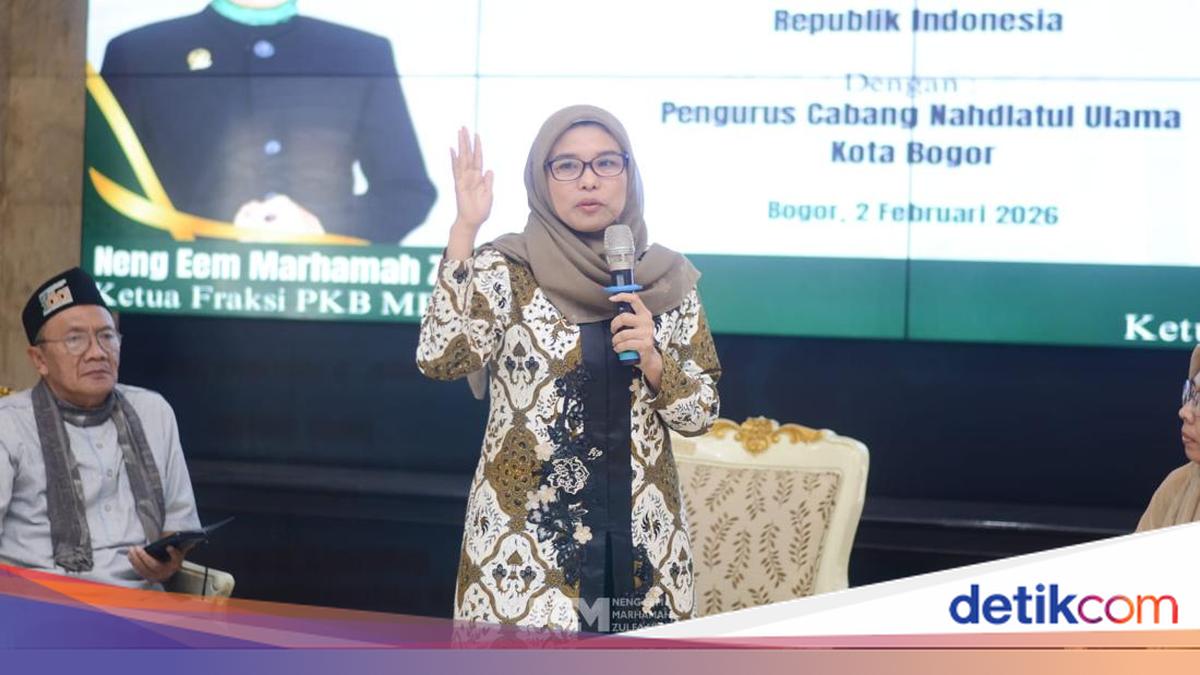
For PKB, this constitutional economy is not merely an academic discourse but a guideline for national development. The PKB faction in the MPR will therefore continue to ensure that every economic policy is grounded in constitutional values: justice, siding with the people, strengthening national self-reliance, and ensuring the state is present to protect all citizens. Ultimately, Prabowonomics will be judged not by how often the term is uttered, but by how much benefit is felt by the people. When farmers receive fair prices, fishers gain market access, small businesses grow, children receive adequate nutrition, jobs are created, and natural resources are truly managed for the prosperity of all Indonesians, that is when the mandate of Articles 33 and 34 of the 1945 Constitution truly lives in national development practice. That is the essence of Prabowonomics: an economy not just for growth, but for justice, sovereignty, and the welfare of all Indonesian people.