
Prabowonomics for Fishermen: A New Paradigm of State Support
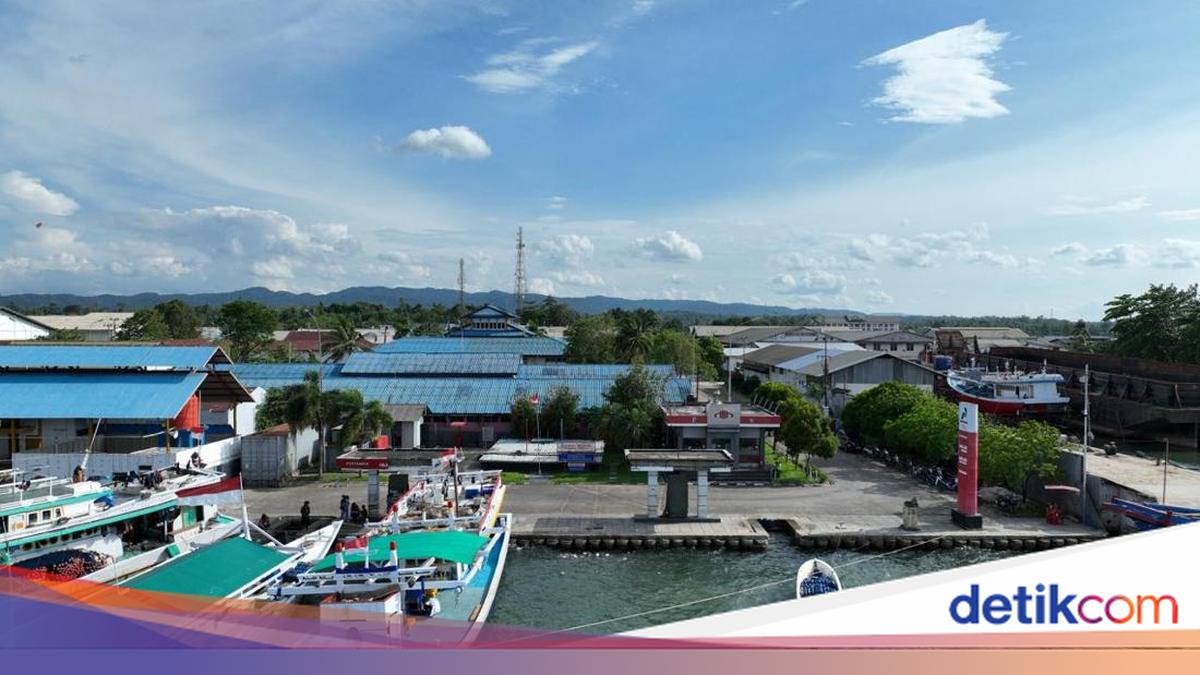
Amid global economic uncertainty and turbulence in energy prices, the government has taken a step that has attracted considerable attention. President Prabowo Subianto has approved a special price of Rp 15,000 per litre for diesel fuel (BBM) for fishing vessels of 30 to 200 gross tonnes (GT).
At first glance, this policy appears to be an additional energy subsidy. On closer inspection, however, it reveals a new way of thinking about how the state uses economic instruments to safeguard the productivity of its people.
It is important to understand that this policy is not the starting point of the state’s partiality towards fishermen. For years, fishing vessels under 30 GT have received subsidised diesel at around Rp 6,800 per litre as a form of protection for small-scale fishermen.
The policy adopted by President Prabowo does not abolish that scheme, but rather extends this support to fishing vessels of 30–200 GT, which until now have had to buy diesel at industrial prices that can reach around Rp 21,300 per litre.
Now, through the special price scheme of Rp 15,000 per litre, the government closes this protection gap so that medium-scale fishing businesses also have room to keep producing amid high energy costs.
Thus, the policy does not replace existing subsidies, but broadens their benefits so that the national fisheries production chain remains intact from upstream to downstream.
This choice is not without reason. In fishing operations, fuel accounts for around 70 per cent of total operational costs. When diesel prices rise in line with global energy market dynamics, many vessels reduce their fishing activities because production costs are no longer proportionate to their catches.
The impact is felt not only by vessel owners, but also by crew members whose incomes decline. The supply of raw materials for processing industries shrinks, fish distribution is disrupted, and ultimately national food security is affected.
Prabowonomics
This is where the interesting paradigm shift lies. The state has chosen not to intervene in fish prices or provide cash assistance to businesses. Instead, the state addresses the root of the problem: reducing production costs. What is strengthened is not the consumption side, but the fisheries sector’s ability to keep producing.
From a development economics perspective, such an approach is far more productive because it keeps economic activity running without removing incentives for businesses to remain efficient.
This outlook can be read as one manifestation of Prabowonomics. The state is not positioned merely as a regulator overseeing the market, but as a facilitator that steps in when production costs threaten the survival of a strategic sector.
Intervention is carried out in a measured way so that economic activity continues, employment is preserved, and national food production is not disrupted.
However, this policy has another, far more interesting dimension: how the state interprets the constitutional mandate.
Article 33 of the 1945 Constitution of the Republic of Indonesia affirms that the land, water and natural resources contained therein are controlled by the state and used for the greatest prosperity of the people.
This mandate has often been understood merely as state control over natural resources. In fact, its meaning is far broader: how the added value generated from the management of natural resources is returned to strengthen the welfare of society.
It is in this context that the fuel policy for fishermen takes on strategic meaning. The special price scheme for vessels of 30–200 GT is supported through the utilisation of funds managed by the Plantation Fund Management Agency (BPDP), which are sourced from the palm oil sector. This approach demonstrates that the economic value generated from one natural resource can be used to strengthen other productive sectors.
Palm oil and fisheries are indeed different commodities, but both are part of the national wealth that must reinforce one another. The state does not allow economic benefits to stop at one sector, but channels them back to safeguard the productivity of its people.
This is the spirit of equitable distribution of natural resource benefits, in line with the mandate of Article 33 of the 1945 Constitution and the embodiment of the fifth principle of Pancasila: social justice for all the Indonesian people.
On closer examination, this approach is a form of redistribution of added value between economic sectors. The wealth generated from managing natural resources does not stop as state revenue, but is recycled to strengthen other sectors that underpin people’s livelihoods.
This means the state is not merely collecting benefits from natural resources, but ensuring those benefits return to the people in productive form. In this context, the fishermen’s fuel policy is not just a fiscal instrument, but also the embodiment of an economic ideology that positions the state as the manager of national wealth for common prosperity.
Nevertheless, the state’s partiality must not be understood as an unconditional subsidy. In fact, the strength of this policy lies in the governance built around it. The government requires recipient vessels to hold active licences, install the Fisheries Vessel Monitoring System (VMS), submit digital reports, and be subject to oversight through the integration of various government systems.
Thus, the special fuel price becomes not only an economic instrument, but also an instrument for improving business compliance with regulations.
Going forward, this principle needs to be continually strengthened so that the policy remains aligned with Indonesia’s Blue Economy agenda. The special fuel price should ideally be positioned as a compliance-based incentive, not merely an energy subsidy.
Such a facility should ideally be granted only to vessels with complete permits, actively operating VMS, no record of illegal, unreported and unregulated (IUU) fishing violations, compliance with electronic logbooks and traceability systems, and operating in fisheries management areas where fish stocks remain at biologically safe levels.
With this approach, Indonesia can demonstrate that the policy aims to safeguard the sustainability of fishing businesses, not to encourage excessive exploitation of resources.
Equally important, the government has stipulated that this policy is a temporary stimulus until the end of 2026 and will be evaluated periodically.
This decision shows that the state is not building a permanent subsidy that could burden public finances, but rather giving businesses room to survive global energy price pressures.
Such an approach maintains a balance between partiality towards the people, fiscal discipline, and resource sustainability.
Ultimately, the special fuel price policy for fishing vessels is not merely about cheaper diesel. It demonstrates how the state uses economic instruments to lower production costs, safeguard food supply, strengthen the competitiveness of the fisheries sector, and ensure that the benefits of natural resource management return to the people.
This is one manifestation of Prabowonomics, an economic approach that not only pursues growth, but also ensures that the results of managing Indonesia’s natural wealth truly work for the greatest prosperity of the people, as mandated by Article 33 of the 1945 Constitution.
Source: jawawa.id (https://jawawa.id/newsitem/prabowonomics-for-fishermen-a-new-paradigm-of-state-support-1784894078)
Originally published by detikcom (https://news.detik.com/kolom/d-8588926/prabowonomics-untuk-nelayan), translated from Indonesian