
Prabowonomics: Between Socialism and Capitalism
Prabowonomics, Between Socialism and Capitalism
Note: This article reflects the author’s personal opinion and does not necessarily reflect CNBC Indonesia’s editorial views.
I will begin by quoting the views of three economists, Nobel Prize winners in Economics for 2024: Daron Acemoglu and Simon Johnson of the Massachusetts Institute of Technology (MIT), USA, and James A. Robinson of the University of Chicago, IL, USA. The trio pioneered research on how institutions are formed and their impact on the prosperity of a country. Their research highlights that inclusive institutions promote long‑term growth, while extractive, exploitative institutions hamper prosperity. However, it seems the ideas of these three Nobel laureates do not apply to China, where the economy is driven by the state (state capitalism). Likewise, its extractive and authoritarian political institutions are controlled by a single party, the Communist Party of China.
Yet the Chinese economy over almost three decades enjoyed growth above 10 percent. In the last decade it has still grown at an average above 5.0 percent.
The views of the three Nobel economists differ from those of Keyu Jin, a brilliant economist of Chinese nationality and professor of economics at the London School of Economics (LSE), in her 2024 book entitled ‘The New China Playbook, Beyond Socialism and Capitalism’. In Jin’s book, she recounts the most common question from her Harvard University classmates: ‘When will China become a democracy? How do you wake up in the morning knowing that you cannot elect your own president? When will China’s economy stop growing?’
Extremes: Western economists argue that China’s economic development will fail if it does not transform its economy based on Western values, including alignment with Western economic and political systems. But in reality, China’s economic development has remained true to its own values and culture. Hence, the Chinese development model is better described as Marxism metamorphosed to align with Chinese values.
Or the China development model is more accurately described as ‘managed capitalism’ or a major economy. Or capitalism with Chinese characteristics. State capitalism in China differs from the Western free market model that prioritises market mechanisms; the private sector in China is highly dominant.
In Keyu Jin’s view, China’s Hybrid Economy places greater emphasis on the government’s role (major economy) through fiscal and monetary policy, controlled industrial policy, regulation of the financial system (capital controls), state funding, and a prioritisation of State‑Owned Enterprises (SOEs).
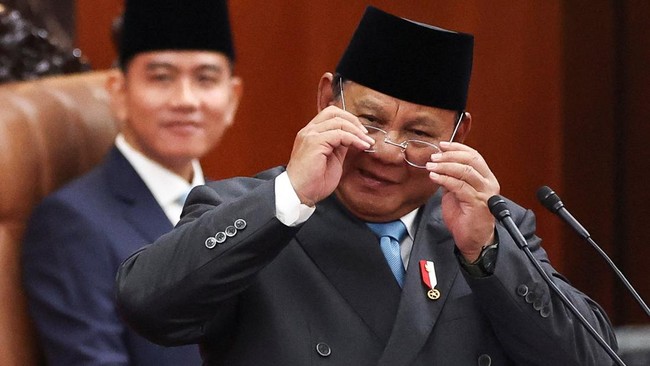
So where does Prabowonomics fit in? The broad ideas can be traced in the book authored by President Prabowo himself, entitled ‘Paradox Indonesia and Its Solutions’, published in May 2022. The central notion of state capitalism is reiterated in his speech in the plenary session of the MPR/DPR/DPD, at Senayan, on Wednesday 20 May 2026.
The concept of state capitalism began from a dinner‑table discussion with his father, Prof. Sumitro, about mixed economy, which is neither capitalism (beyond capitalism) nor socialism (beyond socialism).
Prabowonomics is described as state capitalism or a major economy. The reference is clear: Article 33 of the 1945 Constitution that ‘the important sectors of production must be controlled by the state. The state must control the essential needs of the people’.
Prabowonomics also stands in contrast to liberal economic thought, such as Milton Friedman, Friedrich von Hayek, and Thatcher. They argued that ‘the best government is the least government’. The smaller the state’s role, the better. The government should be merely a watchdog or regulator.
Prabowonomics seeks to steer the national economic development away from a liberal market economy toward state capitalism, in which the government is not merely a supervisor but is actively involved in national economic activity as a prime mover or pioneer.
Like China’s state capitalism, Indonesia’s state capitalism concept has faced resistance not only from liberal‑minded thinkers but also from global investors. This is reflected in the net outflow of foreign capital from the Indonesian Stock Exchange (IHSG) which fell to 6,318—the lowest in a year—on Wednesday, 20 May 2026.
Similarly, net foreign outflows from the government securities market (SBN) and the domestic money market have seen the rupiah weaken to a record low around Rp 17,598 per US dollar. The President’s speech on managing natural resource exports via Danantara Indonesia was met with a negative market response. This was reflected in the price indices of shares of natural resource‑based companies, which declined sharply today.
So how should we behave as a nation? It is time to re‑frame the state capitalism idea, as first proposed by Indonesia’s founding fathers. This is enshrined in Article 33 of the 1945 Constitution on the state’s control of important sectors.
I am reminded of Albert Einstein’s words, ‘Insanity is doing the same thing over and over again, and expecting different results.’ In other words, folly lies in doing the same thing repeatedly while expecting different outcomes.
Finally, it would be wise for us to heed and reflect on the warning of the great 20th‑century economist John Maynard Keynes: ‘The difficulty is not in embracing a new paradigm, but in breaking away from the old paradigm that has permeated our minds.’
(miq/miq)