
Prabowo Warns Inpex Boss Over 28-Year Stalled Project in Indonesia
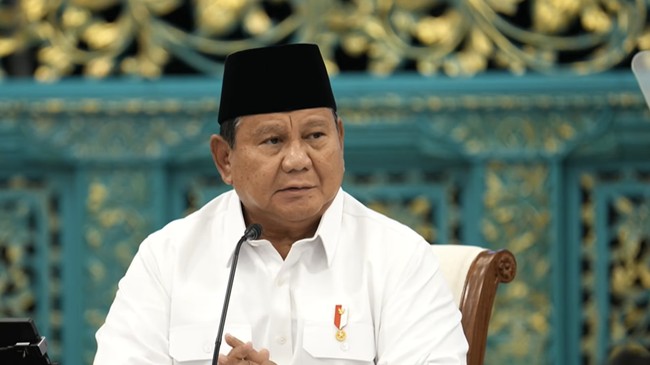
President Prabowo Subianto said he had pursued commitments from the leadership of Japan’s energy giant, Inpex Corporation, to ensure the continuation of the giant Abadi Gas Field project in the Masela Block, Maluku, which is operated by Inpex.
Prabowo said he did so because the Abadi Gas Field project in the Masela Block had been stalled for 28 years.
“Another notable achievement, I believe, is the Masela Abadi Gas project, which sat idle for 28 years. I travelled to Tokyo to meet the leaders of the Japanese company Inpex, and I conveyed it politely and courteously: ‘Are you still interested or not? If not, I shall appoint another company,’” he said at a Plenary Cabinet Session at the Palace in Jakarta on Monday (20 July 2026).
“As a friendly nation, we would never issue an ultimatum — it was not an ultimatum, but an appeal, truly: ‘Your Excellency, is Japan still interested?’ The problem is that the nation needs energy and foreign exchange, and then I went home. As for the Minister of Energy and Mineral Resources, I may crack the whip. I told the minister: if there is no activity for six months, revoke the permit. Now we show no tolerance — for HGU, HGB and SIUP licences we grant two years; if there is no activity, revoke,” Prabowo said.
As is well known, President Prabowo Subianto officially launched the groundbreaking ceremony for the giant Abadi Gas Field project in the Masela Block on the Tanimbar Islands, Maluku, last week, specifically on Thursday (16 July 2026).
President Prabowo officiated virtually from the State Palace in Jakarta, while a number of officials — including Minister of Energy and Mineral Resources Bahlil Lahadalia, Minister of Agrarian Affairs and Spatial Planning Nusron Wahid, Head of the Presidential Staff Office Dudung Abdurachman, Head of SKK Migas Djoko Siswanto, and Regent of the Tanimbar Islands Ricky Jauwerissa — attended in person at the site on the Tanimbar Islands, Maluku.
The ceremony was also witnessed directly by Inpex Corporation CEO Takayuki Ueda. Inpex is the operator and holds the majority Participating Interest (PI) in the Masela Block, at 65 per cent.
President Prabowo said he was grateful that, after nearly three decades of waiting, this National Strategic Project (PSN) had finally begun construction.
“Building a nation is a nation’s hard work, a very long journey that requires the unity of all elements. Thus this national strategic project, Abadi Masela, is truly a very important project,” Prabowo said via video conference from the State Palace in Jakarta on Thursday (16 July 2026).
“We waited for this project for nearly three decades. Three decades the people waited. Thank God, today we begin construction, and the construction must not be hindered — it must be completed in the shortest possible time,” he said.
“Dear brothers and sisters, from the beginning we have been aware and have always affirmed that the goal of a nation’s independence is, first and foremost, to guarantee its survival. In the modern world — indeed for hundreds, even thousands of years — energy is one of the conditions for a nation’s survival. Thus, we are aware, the Indonesian people are aware, that we have been given an extraordinary blessing by the Almighty,” he said.
“One piece of evidence, among others, is that we have long known that in our waters in Tanimbar, Maluku, we possess very large energy reserves. We realised this 28 years ago, and we appreciate all elements — we must once again give recognition to all those who made this project possible,” he said.
“We value our friends from Japan who invest here, and Inpex; we thank our friends from Malaysia, Petronas, who are also participating; and of course we are proud that our national company Pertamina is present here. We must all work shoulder to shoulder so that this project succeeds, goes into production quickly and yields results quickly,” he said.
“So, dear brothers and sisters, today we are proud and grateful that, after decades, this project is under way. We value our friends from Japan and we are starting this project, seeking mutual benefit. The honour of a host is that his partner, his guest, is happy — that is the host’s honour,” he said.
“But we also have a responsibility to our people, many of whom live in hardship. As President of the Republic of Indonesia, as one who has received a mandate, I once again affirm: run this project as well as possible on the basis of mutual benefit. Investors must profit. Once again, as a nation with dignity and honour, we would be ashamed if our partners were dissatisfied, if our partners lost money, if our partners were unhappy,” he said.
“But conversely, we have a great responsibility to the people. We need this energy to carry out the nation’s transformation. We want to become a modern nation. We want to be like the Japanese — a productive nation producing industrial goods,” he said.
“We have all the resources for that; our children’s capacity is no less intelligent. I have planned and seen a real plan; we are determined to become an industrial, modern nation, and we are determined that our people live well. We need money to provide good healthcare services, to pay teachers’ salaries so our schools are on a par with those abroad, to pay all civil servants, and to build the infrastructure essential for modern life,” he explained.
“Therefore this project is important. I appreciate its commencement. It was mentioned that this is a major investment of US$20.9 billion — nearly US$21 billion — which will produce more than 9 million tonnes of gas condensate and so on, so this will greatly help the Indonesian people carry out development,” he said.
“We must pursue downstream processing, and downstream processing requires energy. Our energy is abundant; there is only a two to three-year transition period, and amid a world full of dangers, Indonesia fortunately has sufficient resilience and anticipatory steps to keep Indonesia in a good position,” he said.
“I wish to convey my special thanks and appreciation to the CEO of Inpex, Mr Takayuki Ueda. I am impressed that you can speak Indonesian. Thank you, Inpex, for appointing someone like Takayuki Ueda. I do not see many CEOs of foreign companies willing to learn Indonesian. I believe that under your leadership, God willing, this project will succeed and bring benefits to us all,” he said.
“I am convinced this project will become a driver of Indonesia’s progress, especially in eastern Indonesia. It will also strengthen Indonesia’s national energy self-sufficiency and mark an important milestone for the welfare of the Indonesian people,” Prabowo said.
“Once again, I thank you all, the people of Tanimbar, the people of Maluku. I apologise for not being physically present, but I have visited Moa Island in the South West Islands twice, and I hope Moa Island now has reasonably good clean water points for its people,” he said.
“Therefore, saying bismillahirrohmanirrohim: Thursday, 16 July 2026, by the grace of Almighty God, I, Prabowo Subianto, President of the Republic of Indonesia, hereby declare the groundbreaking of the Abadi Masela LNG National Strategic Project officially begun. Thank you,” he concluded.
Bahlil’s Report
Minister of Energy and Mineral Resources Bahlil Lahadalia, reporting on the Masela Block project, explained that it began 28 years ago and had been handled by six Indonesian presidents. Only under President Prabowo’s administration could this giant gas project finally be executed.
“Today, 16 July, we mark a new chapter for the Abadi Masela project, which was first declared 28 years ago. There have been six presidents, but only President Prabowo Subianto was able to execute it today,” Bahlil said while delivering his report at the groundbreaking ceremony on the Tanimbar Islands, Maluku, on Thursday (16 July 2026).
“I must tell the President that this project was long held up by the debate between offshore and onshore — a very lengthy debate. But on the President’s guidance and instruction to execute quickly and to affirm all oil and gas concession permits whose Plan of Development was completed but not implemented, we issued the first warning letter to Inpex,” Bahlil said.
“And thank God, today we conduct the groundbreaking,” he concluded.
Bahlil said the investment in this giant gas project is estimated at US$20.95 billion, equivalent to around Rp 390 trillion.
“Mr President, we report that with this groundbreaking, work begins: first, 11 development wells plus 4 further wells; second, the construction of various facilities including a port and jetty. The EPC is under way, and the investment is approximately US$20.95 billion, equivalent to almost Rp 390 trillion. This will produce 9.5 million tonnes of LNG per year and 35,000 barrels of condensate per day,” he explained.
As is known, this gas project, with an investment value of US$20.95 billion, holds gas potential of 6.97 trillion cubic feet (TCF).
Gas from the Masela Block will be processed into liquefied natural gas (LNG) at an onshore LNG plant with a production capacity of 9.5 million tonnes per annum (MTPA). In addition, the Masela Block will produce 150 million standard cubic feet per day (MMSCFD) of pipeline gas and 35,000 barrels per day (bph) of condensate.
This project has long been awaited by the Indonesian public. The Production Sharing Contract (PSC) for the Masela Block was signed by Inpex Corporation as operator with the Indonesian government during the presidency of BJ Habibie, precisely on 16 November 1998.
This means that nearly 30 years since the contract for this oil and gas block was signed, the project had yet to operate and produce oil and gas for Indonesia’s benefit.
Indeed, the Masela Block PSC has already been extended to 20 + 7 years until 2055. The extension of Inpex’s production sharing contract for the Masela Block was signed in October 2017, when Ignasius Jonan was Minister of Energy and Mineral Resources. Inpex’s contract in the Masela Block was originally due to expire in 2028, having contracted for 30 years with the Indonesian government.
Because the project had not yet commenced operations and Inpex remained committed to continuing it, the Indonesian government granted a 20-year extension from 2028, plus an additional 7 years because the government had changed the scheme of the LNG plant from offshore to onshore.
Profile of the Masela Block
Inpex Masela Ltd holds the largest Participating Interest (PI) in the Masela Block, at 65 per cent.
Previously, Inpex was partnered by Shell Upstream Overseas Services with a 35 per cent stake. However, Shell decided to walk away from the Abadi gas project in Maluku.
Shell’s 35 per cent stake has since July 2023 been taken over by PT Pertamina Hulu Energi through its subsidiary PT Pertamina Hulu Energi Masela (PHE Masela) with 20 per cent, and Petronas with 15 per cent.
The sale and purchase agreement for the PI from Shell to Pertamina and Petronas was signed on 25 July 2023, and the Minister of Energy and Mineral Resources’ approval for the PI transfer was obtained on 4 October 2023.
The Abadi Field in the Masela Block is a deep-sea gas field with Indonesia’s largest gas reserves, located some 160 kilometres off Yamdena Island in the Arafura Sea, at sea depths of 400–800 metres. The Abadi Field’s gas potential is estimated at 6.97 trillion cubic feet (TCF).
After the production sharing contract was signed in 1998, Inpex discovered the huge gas reserves in the Masela Block in 2000.
Nineteen years later, the Indonesian government finally granted approval of the first Plan of Development (PoD-I) to Inpex to produce 9.5 million tonnes of LNG per annum (MTPA) from the Masela LNG plant, along with 150 MMSCFD of pipeline gas and 35,000 barrels per day of condensate.
The development of this greenfield oil and gas project — which involves high complexity and great risk, encompassing deep-water drilling, subsea facilities, an FPSO (Floating Production Storage and Offloading) vessel, and an onshore LNG plant — will be both a challenge and a major opportunity for PHE and its partners to realise. Moreover, the field’s development could absorb up to 10,000 workers.
The Masela Block is also planned to produce clean energy through the application of Carbon Capture and Storage (CCS) technology, in support of the government’s programme to reduce carbon emissions and promote sustainability during the energy transition era.
The government approved the application of CCS on 28 November 2023 through PoD-I Revision 2, followed by a FEED tender. Finally, on Wednesday, 9 April 2025, Inpex launched this FEED for the onshore LNG plant.