
Prabowo to Tighten Palm-Oil Controls; Palm-Oil Executives Respond
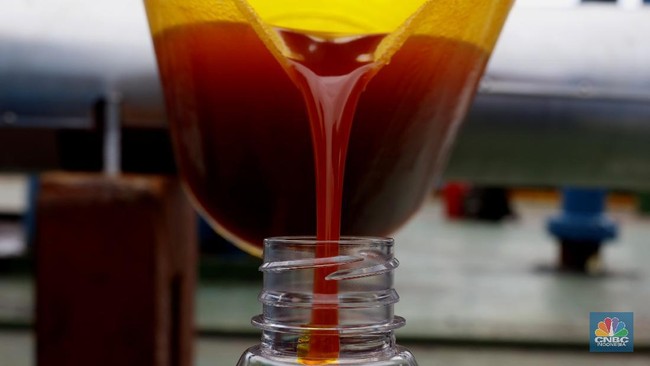
Jakarta, CNBC Indonesia - The head of the Indonesian Palm Oil Producers Association (GAPKI), Eddy Martono, has responded to the latest export policy announced by President Prabowo Subianto during his presidential address to the 19th Plenary Session of the DPR RI on the KEM and PPKF RAPBN 2027. The address took place at the Nusantara Building, MPR/DPR/DPD-RI, Jakarta, on Wednesday, 20 May 2026. The policy includes issuing a new Government Regulation (PP) and the establishment of a new state-owned enterprise specifically for exporting commodities. Under the new regulation, all sales of natural resource outputs, from palm oil to coal to ferroalloys, are required to go through a government-appointed state-owned enterprise. The new SOE named is PT Danantara Sumber Daya Indonesia. Eddy warned that the rule could backfire by reducing export markets for palm oil and its downstream products, impacting Indonesian production. He articulated concerns about the structure of the palm oil industry and its supply chain in Indonesia. Not all exporters are plantation companies with downstream operations; many are trading houses serving modest volumes to various countries. With a government body, how would such firms be treated? Eddy told CNBC Indonesia on Wednesday, 20 May 2026. He also queried how orders with specific compositional requirements from importers would be serviced. “Exporters typically have their own distinct markets. We must ensure we do not lose markets if this is not well managed,” he said. Meanwhile, in his speech, Prabowo stated that the new governance policy for exports of natural resource commodities is not extraordinary, as it is already implemented by many other countries. “The main aim of this policy is to strengthen supervision and monitoring, and to root out under-invoicing, transfer pricing, and the flight of export proceeds (DHE),” he said. “This policy will optimise tax revenues and state revenues from the processing of our natural resources. It could be similar to Mexico, the Philippines, and other neighbouring countries. We do not want our revenues to be the lowest because we are not bold enough to manage our own assets, assets of the Indonesian nation,” he added.