
Prabowo targets world-class digital government for Indonesia
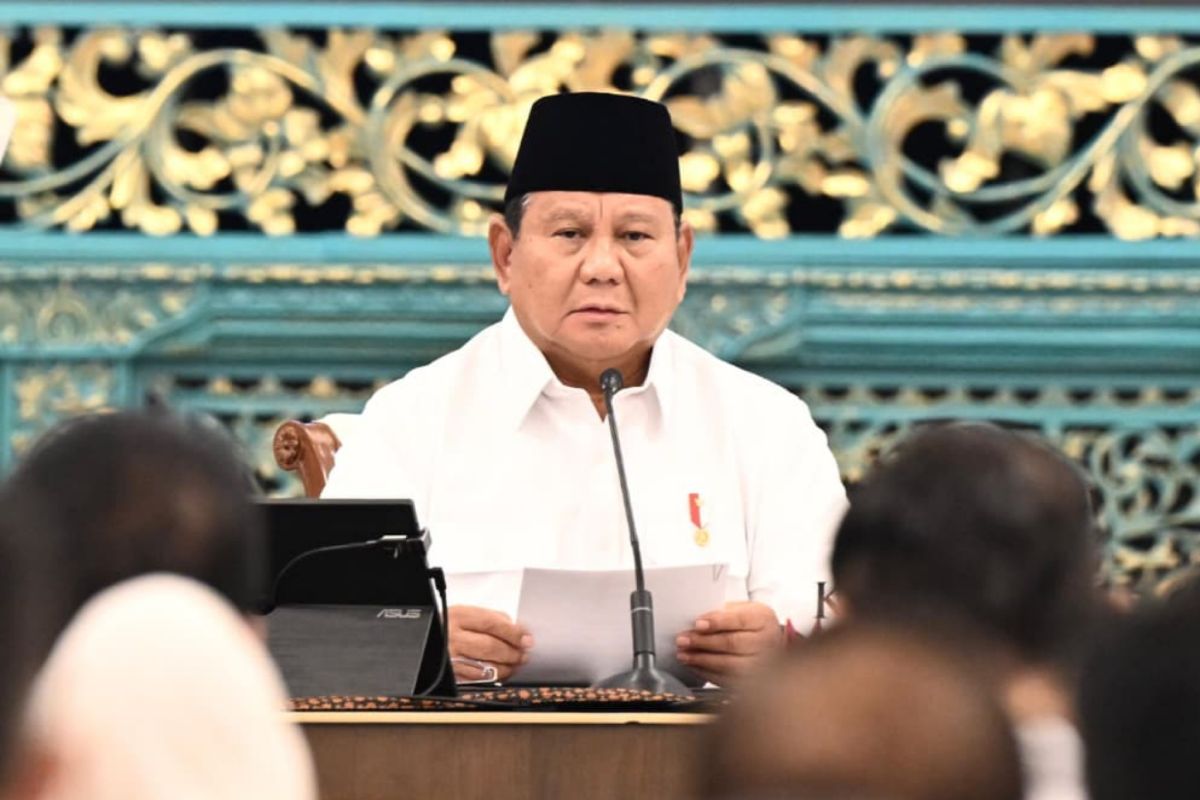
Jakarta (ANTARA) - President Prabowo Subianto has set a target for Indonesia to have a world-class digital government, with all feasible public services accessible online so that the public no longer faces convoluted bureaucracy.
He affirmed that digital transformation must be a top priority for the government in order to deliver public services that are faster, easier and more efficient.
“I want Indonesia to have a world-class digital government,” Prabowo said during a Plenary Cabinet Meeting at the State Palace in Jakarta on Monday.
According to the President, all government services must be made available digitally so that citizens no longer need to queue for hours or move from one office to another.
He went on to say that government digitalisation is no longer negotiable.
He asked all ministries and agencies to end the practice of using numerous applications that are not interconnected, as this only makes things harder for the public.
“Government digitalisation is something we absolutely must carry out. We cannot have dozens of applications that do not talk to one another, and we cannot ask the people to enter the same data repeatedly,” he said.
In addition, Prabowo noted that the digitalisation of the social assistance programme has begun to show results.
According to a report by the National Economic Council (DEN), the programme has been implemented in 43 regencies and cities across 26 provinces, with around one million families registered out of a target of 12.5 million families.
He said that before digitalisation was introduced, a family could spend around Rp150,000 to process various documents and register for social assistance. Now, the process can be carried out free of charge.
“Now that process can be done at no cost. This is a direct benefit of digitalisation,” he said.
Nevertheless, the President believes the government must go further by integrating the various national databases - ranging from social, population, education, health, employment and housing data to beneficiary data - under a robust security system.
According to him, data integration is the key to ensuring social assistance reaches the right recipients and preventing errors caused by outdated data.