
Prabowo Subianto Reveals Surprising Facts About Indonesia's 'Sky Toll Road'
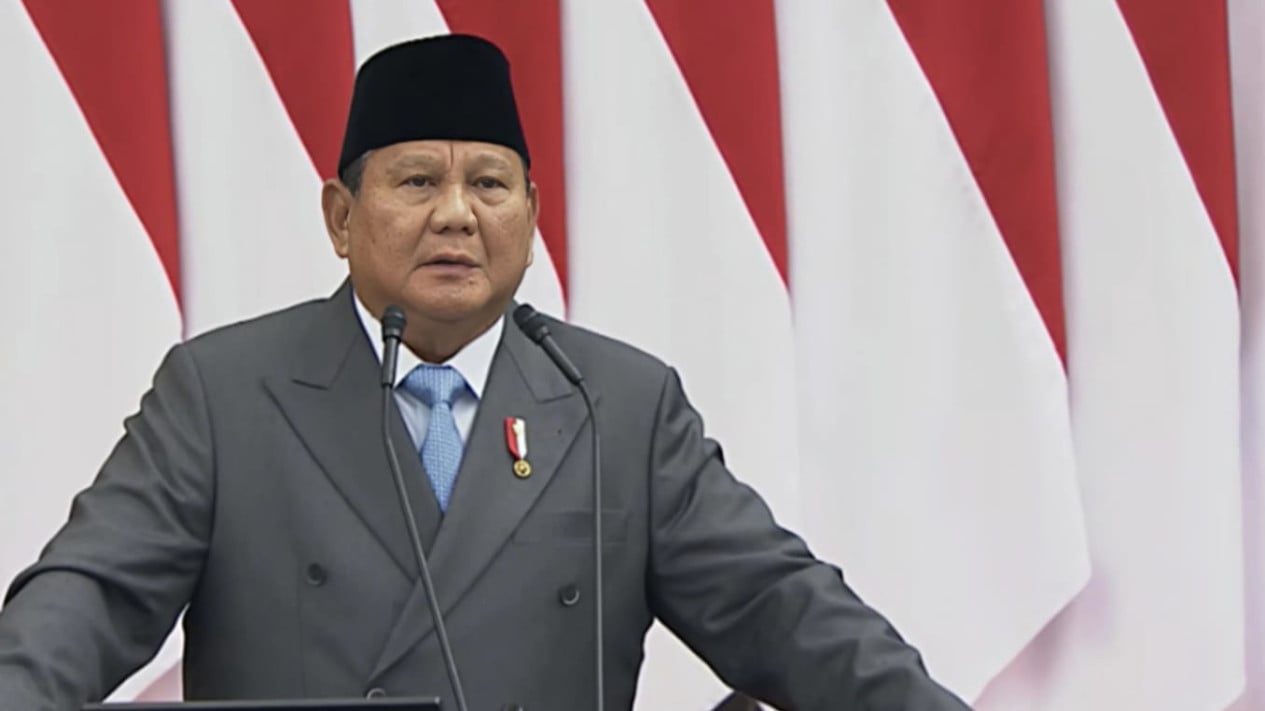
President Prabowo Subianto has positioned digital connectivity as essential infrastructure for broadening equitable development. He stated that internet access, or the ‘sky toll road’, is directed not only at supporting communication but also at opening public access to education, health, public services, and markets for business actors. “The digital network is infrastructure for equality,” the President stressed during the Annual Session of the MPR and the Joint Session of the DPR and DPD in Jakarta on Friday, 14 August 2026. According to Prabowo Subianto, 4G networks currently reach 98.94 per cent of the Indonesian population. Meanwhile, fibre optic networks have reached all 38 provinces, 502 out of 514 regencies and cities, 5,319 sub-districts, and 43,233 villages and urban wards. The President also confirmed the utilisation of the Republic of Indonesia Satellite (SATRIA)-1 to expand internet access, especially in areas not yet reached by terrestrial networks. As of early July 2026, SATRIA-1 had served 31,803 public service locations. Data from the Telecommunications and Information Accessibility Agency (BAKTI) of the Ministry of Communication and Digital Affairs (Kemkomdigi) shows that of these 31,803 locations, 21,718, or 68.16 per cent, are educational facilities. Additionally, SATRIA-1 connectivity has been used in 6,353 government offices and 1,880 health facilities, as well as defence and security facilities, community activity centres, places of worship, tourism sites, business services, and public transport. SATRIA-1 is part of the government’s strategy to expand equitable development through the digital space. The satellite’s presence complements the fibre optic network and BTS towers, particularly for underdeveloped, frontier, and outermost (3T) regions. This strengthening of connectivity runs in parallel with the transformation of government services. President Prabowo said that to date, 313 regencies and cities have established Public Service Malls (MPP), which integrate up to 150 types of services in one location. These services cover civil documents, business permits, land affairs, tax, social security, immigration, and police matters. “The state must not make the people go around from one office to another,” the President stated. According to Prabowo Subianto, one-stop services can save the public time and money while narrowing the space for illegal brokers. However, this transformation does not stop at physical service integration. “In the future, all government services must also be available digitally,” he explained.