
Prabowo: Social Aid Digitalisation Now Running in 153 Regencies/Cities
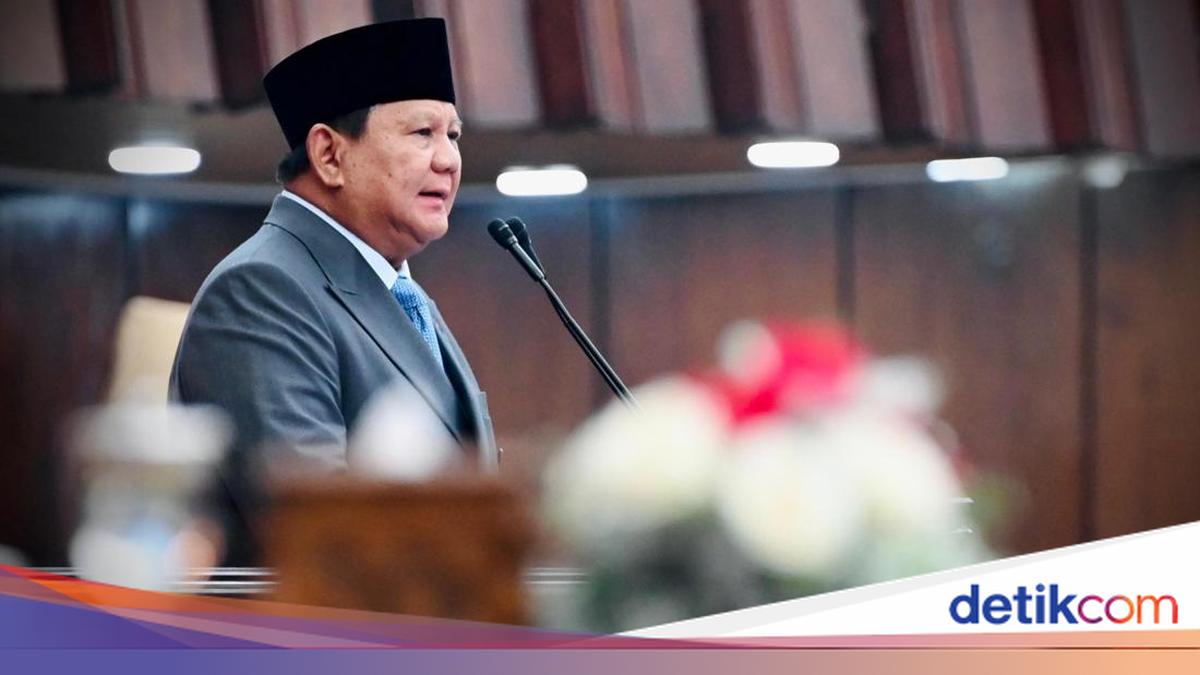
Indonesian President Prabowo Subianto has stressed that social protection (Perlinsos) must be increasingly well-targeted, easily accessible, and dignified. One of the government’s efforts is the digitalisation of registration for the Family Hope Programme (PKH) and Sembako social assistance.
“As of today, digital registration for social assistance under the PKH and Sembako programmes is operating in 153 regencies and cities across 38 provinces,” Prabowo said in a written statement on Friday (14/8/2026).
“More than 3 million families have been registered, moving towards a target of 49 million registered families, or more than 50% of Indonesian families at the time of implementation,” he continued.
Prabowo made the remarks during his state address at the 2026 Annual Session of the People’s Consultative Assembly (MPR) and the Joint Session of the House of Representatives (DPR) and the Regional Representatives Council (DPD) at the Parliament Complex in Senayan, Jakarta, on Friday (14/8).
According to Prabowo, digitalisation also reduces the costs and time that underprivileged communities previously had to bear to access social assistance.
Previously, pre-prosperous families were estimated to spend around Rp150,000 on travel, documents, photocopying, and lost working time.
“Now registration can be done free of charge. Eligibility checks that previously could take 75–200 days,” Prabowo explained, “can now be completed in minutes or hours.”
Prabowo stressed that underprivileged communities should not be burdened with costs to prove their economic circumstances.
“Poor people must not pay to prove that they are poor. People also should not have to repeatedly submit data that the state already holds,” Prabowo said.
Digitalisation, Prabowo continued, will be expanded not only to social assistance programmes but also to other government aid and subsidies.
The move is part of implementing an integrated pro-welfare agenda to improve targeting, transparency, and ease of access for the public.
In his speech, Prabowo also introduced two beneficiaries who were present. Both serve as tangible examples of the impact of social protection programmes.
One of them was Susana from Bogor Regency, who works as a daily labourer earning Rp700,000 per kilogram for peeling shallots.
“The Family Hope Programme and Sembako have helped maintain her children’s education,” Prabowo explained.
Also present was Margarelitha Rohi from Kupang, East Nusa Tenggara (NTT), a recipient of social rehabilitation assistance (ATENSI).
Having lived in hardship since childhood and never having had the opportunity to attend school, at the age of 38 Margarelitha still works as a trader while caring for her 80-year-old aunt.
“The ATENSI social assistance in the form of rice and cooking oil has become one of the mainstays for her family,” Prabowo said.
Prabowo emphasised that the state’s presence is not to replace the hard work of the people, but to ensure support for improving welfare.
“The state is present not to replace the people’s hard work. The state is present so that the people’s hard work is not in vain,” he concluded.