
Prabowo: Sekolah Rakyat Key to Breaking Poverty Chain
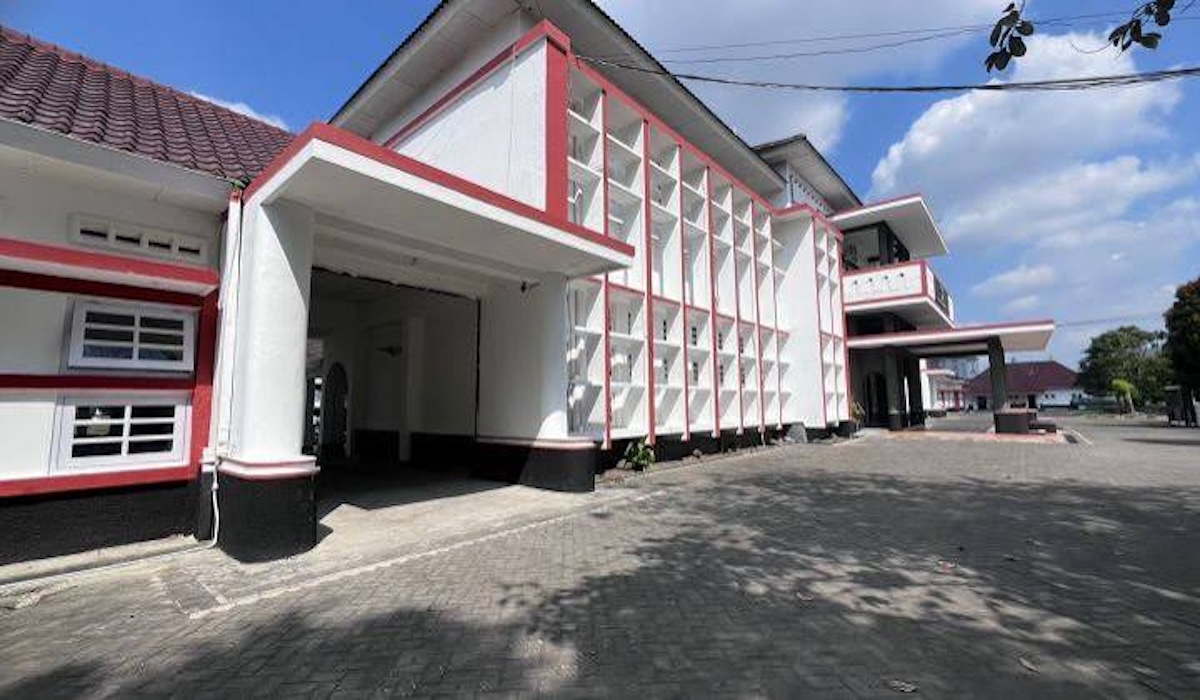
President Prabowo Subianto has emphasised the government’s commitment to building People’s Schools as a primary strategy to break the intergenerational chain of poverty. The programme is specifically designed to target children from the most vulnerable families across Indonesia.
“The strategy is that we must break the circle of poverty,” said President Prabowo during his address at the Annual Session of the MPR and the Joint Session of the DPR and DPD in Jakarta on Friday (14/8).
Prabowo stressed that children from underprivileged families should not inherit their parents’ economic circumstances. Through People’s Schools, the state is intervening by providing boarding education facilities, decent housing, nutritious food, computer access, and a safe learning environment.
This measure is described as a concrete implementation of the mandate of Article 34 of the 1945 Constitution concerning the state’s obligation to care for the poor and abandoned children. To date, 93 permanent People’s Schools are in operation. The government is targeting the construction of 182 schools so that every regency has at least one People’s School unit.
In his speech, the President recounted the inspiring story of Muhammad Rizki Pratama (12), a People’s School student who had previously dropped out of school and worked selling fish tens of kilometres away. Rizki, who initially struggled with reading and arithmetic, now has the opportunity to shape his future through a proper education.
“There is no more valuable investment than restoring a child’s future,” Prabowo asserted.
The success of the programme is beginning to show through the achievements of its students. Seven People’s School students in Makassar won the 15th National Olympiad of Indonesia in various science and social fields. In addition, Ismi Ulfaidah from Polewali Mandar People’s School was successfully selected as a member of the national Paskibraka.
The President assessed that these achievements prove that economic limitations are not a barrier to excellence if the state is present to provide proper facilities and guidance. He assured that the programme will continue to be expanded to reach all corners of the country.
“No Indonesian child will be left behind,” he concluded.