
Prabowo Says Indonesia Is Not Intimidated by MSCI
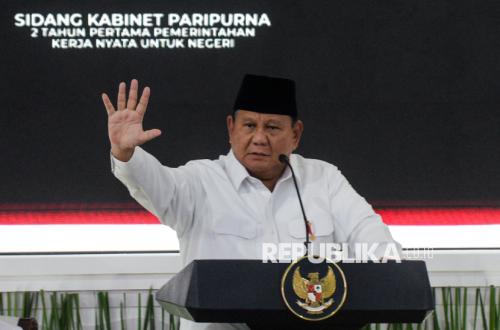
JAKARTA — President Prabowo Subianto has described Morgan Stanley Capital International (MSCI) as one of the challenges facing Indonesia, saying the country is not afraid and will not be intimidated by the global index provider amid scrutiny of the domestic capital market.
“We still face many difficulties. There are still many disruptions. We continue to be confronted with challenges. What are they? Various things. MSCI, among others. They want to intimidate us,” Prabowo said in Jakarta on Wednesday (21 October 2026).
He said Indonesia had the strength and courage to face various challenges, adding that the country did not know the meaning of surrender.
“I would only say to MSCI that the Indonesian nation is afraid of no one and will not be daunted. We are not afraid. We have strength,” he said.
“We have courage. And we are willing to make sacrifices. And we do not know how to give up,” Prabowo continued.
The remarks came amid attention to MSCI’s review of the Indonesian stock market. The developments have also raised questions about their effect on investor confidence and the movement of the Jakarta Composite Index (JCI).
Coordinating Minister for Economic Affairs Airlangga Hartarto said Indonesia was not dependent on a single index or ratings provider. MSCI was not the only benchmark, he said, noting that there were other index providers, including FTSE Russell.
“We are confident about the governance arrangements being prepared. Indonesia does not depend on just one rating,” Airlangga said.
He also said Indonesia’s economic fundamentals remained solid. Economic growth stood at 5.45 per cent, inflation was around 3 per cent, and foreign exchange reserves were relatively strong, covering about five months of imports.
Fitch Ratings, meanwhile, said the impact of a possible reclassification of Indonesia’s stock market by MSCI on the country’s credit profile would depend on investor confidence and domestic and external funding conditions.
Fitch said the potential reclassification was unlikely to have a material direct impact on Indonesia’s credit profile. However, a prolonged loss of investor confidence leading to capital outflows could tighten financial conditions.
Bhima Yudhistira, executive director of the Center of Economic and Law Studies (CELIOS), said foreign investors’ stock selling was a warning for the government to respond substantively to MSCI’s review.
In Bhima’s view, investors had yet to see a significant change in the government’s approach to capital-market governance issues. A response he characterised as tending to deny the problems risked further eroding investor confidence.
“What is being asked for is substantive change in enforcing the rules against share manipulation, in free-float regulations, and in the independence of the Indonesia Stock Exchange,” Bhima said.
Bhima also criticised President Prabowo’s remark that villagers do not trade shares, saying it risked undermining the credibility of policy in investors’ eyes.
He forecast that pressure on the stock market would continue over the following week. Bhima said foreign investors’ net sales since January 2026 had reached Rp 88.1 trillion.