
Prabowo Rejects Neoliberal Theory, Says Indonesia Is on the Right Path
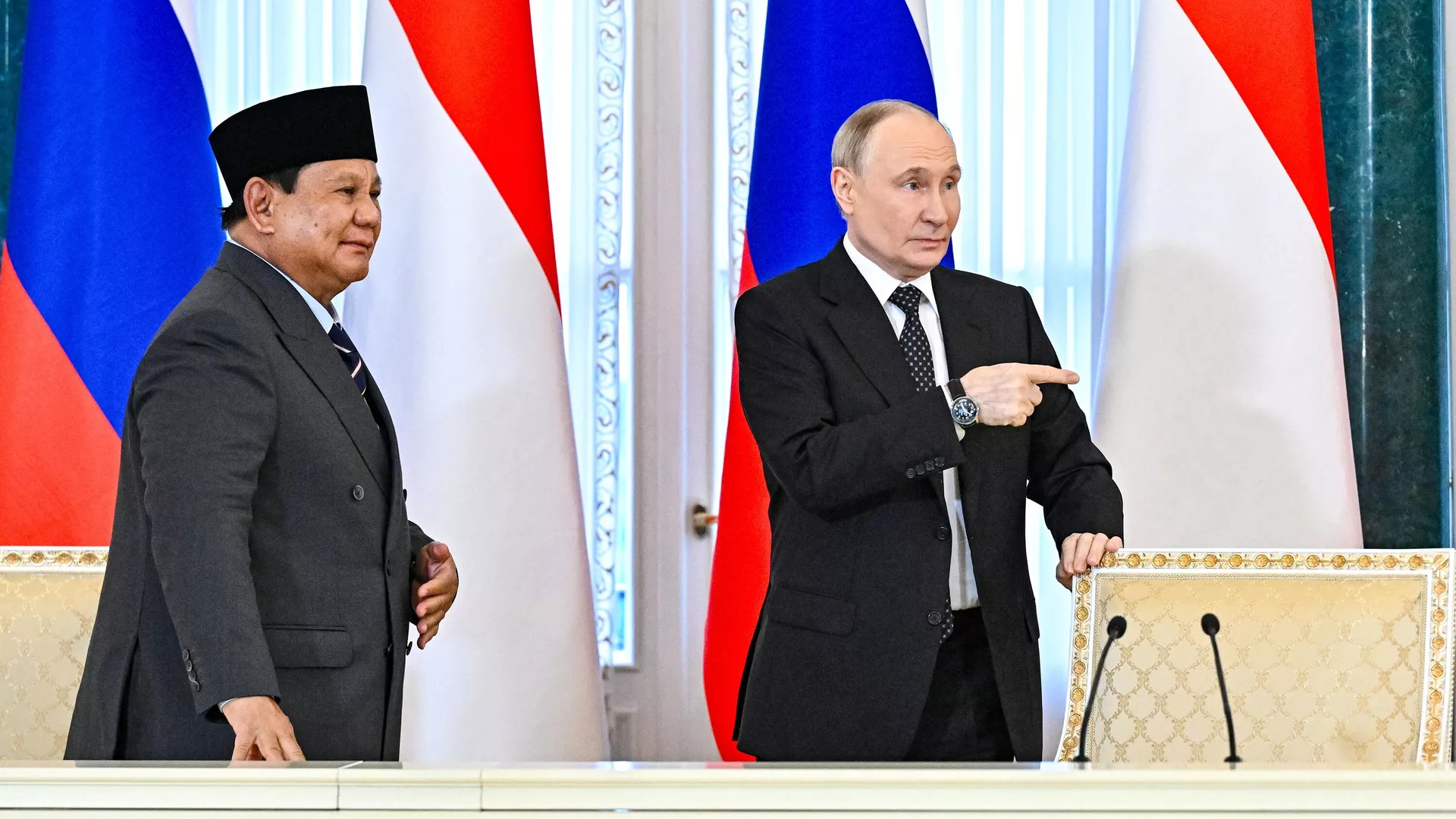
President Prabowo Subianto has asserted that Indonesia must not rely entirely on neoliberal theory and free-market mechanisms for its economic development. He made the statement while inaugurating 80,081 ‘Merah Putih’ (Red and White) Village Cooperatives in Klaten, Central Java, on Monday, 21 July 2025. In Prabowo’s view, it is insufficient for the state to merely create economic growth and then wait for the results to trickle down from the wealthy and capital owners to the lower classes. He argued that this process can be extremely slow, while the people require faster improvements in welfare, employment, affordable food, health services, and access to capital. Consequently, Prabowo is promoting an economic approach that grants a larger role to the state, cooperatives, state-owned enterprises, and national businesses. The establishment of the Merah Putih Village Cooperatives is positioned as a direct intervention to ensure that economic activity, distribution of goods, financing, and profits reach village communities. The government describes the programme as part of an effort to build a more inclusive economy starting from the village level. Neoliberalism is an economic and political school of thought that places markets, competition, private ownership, and freedom of enterprise as the primary drivers of the economy. In this approach, the government’s role is limited to creating rules, maintaining stability, protecting property rights, and ensuring competition functions, while production and distribution are largely left to private companies and market price mechanisms. Policies often associated with neoliberalism include the privatisation of state-owned enterprises, deregulation, free trade, the opening of investment and foreign capital flows, reduction of government subsidies, limiting budget deficits and state spending, and handing price controls to the market. In practice, the state does not disappear entirely but plays a strong role in shaping regulations and institutions that support market operations. The term itself is often debated, and not all governments that implement privatisation and deregulation identify as neoliberal; the label is more frequently used by academics and critics to describe a set of market-oriented policies. Prabowo’s critique of neoliberalism is often linked to the trickle-down theory, which posits that providing space for investment and high-income groups will eventually benefit the broader population through job creation, rising incomes, and tax revenue. The problem, however, is that economic growth does not automatically lead to equality. Wealth can become concentrated among capital owners if labour positions are weak, competition is unfair, education is unequal, and the state lacks adequate redistribution policies. The IMF itself has assessed that certain policies associated with neoliberalism, particularly capital account liberalisation and overly tight fiscal consolidation, can increase inequality, which in turn may undermine the strength and sustainability of economic growth. The core issue is not simply whether growth occurs, but who reaps the greatest benefits from it. Neoliberal policies are typically implemented through a combination of measures: privatising state-owned enterprises to improve efficiency, reducing regulations to allow businesses to move faster, lowering import tariffs to increase competition, cutting subsidies on the grounds they are poorly targeted and burden state budgets, and maintaining fiscal discipline by limiting debt and deficits. However, aggressive austerity can reduce spending on health, education, social protection, and infrastructure. No country has applied neoliberalism in a pure form; most combine market mechanisms with subsidies, social protection, and government intervention. Historical examples often cited include the United Kingdom under Margaret Thatcher in the 1980s, which privatised numerous state-owned companies, curbed trade union power, and deregulated markets, transforming the British economy but also drawing criticism for industrial closures and rising unemployment in former industrial regions.