
Prabowo Receives National Economic Council Study: Free Nutritious Meals Programme Positively Impacts MSMEs
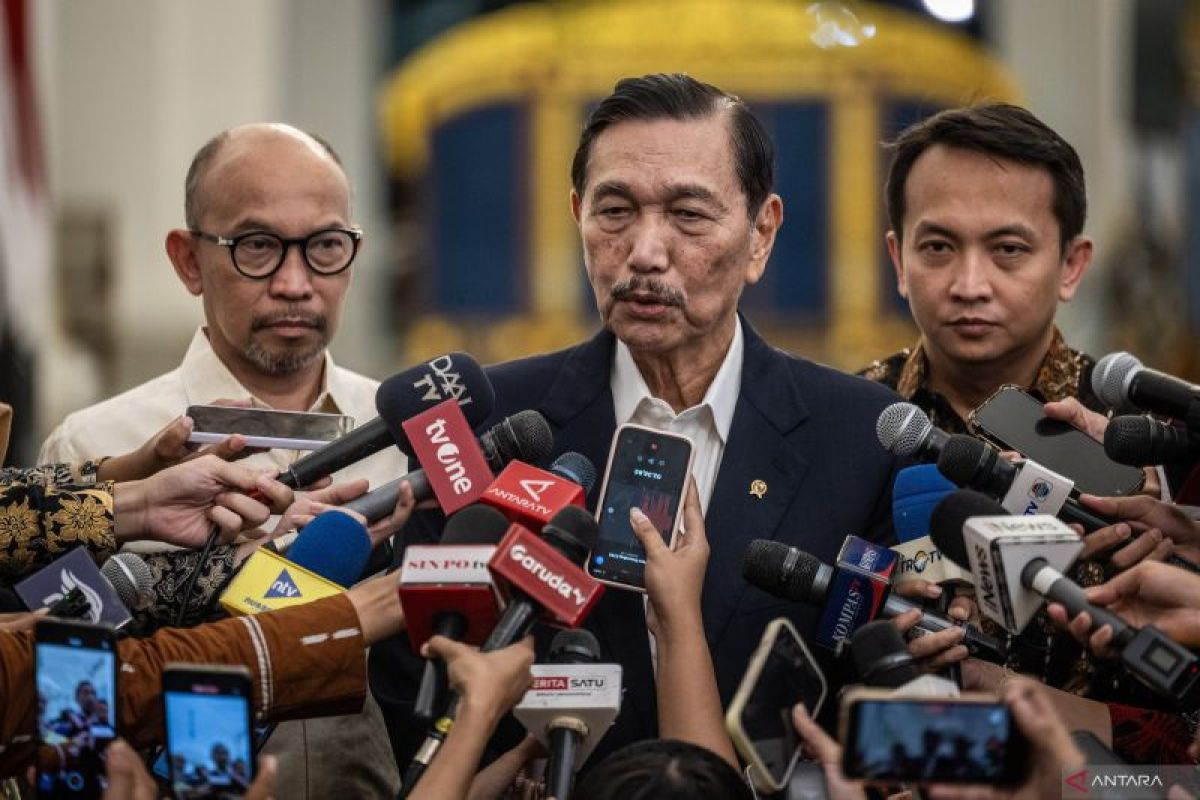
Jakarta (ANTARA) - President Prabowo Subianto received the results of a survey by the National Economic Council (DEN) specifically examining the impact of the Free Nutritious Meal (MBG) programme on micro, small, and medium enterprises (MSMEs) during a meeting at the Presidential Palace in Jakarta on Tuesday afternoon.
The DEN delegation meeting President Prabowo was led by the Chairman of the DEN, Luhut Binsar Pandjaitan, accompanied by Septian Hario Seto as a member and Executive Secretary of the DEN, Mochammad Firman Hidayat as a member, and senior economist and former Finance Minister Chatib Basri.
“We were summoned by the President. I believe the first explanation is the results of the survey conducted by the Economic Council regarding the implementation of the nutritious meal programme (MBG), which was carried out across 800 points, professionally,” said Luhut during a press conference following the meeting with President Prabowo at the Merdeka Palace courtyard, Jakarta, on Tuesday night.
Luhut then requested his member, Septian Hario Seto, to explain the key highlights from the DEN survey results regarding the MBG programme.
The DEN survey targeted 800 Nutrition Fulfillment Service Units (SPPG) selected randomly using computerised sampling.
“There were 800 points chosen via random sampling. The computer selected the samples, ranging from South Nias and Halmahera to Papua and various other regions. Therefore, this can be described as representative of the total population of existing SPPGs,” said Seto during the same press conference.
“These are MSMEs located near the SPPG sites. On average, there are three MSMEs partnered with each SPPG. This proves that the SPPG MBG programme, in addition to achieving the President’s goal of improving the nutrition of Indonesian children, is also creating a new supply chain ecosystem,” he added.
Seto continued by noting a second positive impact: 64–65 per cent of the MSME sector within the MBG supply chain ecosystem is located in the same area as the SPPGs.
This means, as Seto clarified, that the raw material suppliers are not large corporations, but rather local MSMEs situated in the same regions as the SPPGs.
As a third positive impact, Seto stated that the DEN survey shows 99 per cent of the workforce absorbed by the SPPGs consists of residents living near the SPPG locations.
Nevertheless, the DEN provided several recommendations following the study, including the need for capital assistance for MSMEs that have the potential to enter the SPPG supply chain ecosystem.
“This would allow them to have better working capital, ultimately enabling them to serve more SPPGs and offer a more diverse range of commodities,” said Seto.