
Prabowo questions why critics of free meals programme ignore 'transfer pricing'
Jakarta (ANTARA) - President Prabowo Subianto has questioned why economic leakages such as transfer pricing and under-invoicing receive little scrutiny, whilst the Free Nutritious Meals (MBG) programme is criticised as wasteful spending.
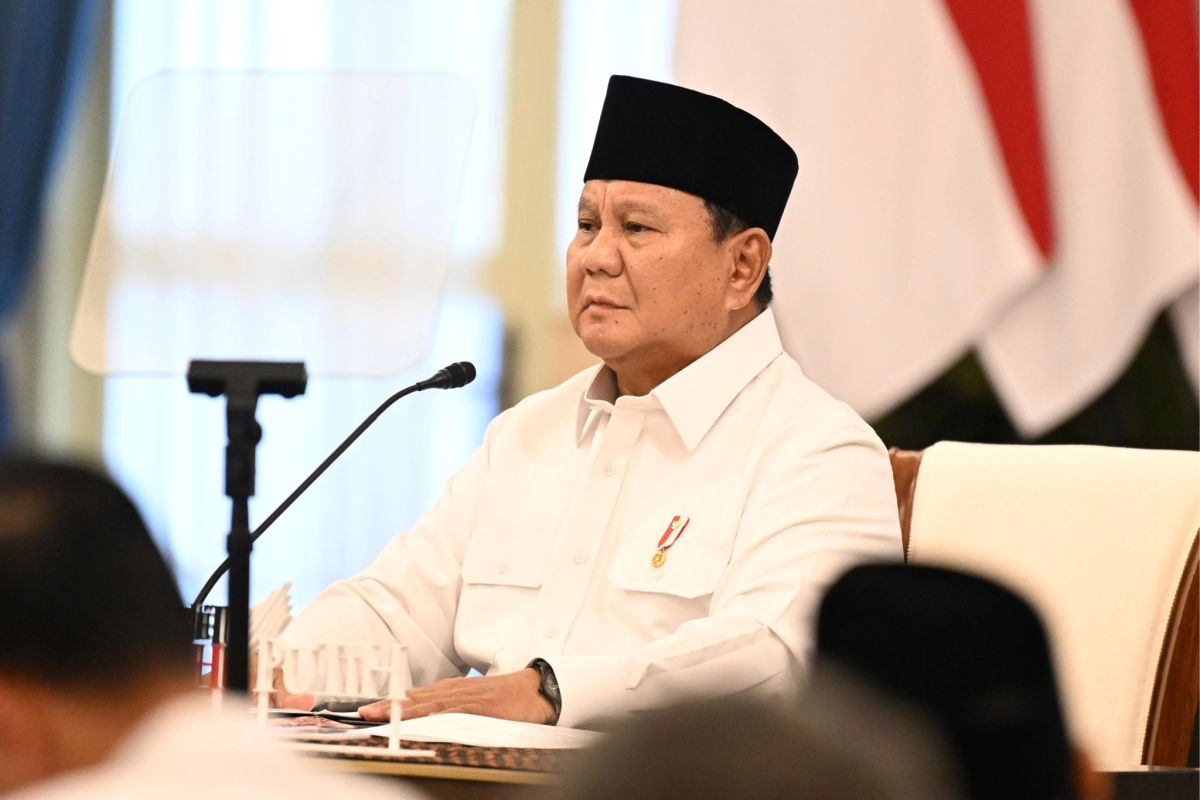
“Feeding Indonesian children, pregnant mothers and the elderly is regarded as wasteful, yet thousands of trillions that evaporate, that leave Indonesian soil every year for 34 years, attract no comment. No expert protests,” Prabowo said at the State Palace in Jakarta on Monday.
Transfer pricing and under-invoicing are practices carried out by companies to shift profits to low-tax jurisdictions in order to minimise the overall tax burden of a business group.
Such manipulation is highly detrimental to the state, resulting in the loss of valuable potential tax and import duty revenue.
Meanwhile, the President said, the government has instead faced criticism when implementing its programme to provide nutritious meals for schoolchildren, pregnant women and other vulnerable groups.
“Yet when we want to feed children, when clearly at least a quarter of our children suffer from stunting, and many also do not eat at school, we are accused of wastefulness. We are told the economy will collapse, share prices will plummet, the currency will weaken,” Prabowo said.
Earlier, Prabowo revealed that economic leakages occur through various practices such as under-invoicing, falsified trade reports, transfer pricing and smuggling, which he said have caused Indonesia’s wealth to flow abroad.
According to the President, the data on these practices comes from various international institutions and was not compiled by the government.
Prabowo said the government remains convinced that the MBG programme forms part of fulfilling the constitutional mandate to improve public welfare.
He also affirmed that the government’s economic policies are based on the mandate of the 1945 Constitution of the Republic of Indonesia, particularly Articles 33 and 34, which govern the management of the economy for the greatest prosperity of the people and the state’s obligation to care for the poor and abandoned children.
The mid-year plenary Cabinet session was held as a forum to evaluate the performance of the Red-and-White Cabinet ahead of the President’s state address in August 2026.