
Prabowo Pushes Downstream Processing in 35 New Deals with China
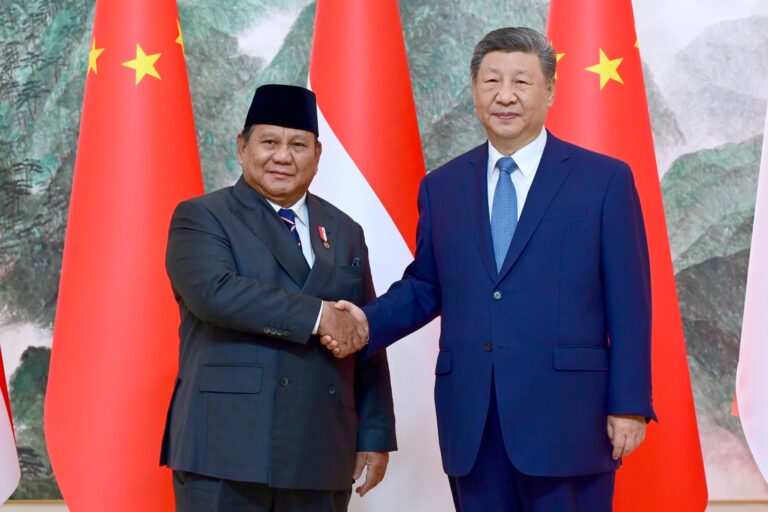
SHENZHEN, China – For decades, Indonesia has been known as a country that sells raw materials and then buys back finished goods at high prices. On Friday (20 November 2026), in Shenzhen, an effort was made to reverse that pattern.
At the 2026 Indonesia-China Business Forum, Indonesian and Chinese businesses signed 35 agreements involving planned investment of US$15.76 billion, or around Rp274 trillion.
But President Prabowo Subianto did not focus on the size of the figure. He spoke about what would be processed domestically.
“Today, I witnessed 35 very large and very important agreements,” Prabowo said in a press release, quoted on Tuesday (24 November 2026).
The President said the cooperation could boost downstream processing in Indonesia while strengthening economic ties between the two countries.
Data from the Ministry of Investment and Downstreaming/BKPM as at 20 November 2026 show that 30 of the 35 agreements were memoranda of understanding worth US$12.50 billion. These comprised 19 new investment plans worth US$9.83 billion and 11 business expansion plans worth US$2.67 billion. The remaining five agreements, worth US$3.26 billion, had already reached the construction stage.
The sectoral breakdown reflects the downstreaming agenda.
The largest share of investment is earmarked for the development of integrated industrial estates, worth US$4.70 billion, or around 30 per cent of the total. These are the foundations of downstream processing: places where raw materials are processed rather than simply sent to port.
Chemicals and petrochemicals rank second, with US$4.30 billion, or 27 per cent. These industries turn oil, gas and minerals into higher-value products, from plastics and fertilisers to pharmaceutical materials.
Energy ranks third, at US$2.05 billion, or around 13 per cent. Projects include liquefied natural gas (LNG), biofuels and solar power. This means energy, too, is not just exported in raw form but processed to support domestic industry.
The remaining investment is spread across sectors also closely linked to downstream processing: manufacturing; healthcare and pharmaceuticals; the digital economy and finance; mineral and battery processing; waste-to-energy; and food and agribusiness.
From Nickel to Batteries, from Waste to Energy
This pattern is no coincidence. The Shenzhen agreements appear to continue Indonesia’s nickel downstreaming drive, which began several years ago. The effort is now expanding from minerals and batteries to petrochemicals, food and even the conversion of waste into energy.
Indonesia no longer wants to be merely a supplier of raw nickel for China’s electric-vehicle batteries. It wants battery factories, industrial estates and jobs to be based in Indonesia.
The projected impact reflects this ambition: the 35 agreements are expected to create 30,461 jobs in Indonesia. Ultimately, downstream processing is not just about factories, but also about the people who work in them.
The Ministry of Investment and Downstreaming/BKPM stressed that the 35 business agreements worth US$15.76 billion are separate from four strategic cooperation memoranda worth US$71.8 billion, which were also exchanged in the presence of President Prabowo in Shenzhen on 18 November 2026.
The US$71.8 billion concerns strategic cooperation at government level. The US$15.76 billion covers business cooperation between companies, making it more concrete and closer to implementation on the ground.
The forum was organised by Kadin Indonesia, together with KIKT and the Ministry of Investment and Downstreaming/BKPM, as part of President Prabowo’s working visit to Shenzhen to attend the 33rd APEC Summit.
The President was accompanied by Investment and Downstreaming Minister and BKPM Head Rosan Perkasa Roeslani, Kadin Indonesia Chairman Anindya Novyan Bakrie, and Indonesia-China Chamber of Commerce and Industry (KIKT) Chairman Garibaldi Thohir.
BKPM has pledged to facilitate and oversee follow-up on all the agreements, from licensing through to investment realisation. The aim is to turn the agreed cooperation plans into business activities that add value to the national economy.
This is the biggest challenge facing Indonesia’s downstreaming drive. The memoranda signed in Shenzhen will not automatically become factories. They must pass through licensing, land acquisition, energy availability and the readiness of a skilled workforce.
Source: jawawa.id (https://jawawa.id/newsitem/prabowo-pushes-downstream-processing-in-35-new-deals-with-china-1795513850)
Originally published by dunia-energi.com (https://www.dunia-energi.com/prabowo-dorong-hilirisasi-di-35-kesepakatan-baru-dengan-tiongkok/), translated from Indonesian