
Prabowo pushes desalination for NTT
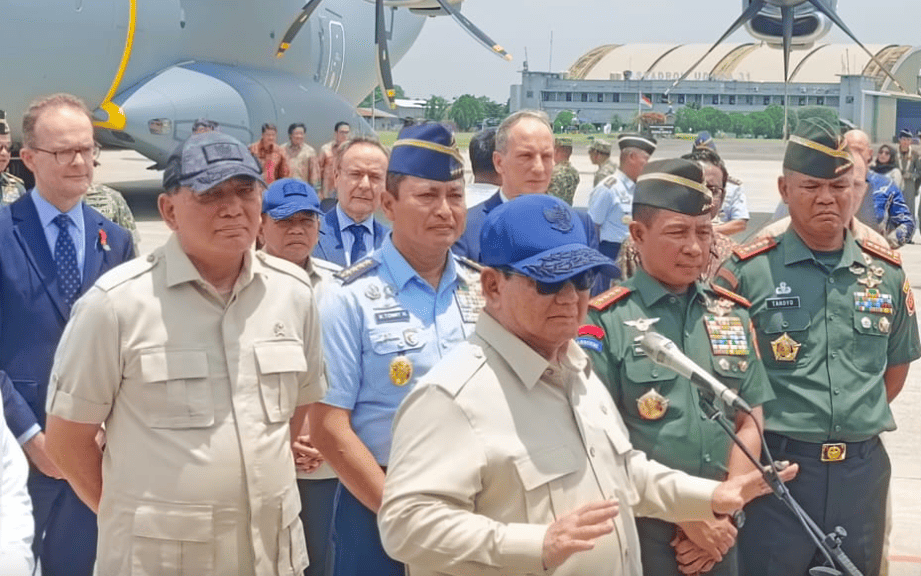
President Prabowo Subianto has requested the development of desalination technology to expand access to clean water in East Nusa Tenggara (NTT), a region with limited water sources. The technology is considered important, especially for island areas such as Palue Island in Sikka Regency, which require alternative water supplies beyond conventional sources.
The directive was delivered by Prabowo while chairing an earthquake response meeting at the Earthquake Handling Post of Infantry Battalion 834/WM in Nagekeo Regency, NTT, on Wednesday, 26 August 2026.
During the meeting, Minister of Public Works Dody Hanggodo reported on the condition of clean water provision in several earthquake-affected areas. Palue Island was a particular concern because its characteristics as a volcanic island make water availability a fundamental problem. “So for Palue, in addition to the roads that we have long been preserving, we will also prioritise the basic need for water, Sir,” he said.
To address the issue, the government is preparing repairs to rainwater harvesting facilities damaged by the earthquake. The Ministry of Public Works is also coordinating with the National Research and Innovation Agency (BRIN) to explore the use of reverse osmosis technology that can turn seawater into fresh water.
“I have also telephoned the Head of BRIN, Sir. We will try reverse osmosis technology, which can turn seawater into fresh water,” said the Public Works Minister.
Responding to the report, Prabowo asked that Indonesia not rely solely on foreign technology. He wants desalination technology that can be produced or developed domestically to be prepared immediately and sent to areas in need.
“I ask BRIN, perhaps with the Defence University, the TNI, and engineering faculties, to ensure desalination technology that we are capable of building ourselves is immediately sent to areas that urgently need it,” he said.
According to Prabowo, water problems in disaster-affected areas should not be resolved only for the duration of the emergency response period. The government needs to prepare a sustainable strategy so that communities have adequate access to water in the long term. “Water is very important. So beyond the short term, we must think about medium- and long-term efforts,” Prabowo said.
Prabowo noted that technological advances have made desalination easier to implement than a few decades ago. Whereas the technology previously required large costs, developments now make it possible to apply seawater processing down to village scale.
“Disasters push us to think more creatively. With this, we realise that for this region, reforestation and water are now supported by science and technology that have made many technologies much cheaper. Desalination 30 years ago was unaffordable, only rich nations could do it. Now we can build desalination at village level,” he said.
The development of clean water systems is also intended to be synergised with energy provision. Prabowo proposed the use of solar power through the construction of solar power plants in unproductive mountainous areas. The energy could then support various economic activities in the region.
“Here, if necessary, we can build solar power plants on unproductive mountains. How many gigawatts of solar power here as an energy source for productive economic projects. I am optimistic this region can become a food source for the nation and the world,” said the Head of State.
With water and energy support, Prabowo wants NTT’s recovery not to stop at repairing earthquake damage. The basic infrastructure is expected to become a foundation for developing various economic sectors suited to the region’s characteristics.
The marine sector is seen as having major prospects. Prabowo believes fisheries and seaweed cultivation can be developed more optimally in NTT waters, which he considers to still hold great potential.
“Fisheries are very promising in this region. From the plane, the sea is deep blue and unpolluted. Later you can develop seaweed fisheries here. That is why I asked about the beaches earlier,” Prabowo said.
The government is directing post-disaster recovery as an opportunity to build NTT with stronger foundations. The provision of water through desalination, the use of renewable energy, reforestation, and the development of agriculture and the marine economy are expected to proceed together.