
Prabowo Prepares 40,000 Villages for Fish Farming with Norwegian Technology
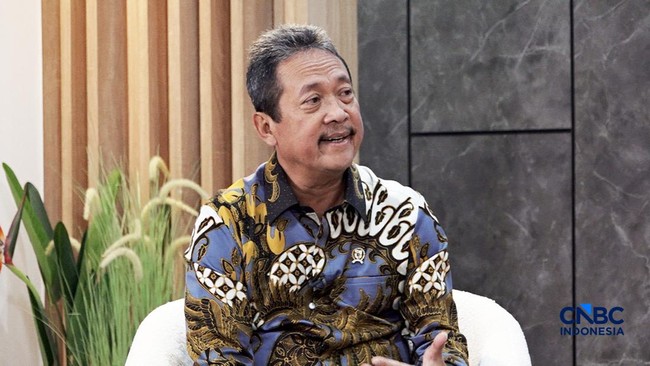
The government is beginning preparations for the development of large-scale fish farming in 40,000 villages as part of efforts to strengthen food security while increasing national animal protein production. The programme, initiated by President Prabowo Subianto, will rely on Mini Recirculating Aquaculture System (Mini RAS) technology adopted from Norway. Minister of Marine Affairs and Fisheries Sakti Wahyu Trenggono stated that the development of thematic aquaculture is one of the strategies to strengthen national fisheries production amid continuously rising food demand. “Moreover, thematic aquaculture is now being developed by the President. So, thematic aquaculture in every village will be built using Mini RAS technology. This is excellent technology that we have adopted from Norway,” Trenggono said during CNBC Indonesia’s Economic Update 2026 on Thursday (25/6/2026). He explained that the programme will be implemented in stages. However, if the entire target of building 40,000 aquaculture villages is realised, the national demand for fish seeds will surge very significantly. “Just imagine, we have been asked to build 40,000 village points. If that happens, and one point produces 30 tonnes, even just 1,000 villages would yield a substantial amount. What about 40,000 villages? We would need approximately 15 billion seeds every year for the upstream and downstream sectors alone,” he clarified. The development of thematic aquaculture will not be uniform across Indonesia. The commodities cultivated will be adjusted to the characteristics of the region and the consumption preferences of the local community, while also considering export market opportunities. “It is adjusted to the commodities favoured by the local community. In Java, for example, there are two types: catfish and tilapia,” he said. “Outside Java, there are several commodities we are developing, such as carp and gourami. These are what we are developing,” Trenggono continued. According to him, the choice of commodities will continue to be expanded following market demand in each region as well as export needs. “We will adjust it according to the demand conditions and regional preferences. At the same time, it is also for export purposes, like pangasius for instance, we can develop in that direction,” he stated. On the other hand, Trenggono confirmed that national fisheries sector production is currently still able to meet public consumption needs while recording a trade surplus. He noted that Indonesia’s capture fisheries production averages 7.5 million tonnes per year, while aquaculture production is around 5.5 million tonnes. Thus, total national fish production reaches approximately 13 million tonnes annually. Meanwhile, seaweed production reaches around 10 million tonnes per year, bringing the total production of the marine and fisheries sector to about 24 million tonnes per year. “Our average production is 7.5 million tonnes for capture fisheries. Meanwhile, aquaculture is around 5.5 million tonnes, making 13 million tonnes per year. Seaweed is about 10 million tonnes, so the total is roughly 24 million tonnes a year,” Trenggono detailed. He emphasised that Indonesia’s fisheries sector continues to record a trade balance surplus, as export values are far higher than imports. “Specifically for the fisheries sector, these 13 million tonnes, Indonesia is always in surplus. This means our exports are higher than our imports. Our exports average US$6.5 billion, while our imports are less than US$1 billion, roughly around US$600 million. So we are always in surplus,” he said. “And for domestic needs, the availability of protein from the fisheries sector is sufficient,” he concluded.