
Prabowo Plans to Form Deregulation Task Force: Will it be Enough to Address Business Obstacles in Indonesia?
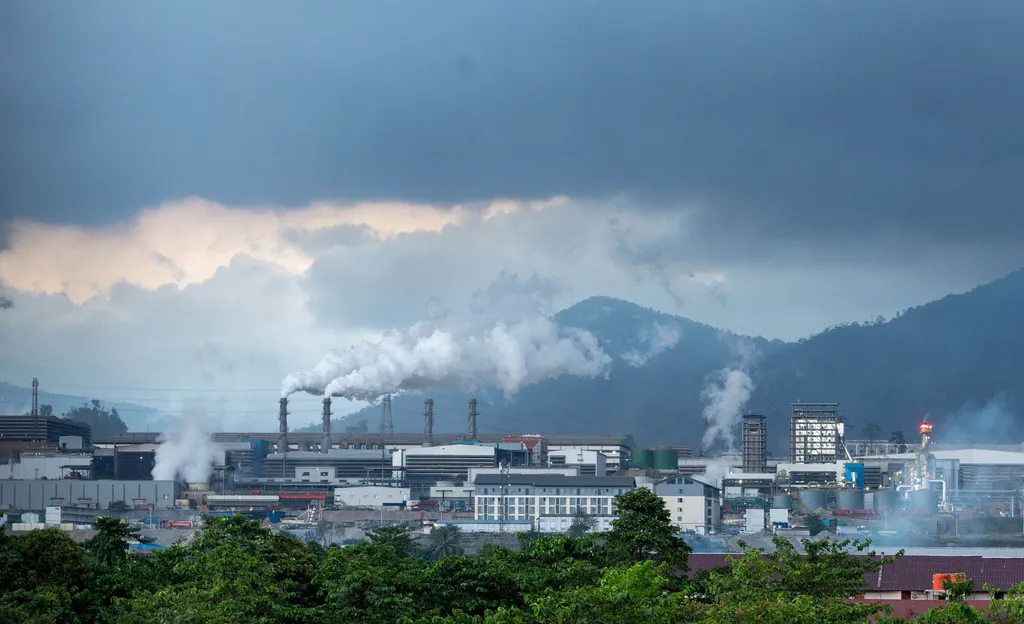
Reflecting on past experiences, the formation of a new task force is often insufficient to resolve the structural problems hindering investment in Indonesia.
By Aguido Adri
May 15, 2026 15:07 WIB · Economy & Business
JAKARTA, KOMPAS — The plan to form a Deregulation Task Force by President Prabowo Subianto is considered insufficient to address the fundamental issues of the national investment climate. Without strong political commitment and improved legal certainty, the task force risks being merely a “cosmetic” measure with no real impact on the business world.
Economist Wijayanto Samirin of Paramadina University said that the idea of forming a Deregulation Task Force was actually conveyed by President Prabowo last year during an Economic Forum with academics, economists, and business actors.
At that time, the proposal to form a Deregulation Task Force emerged as one of Indonesia’s responses to the implementation of reciprocal tariffs by US President Donald Trump. However, to date, no concrete realization has been seen in the field.
“This idea has been conveyed since April 2025, but until now there has been no realization. So, this (formation of the task force) is not a quick response. If it is truly formed, there must be strong political will from the president to listen (to the complaints of business actors) and implement the task force’s recommendations,” said Wijayanto when contacted, Thursday (15/5/2026).
As previously reported, the China Chamber of Commerce in Indonesia sent a letter to President Prabowo Subianto regarding various investment obstacles that are considered burdensome for Chinese investors.
In the letter, Chinese investors highlighted various classic problems that hinder investment in Indonesia. These include overly strict regulations, excessive law enforcement, and several new policies, such as increased taxes and royalties, the obligation to retain export proceeds, reduced nickel ore quotas, stricter work permit requirements for foreign workers, and alleged practices of corruption and extortion by authorities.
Wijayanto continued, the success of deregulation does not only depend on the formation of a new institution. The President needs to take direct action to ensure that the task force’s recommendations are implemented by relevant ministries and agencies.
Government policies have also been seen as eroding business confidence, such as efforts to withhold tax refunds, audits of “tax amnesty” participants, and a tendency to nationalize a number of businesses.
“Without the president’s direct role in ensuring that recommendations are implemented, the task force will not produce anything. It risks only producing cosmetic decisions,” he said.
From the perspective of political economy, based on past experiences, Wijayanto sees that the formation of a new task force will not solve the structural problems of bureaucracy and investment. “Based on the experience of the last two years, the task force has not had an adequate impact,” he said.
Various regulatory reform and investment acceleration programs that have been implemented by the government have also not been effective in improving the investment climate. The main problem lies in the still weak legal certainty.
“About 80 percent of the problems with our investment climate lie in the poor legal certainty, which is reflected in the criminalization of public policy and corporations. This makes various parties worried and reluctant to invest and run businesses,” he said.
In addition to legal issues, about 20 percent of investment obstacles come from overlapping regulations and the still weak quality of bureaucracy.
Several government policies have also been seen as eroding business confidence, such as efforts to withhold tax refunds, audits of tax amnesty participants, and a tendency to nationalize a number of businesses. This condition can damage business confidence.
“Investors from the European Union, the United States, Japan, and South Korea have long complained. Recently, Chinese investors have also begun to express their dissatisfaction,” he said.
Even if there are still investors who are interested in Indonesia, policy uncertainty makes investors tend to choose sectors with simple supply chains and based on natural resources, such as coal, crude palm oil (CPO), and nickel.
In contrast, investment in high-tech manufacturing sectors is considered to be increasingly avoided because it is considered risky.
“Investors will avoid sectors with long and complex supply chains such as gadgets, computers, advanced pharmaceuticals, and biotechnology. In fact, these sectors generate high added value, quality jobs, and significant tax revenue,” he said.
According to Wijayanto, this condition risks accelerating the pace of deindustrialization in Indonesia. As a result, job opportunities will become more limited and will eventually lead to the welfare of the community.
If the government does not realize this soon, it will cause economic difficulties and widespread dissatisfaction that could lead to socio-political instability.
Meanwhile, Researcher at the Institute for Economic and Social Research, Faculty of Economics and Business, University of Indonesia (LPEM FEB UI) Teuku Riefky said that the formation of a task force will only be a symbol of the government’s quick response if it is not followed by concrete steps.
Various task forces that have been formed by the government in the past have also not shown a significant impact on improving the business and investment climate in the country.
Not only that, there is also the impression that the government “promises” or plans to form a task force, but is slow or does not follow up.
“The point is that it’s all in the implementation. We remember at the economic forum last year, right after Eid, Prabowo said he would carry out deregulation. In fact, the regulatory debottlenecking only appeared at the end of last year. So, there is a pattern that government statements are not necessarily quickly translated into concrete steps,” said Riefky.
He assessed that Indonesia’s main weakness compared to competing countries in the region, such as Vietnam, Malaysia, and Singapore, lies in legal certainty.