
Prabowo Orders In-Depth Review of the Definition of Corruption
Indonesian President Prabowo Subianto has instructed his administration to conduct an in-depth review of the definition of corruption.
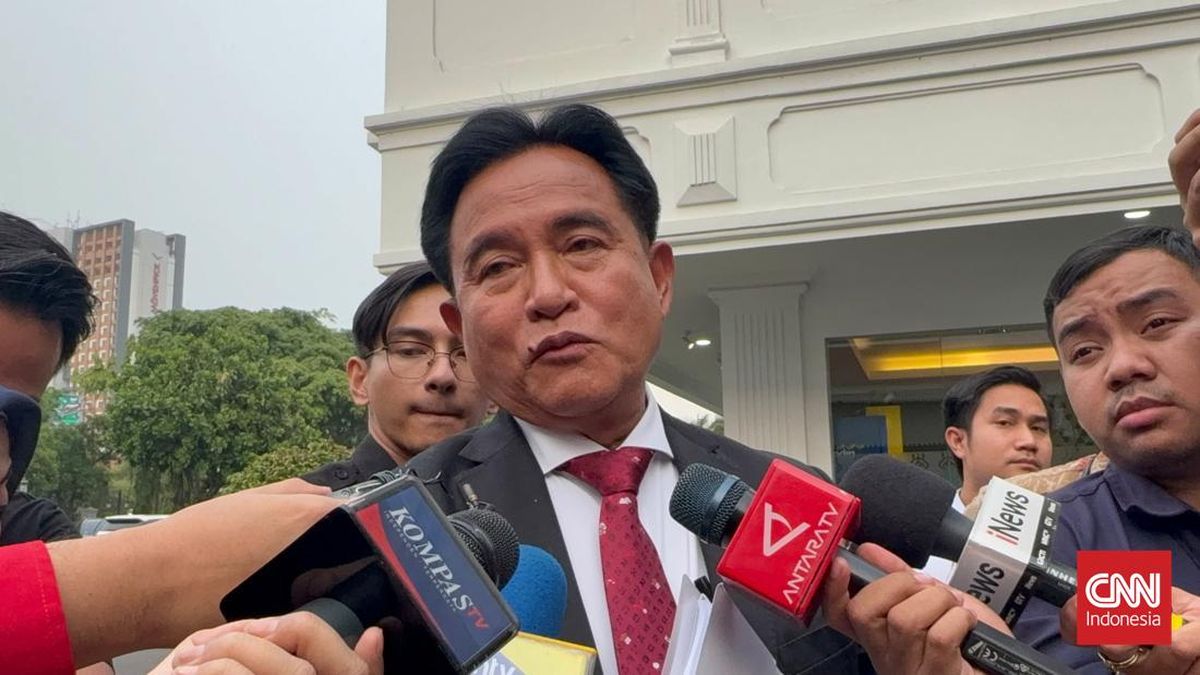
Coordinating Minister for Law, Human Rights, Immigration and Corrections Yusril Ihza Mahendra said Prabowo had asked for the review to formulate a definition of corruption suited to current conditions.
“He asked for a more in-depth study so that we can formulate a definition of corruption that fits the situation our country is facing,” Yusril said at the Presidential Palace in Jakarta on Monday (26 October).
Yusril cited under-invoicing as one example of a practice that clearly harms the state but is not yet classified as a corruption offence.
“If someone engages in illegal fishing or under-invoicing in the mining sector, they clearly harm the country’s economy, and that should also be considered corruption,” he said.
He said the review would involve a range of qualified parties from different sectors, including academics and activists.
Indonesia’s Anti-Corruption Law, Yusril said, has not been revised since 2001, while the UN Convention against Corruption (UNCAC) was ratified through Law No. 7/2006.
He also stressed the importance of aligning the Anti-Corruption Law with UNCAC and called for revisions to Law No. 31/1999, as amended by Law No. 20/2001, on the Eradication of Corruption.
He said amendments were increasingly necessary as they would coincide with changes to Indonesia’s Criminal Code and Criminal Procedure Code.
“A bill on asset forfeiture is also being discussed now. Inevitably, there will also need to be harmonisation with the current Anti-Corruption Law,” he said.
The question of whether state losses should be removed from the definition of corruption came to the fore after National Economic Council chairman Luhut Binsar Pandjaitan said Prabowo had approved the council’s study, which suggested that corruption should be limited to bribery and exclude state financial losses.
Luhut later corrected his remarks. He said the recommendation to improve the Anti-Corruption Law did not remove state financial losses from the definition of corruption, and that Articles 2 and 3 of the law—or Articles 603 and 604 of the Criminal Code—would remain in force.
Luhut said the council’s recommendations focused on two points: clarifying the elements of proof to make law enforcement more certain, objective and consistent; and broadening the scope of anti-corruption efforts by adopting UNCAC offences not yet covered by national law.
UNCAC’s corruption offences include bribery of national public officials; bribery of foreign public officials and officials of public international organisations; embezzlement, misappropriation or other diversion of property by a public official; trading in influence; abuse of office or authority; illicit enrichment; bribery in the private sector; embezzlement of property in the private sector; laundering the proceeds of crime; concealment of the proceeds of crime; and obstruction of justice.
Meanwhile, Law No. 20/2001, the second amendment to Law No. 31/1999 on the Eradication of Corruption, classifies at least 30 acts as corruption offences. One concerns state financial losses, addressed in Articles 2 and 3.
Source: jawawa.id (https://jawawa.id/newsitem/prabowo-orders-in-depth-review-of-the-definition-of-corruption-1793022703)
Originally published by CNN Indonesia (https://www.cnnindonesia.com/nasional/20261026194957-32-1419879/prabowo-instruksikan-kaji-mendalam-pengertian-tindak-pidana-korupsi), translated from Indonesian