
Prabowo Opens Up About Four Presidential Election Defeats, Jabs at Those Who Like to Stir Unrest
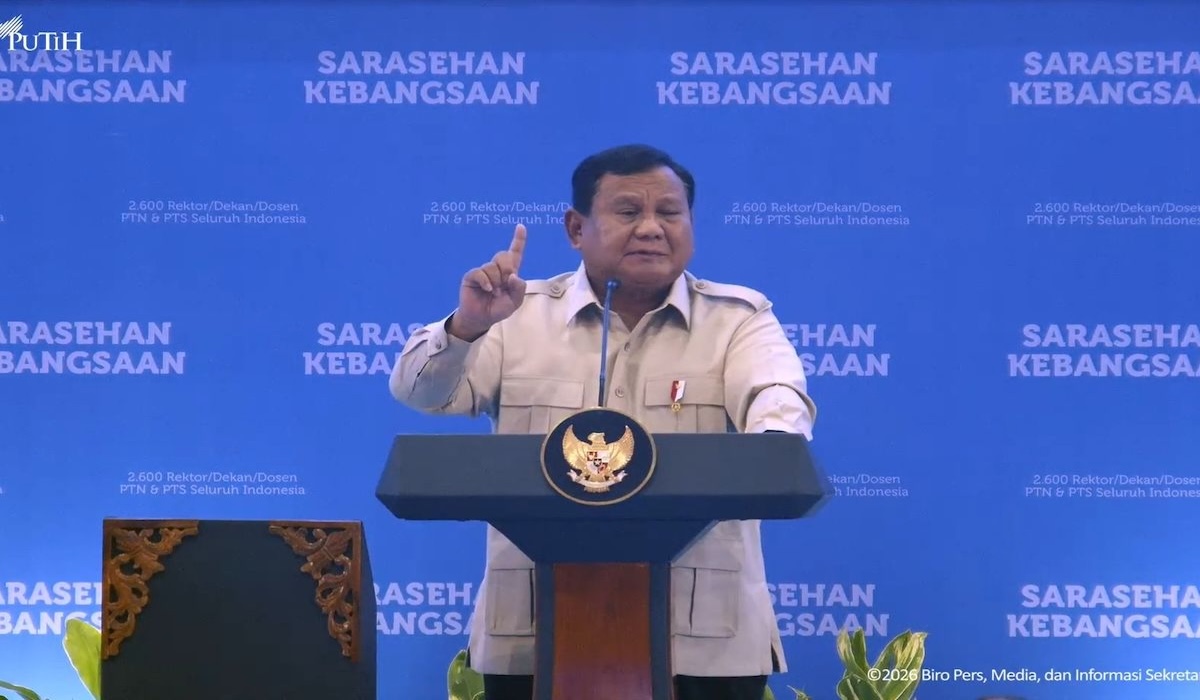
President Prabowo Subianto shared a rarely disclosed political experience, detailing his four defeats in presidential elections. Speaking before thousands of academics, he affirmed his stance of never disturbing the elected leader as a form of commitment to democracy. The strong message was delivered while opening the National Symposium at the Jakarta Convention Centre on Friday (26/6), an event attended by 2,600 academics from across Indonesia. “I went to the people five times to ask for a mandate, four times I was not given the mandate. Four times I lost, but I did not disturb the leader who received the mandate,” Prabowo said. Prabowo explained that this gracious attitude stemmed from the awareness that the Indonesian nation had agreed to uphold the sovereignty of the people. According to him, the manifestation of that sovereignty is democracy realised through general elections. In his speech, Prabowo appeared to take a jab at parties who struggle to accept election results and tend to create commotion. He questioned when the nation could focus on welfare if energy is exhausted by disputing election results. “We may be dissatisfied, but what is the alternative? Do we want chaos? Every election ends in chaos. The losers make noise, the losers make noise. When will we move towards prosperity for our people?” he asked rhetorically. Beyond personal reflection, Prabowo used the momentum to invite the elite and intellectuals to reconsider the purpose of the state. He stressed that knowledge and intelligence must be dedicated to lifting the dignity of the weakest people. “Is that not our duty as children of the nation, as leaders, as the smartest people in this country? All our intelligence must be dedicated to our poorest and weakest people,” he concluded.