
Prabowo Opens Path to Dual Citizenship for Diaspora Talent
President Prabowo Subianto has proposed a change to the law to open the possibility of limited dual citizenship for the Indonesian diaspora and exceptional talent deemed capable of making a significant contribution to the national interest. The policy is directed not as mass dual citizenship, but rather a selective scheme for scientists, doctors, engineers, artificial intelligence experts, researchers, entrepreneurs, artists, athletes and world-class professionals who wish to maintain their ties with Indonesia.
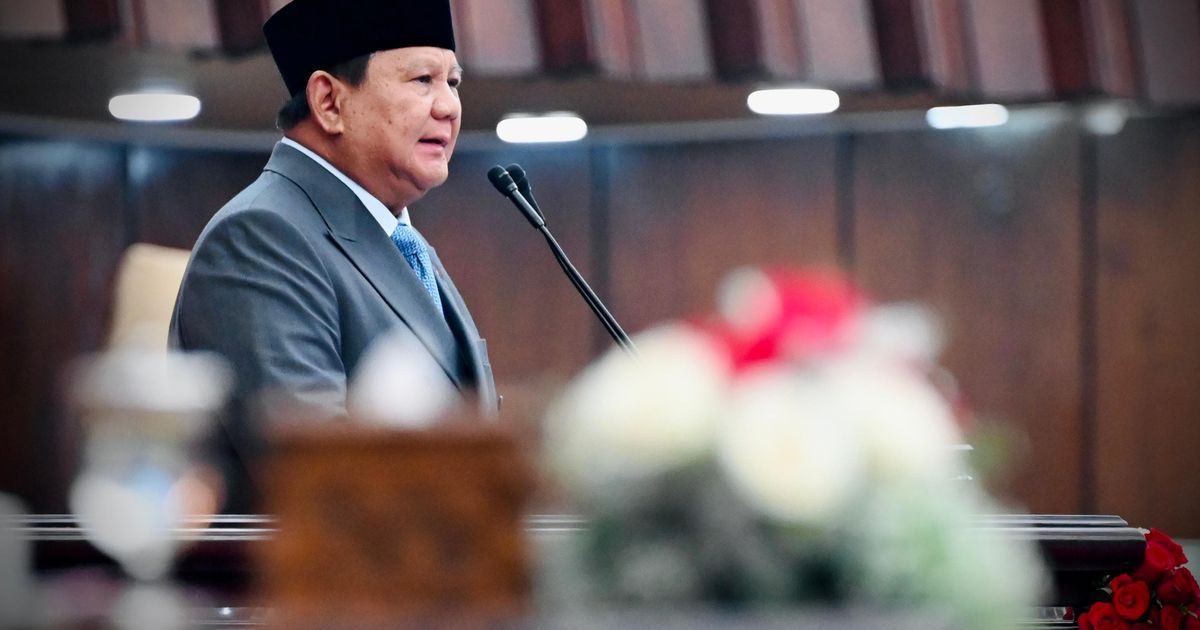
Prabowo conveyed the idea while delivering the Government Statement on the Draft Law on the State Budget for Fiscal Year 2027 along with its Financial Note at a Plenary Session of the House of Representatives (DPR RI) at the Parliamentary Complex, Senayan, Jakarta, on Friday (14/08/2026). In his speech, the President outlined a number of upcoming economic transformation agendas, including the development of the Indonesian International Financial Centre, optimisation of state assets, industrialisation through Danantara, the establishment of a Strategic Minerals and Commodities Exchange, and efforts to attract global capital and talent to Indonesia.
It is within this context that the issue of dual citizenship is placed. The government sees that Indonesia’s development cannot rely solely on financial capital. The country must also have the ability to attract, retain and connect the best human resources with national development needs.
Prabowo said Indonesia has millions of diaspora living and working in various countries. Among them are scientists, doctors, engineers, artificial intelligence experts, researchers, entrepreneurs, artists, athletes and world-class professionals.
Some of them, according to the President, have had to take citizenship of other countries due to career, family, professional or service considerations abroad. Such choices can make their legal relationship with Indonesia more limited, even though their family, cultural, economic and emotional ties to the homeland remain strong.
“We must not force Indonesia’s best talent to choose between the opportunity to work in the world and their ties to the homeland,” said Prabowo.
Because of this, the government will bring the idea to the DPR. Prabowo stated explicitly that opening dual citizenship requires a change to the law, so the policy cannot be implemented merely through an administrative decision of the government.
“Today the government will submit to this honourable house a change to the law to open dual citizenship on a limited basis,” said the President.
The emphasis on the word “limited” is important. Prabowo is not proposing that Indonesia change its citizenship system entirely so that every citizen can freely hold two passports.
The scheme will be directed at certain groups who possess exceptional abilities and can make an extraordinary contribution to the national interest.
The President said the policy will be designed selectively and measurably, equipped with integrity tests, clear obligations and mechanisms to protect the security and interests of the state.
Thus, the door to dual citizenship will be opened based on strategic benefit and fulfilment of requirements, not granted automatically to the entire diaspora.
The idea has a significant economic dimension. For decades, many developing countries have faced the problem of brain drain, whereby highly educated citizens with specialised skills move to other countries because of better educational, research, income and career opportunities.
Indonesia also faces a similar phenomenon. Indonesian children pursue education at world-renowned universities, then work at technology companies, research institutions, hospitals, financial centres and advanced industries abroad. Some eventually take citizenship of the country where they work.
The issue is not merely whether they remain abroad. What is more important is how Indonesia ensures that the skills, knowledge, networks and capital they possess remain connected to the national economy.
Limited dual citizenship can become one of the instruments to transform brain drain into brain circulation, even brain gain.
The diaspora need not be forced to abandon their global careers in order to contribute to Indonesia. They can remain within international networks while building companies, conducting research, investing, teaching, bringing technology or opening market access for Indonesia.
With such a pattern, the presence of the diaspora abroad can become an extension of Indonesia’s economic, technological and diplomatic networks.
The policy also reflects a shift in global economic competition. Countries now compete not only for investment and factories, but also for the best people.
Technology talent, biotechnology researchers, specialist doctors, engineers, programmers, semiconductor experts, artificial intelligence specialists, renewable energy experts and financial professionals have become resources contested by various countries.
Many countries provide professional visa schemes, permanent residency, golden visas, tax facilities, research programmes and citizenship pathways to attract highly skilled individuals.
In a knowledge-based economy, people can be an asset even more important than natural resources.
Therefore, if Indonesia wishes to develop semiconductors, artificial intelligence, electric vehicles, the defence industry, medical technology, clean energy, financial technology and high-technology manufacturing, the need for capital must go hand in hand with the availability of expert personnel.