
Prabowo Launches 29 Strategic Policies to Eradicate Extreme Poverty
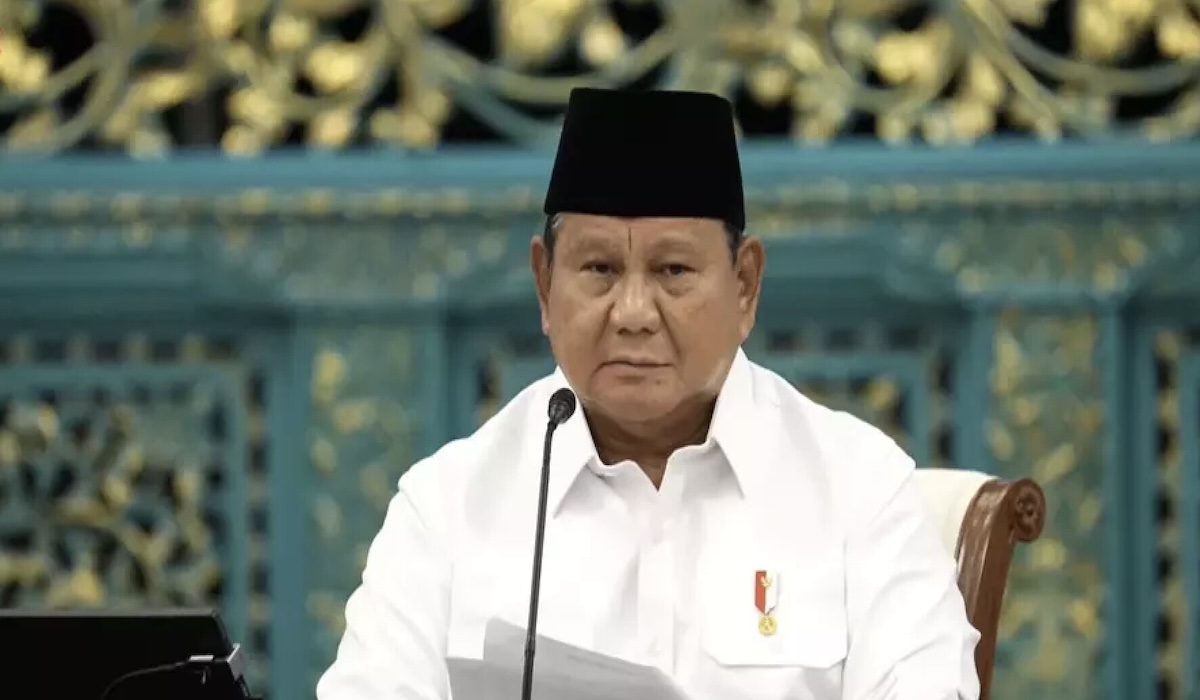
President Prabowo Subianto has affirmed the government’s determination to eradicate extreme poverty in Indonesia through the launch of 29 strategic policies. This initiative directly targets communities categorised as extremely poor to near-poor, specifically those in deciles 1 to 4.
During a Plenary Cabinet Session at the State Palace in Jakarta on Monday (20/7/2026), the President explained that the 29 policies are divided into three main categories: the Zero Per Cent Poverty Programme, Universal Programmes, and Affirmative Programmes. These policies are designed to comprehensively strengthen the social safety net.
In the education sector, the government is relying on the Family Hope Programme (PKH), which targets 10 million families, and the Indonesia Smart Programme (PIP) for 22.1 million students. One of the highlighted breakthroughs is the ‘Sekolah Rakyat’ (People’s School) programme for children from decile 1-2 families, with assistance reaching Rp4 million per student per month. “Our partiality to the poor is extraordinary,” said President Prabowo. He also mentioned support for university students through the KIP Kuliah programme, which waives tuition fees for 1.2 million people, plus a monthly living allowance.
In the health sector, the National Health Insurance (JKN) has covered 96.8 million people. The President compared this coverage to the populations of neighbouring countries as proof of Indonesia’s social protection strength. The government has also allocated massive subsidies for basic needs. LPG subsidies reach 66.4 million households, while electricity subsidies are provided to 87 million customers. For food security, 33.24 million families received aid packages containing 10 kg of rice and 2 litres of cooking oil for three months. “Do not underestimate us, we are strong, we are rich, and we will be richer. We will be richer because we refuse to be naive anymore,” the President stressed before the Red and White Cabinet members.
In addition to direct assistance, there are Universal Programmes such as Free Nutritious Meals (MBG) targeting 74.56 million recipients, including students and pregnant women, and Free Health Checks (CKG) for 130.8 million people. In the affirmative category, the government launched an internship programme for recent bachelor’s degree graduates with an allowance equivalent to the district/city minimum wage, various top-tier scholarships such as the Garuda Scholarship and LPDP, and fertiliser subsidies for 14.2 million farmers to maintain agricultural productivity.
The 29 Welfare Support Programmes for 2026 are as follows: The Family Hope Programme (PKH) targets 10 million families in deciles 1-4, with assistance of Rp75,000–Rp250,000 per month. Sekolah Rakyat reaches 44,635 students from decile 1-2 families, with assistance of Rp4 million per student per month. The Indonesia Smart Card (KIP) Kuliah targets 1.2 million students, with tuition fees paid directly to universities and a living allowance of Rp800,000–Rp1.4 million per month. The Indonesia Smart Programme (PIP) reaches 22.1 million students from decile 1-4 families, with assistance of Rp37,500–Rp150,000 per month. The Sembako Card targets 18.25 million families in deciles 1-5, with assistance of Rp200,000 per month. ATENSI Social Assistance reaches 83,357 people, with a maximum of Rp2.4 million per year per recipient. National Health Insurance Contribution Assistance (PBI JKN) targets 96.8 million people in deciles 1-5, with a benefit value of Rp42,000 per month. Empowerment Assistance includes the Socio-Economic Empowerment Programme for 15,000 recipients at around Rp5 million each, and Empowerment for Remote Indigenous Communities for 2,810 recipients at around Rp10 million each. Self-Help Housing Stimulant Assistance (BSPS) reaches 400,000 beneficiaries, with assistance of Rp20 million per house. The Housing Finance Liquidity Facility (FLPP) has reached 1,877,747 households from 2010 to 2025, with a benefit value of Rp727,000 per month. Disaster Assistance includes socio-economic stimulus aid of Rp5 million per recipient for 120,518 recipients, recovery and social strengthening aid of around Rp7.9 million for 150,018 recipients, and preparedness and logistics aid of around Rp600,000 for 169,014 recipients. LPG subsidies reach 66.4 million households, with a subsidy value of Rp107,000 per month. Diesel subsidies and compensation target 484,087 households, with a benefit value of around Rp578,139 per month. Pertalite compensation reaches 33,787,364 households, with a compensation value of Rp89,050 per month. Electricity subsidies and compensation target 87 million households or customers, with assistance of around Rp130,000–Rp150,000 per month. Train fare discounts reach 481,587 passengers, with a discount value of Rp69,752 per passenger. Sea transport fare discounts reach 481,587 passengers, with a discount value of around Rp97,403 per passenger. Food assistance is provided for three months in the form of 10 kg of rice and 2 litres of cooking oil, with a value of around Rp179,278 per month, reaching 33.24 million families in deciles 1–4. Free Nutritious Meals (MBG) reach 74.56 million recipients, including students, pregnant women, breastfeeding mothers, and toddlers, with a value of around Rp300,000 per recipient per month. Free Health Checks (CKG) reach 130.8 million people, with an examination value of around Rp655,000–Rp1.13 million per check. An internship programme for recent bachelor’s degree graduates reaches 150,000 participants for six months, with an average allowance of Rp3.6 million per month, equivalent to the district/city minimum wage.