
Prabowo Inaugurates Marsinah Museum: A Symbol of the Labour Movement's Struggle
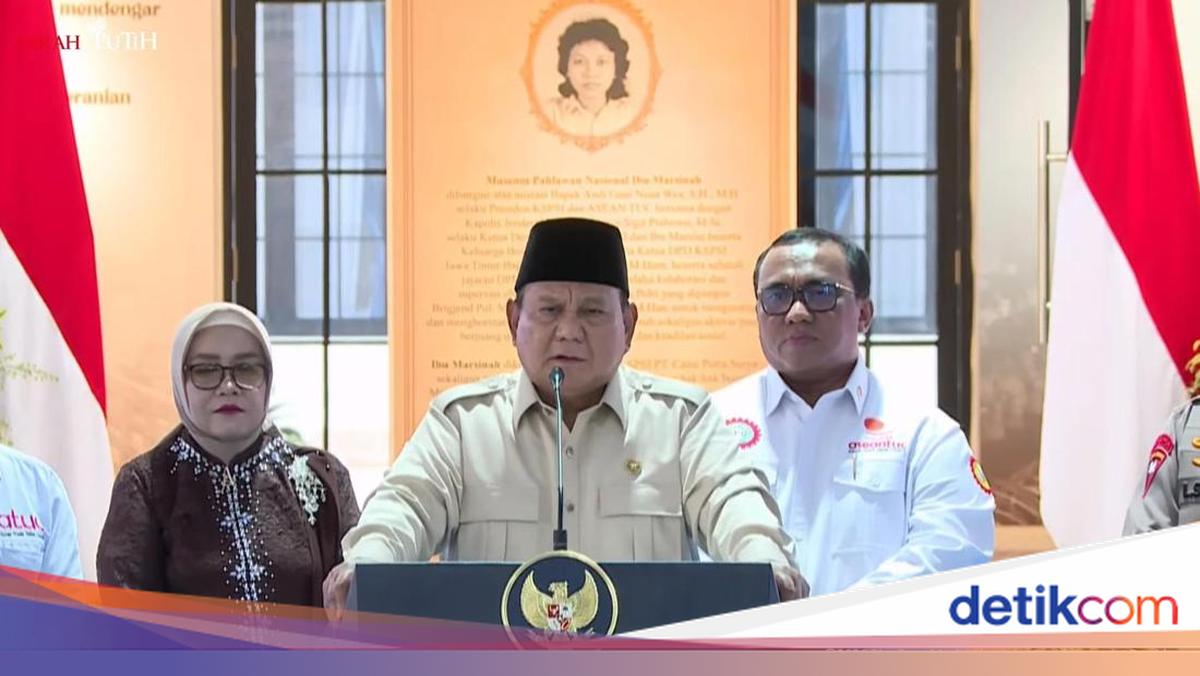
I believe this museum was established as a symbol, as a reminder, to commemorate the courage of a fighter, a young fighter, a female fighter who fought for the rights of workers,” Prabowo said in his speech on Saturday, 16 May 2026.
Prabowo believes that the essence of Marsinah’s struggle is not just about labour issues. More than that, Marsinah represents the marginalised.
“This struggle is a symbol of the struggle of all those who are on the weaker side, the poor, those who have no power,” he added.
The inauguration of the Marsinah Museum also serves as a reminder to the current generation that the struggle to build a nation and a state requires a long effort.
He reminded that maintaining and establishing a foundation for a state is a long, dialectical process, full of challenges, and often marked by clashes of various philosophies of power in the past.
“In fact, the event of Marsinah being brutally murdered for fighting for factory workers in a company, should not have happened at all,” he said.
Prabowo said that the establishment of the Marsinah Museum is a rare moment. According to him, the museum dedicated to commemorating the struggle of workers is the only one in the world.
“I think, this is probably a rare event. Maybe in the whole world, it’s extraordinary. So it turns out, maybe in the whole world there is only now a labour museum. But please check. There probably is, but this is a rare event,” he concluded.
Source: jawawa.id (https://jawawa.id/newsitem/prabowo-inaugurates-marsinah-museum-a-symbol-of-the-labour-movements-struggle-1780600920)
Originally published by detikcom (https://news.detik.com/berita/d-8490748/resmikan-museum-marsinah-prabowo-ini-adalah-simbol-perjuangan-buruh), translated from Indonesian