
Prabowo Highlights Indonesia's Wealth Flowing Abroad
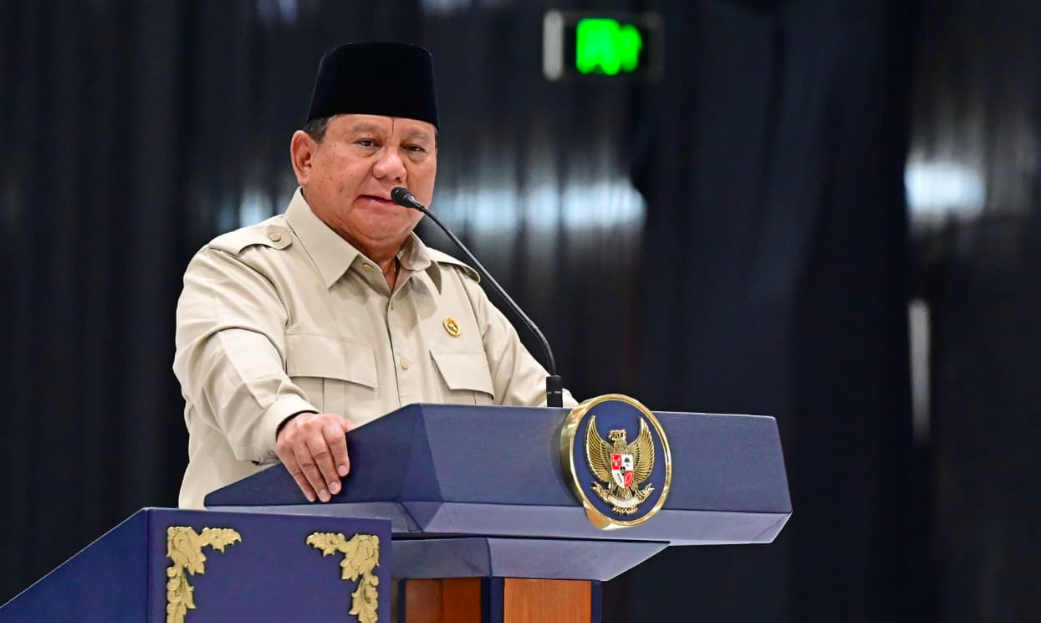
President Prabowo Subianto has revealed that one of the biggest issues facing Indonesia is the continuous flow of national wealth abroad. According to him, this phenomenon has been ongoing for decades and is the cause of various problems still faced by the country, ranging from budget limitations to low welfare in several sectors. “What is happening in Indonesia is the outflow of national wealth abroad. In fancy terms, in English, it is a net outflow of national wealth. Our national wealth is flowing abroad,” Prabowo said during a speech at the closing of the National Deliberation of Alim Ulama and the 2026 NU Grand Conference, as broadcast on the Presidential Secretariat’s YouTube channel on Tuesday (23/6). Prabowo stated that he had been expressing this view for over a decade. Although not an economist, he believes the data and calculations he uses indicate a serious problem in the management of national wealth. He claimed that his earlier analysis is now supported by United Nations (UN) data, which was subsequently processed by the National Economic Council. Based on this data, Indonesia has actually enjoyed a trade surplus and substantial profits for more than two decades. According to Prabowo, over the last 22 years, Indonesia recorded profits of up to US$436 billion. However, the outflow of funds from Indonesia has been so large that the benefits are not fully felt domestically. “If people now say the rupiah is weak, this and that, it is because the wealth is flowing out. If our blood, every day our blood flows out, eventually our body will collapse, die,” he said. He described Indonesia as a very wealthy country, which is why it has managed to survive despite a significant portion of its wealth continuously flowing out. From the data presented, funds leaving Indonesia during that period reached US$343 billion, leaving the remaining profit far smaller than its potential. Prabowo assessed that one of the main causes of this leakage is the practice of trade manipulation or under-invoicing. In this practice, the actual volume of exports is not fully reported, causing the state to lose significant potential revenue. “The businessmen are lying. They say they sold 1,000 tonnes, but they only report 500 tonnes. That means the state loses out,” he said. Based on data said to originate from the UN, Prabowo revealed that Indonesia’s losses from such practices reached approximately US$908 billion over 34 years, equivalent to Rp15,000 trillion. He said this issue needs to be understood by religious scholars and community leaders because it directly impacts the state’s ability to finance various public needs. According to him, the budget limitations for improving the welfare of teachers, civil servants, and the public service sector cannot be separated from these continuous leakages. “Why can’t teachers’ salaries be good? Why can’t civil servants’ salaries be good? Why is the budget always lacking? Because the money isn’t there, it keeps being taken,” Prabowo said. He also revealed that Indonesia’s current economic leakage is estimated at around US$150 billion, or Rp2,500 trillion, each year. Therefore, he stressed that his administration is focusing on reforms to stop the continuous outflow of state wealth. “Our leakage, we calculate, the experts now calculate, is approximately US$150 billion per year. Rp2,500 trillion per year. And I am fixing all of this,” Prabowo concluded.