
Prabowo Firmly Continues Free Nutritious Meal Programme, Oversight Tightened
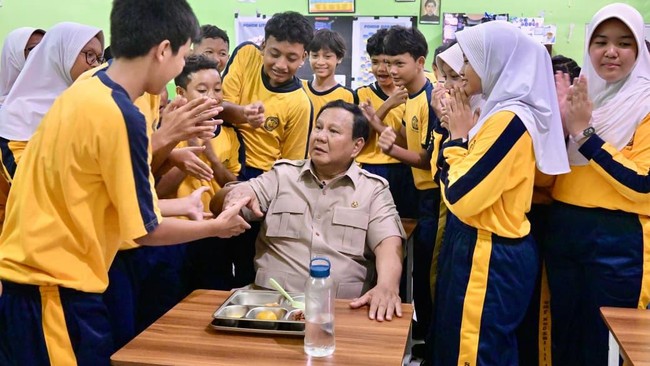
Jakarta - Presidential Chief of Staff, General (Ret.) Dudung Abdurachman, has affirmed the government’s full commitment to continuing the Free Nutritious Meal (MBG) Programme amidst an ongoing internal reform process at the National Nutrition Agency (BGN). The change in leadership and the current legal proceedings serve as tangible proof that the government is being responsive and transparent.
This was conveyed by Dudung at the Bina Graha Building, Presidential Palace Complex, Jakarta, on Friday (19/6/2026).
“The replacement of the BGN leadership and the ongoing legal process show that the government is not turning a blind eye to the problems that have occurred. The government has the courage to conduct evaluations, fix weaknesses, and improve the programme’s governance so that it becomes better in the future,” said Dudung.
He also assured that internal obstacles would not halt a programme that concerns the livelihood of many people. President Prabowo Subianto has given firm instructions that the nutritional fulfilment of vulnerable groups must not be disrupted.
“The President has ensured that the Free Nutritious Meal programme will continue, because this programme concerns the basic needs of the people, especially schoolchildren, pregnant women, and vulnerable groups. We must not stop just because there are problems, but rather we must learn from these problems, improve the system, and ensure the programme’s benefits still reach the community,” he stressed.
As a form of control function, the Presidential Staff Office (KSP) has conducted unannounced inspections (sidak) at several Nutritional Fulfilment Service Units (SPPG). From the direct field observations, the KSP found many service units that have adopted operational standards very well.
“From these spot checks, the KSP found SPPGs that have been operating according to standards, ranging from kitchen cleanliness, food ingredient quality, food safety, distribution accuracy, to service for beneficiaries. These SPPGs that are already up to standard can be used as models, so that good practices in the field can be replicated in other regions, while of course still adapting to the conditions and needs of each area,” he explained.
Dudung added that the implementation of the programme at the grassroots level has now begun to be improved with a much stricter, cleaner, more transparent, and measurable supervision system. To ensure the programme’s accountability, the KSP is opening the widest possible space for the public to participate in oversight. This is important so that the programme does not merely pursue quantity targets.
“The KSP also encourages the opening of participatory oversight channels from the community, so that the public can help monitor the programme’s implementation, provide input, and report if they find irregularities in the field. This oversight is important, because the Free Nutritious Meal programme must not only be measured by the number or quantity of beneficiaries, but must prioritise quality, targeting accuracy, food safety, and tangible benefits for the community,” he elaborated.
The government is prioritising that the distribution of nutritious food reaches the layers of society most in need, including in the outermost regions.
“We want this programme to be truly well-targeted, especially for schoolchildren, pregnant women, vulnerable groups, and communities in the Disadvantaged, Frontier, and Outermost regions, or 3T,” he added.
Concluding his statement, Dudung affirmed the KSP’s position as the front line in overseeing the comprehensive governance transformation at the BGN.
“The Presidential Staff Office will continue to oversee the BGN reform process, so that the improvements made truly touch the system, from budget oversight, food quality, food safety, the distribution chain, to the public complaints mechanism. The KSP is present as the programme controller, reform supervisor, cross-agency liaison, and guardian to ensure the President’s priority programme remains on the side of the people,” he said.
He expressed hope that this evaluation momentum could increase public trust in national strategic programmes financed by the state.
“Most importantly, this programme must be directly felt by the community, run with good governance, prioritising quality, well-targeted, and clean from irregularities. We make every correction a momentum to improve ourselves, strengthen the system, and account for every rupiah of the people’s money used for the MBG programme, to increase public trust,” he concluded.