
Prabowo discusses returning teacher recruitment authority to central government
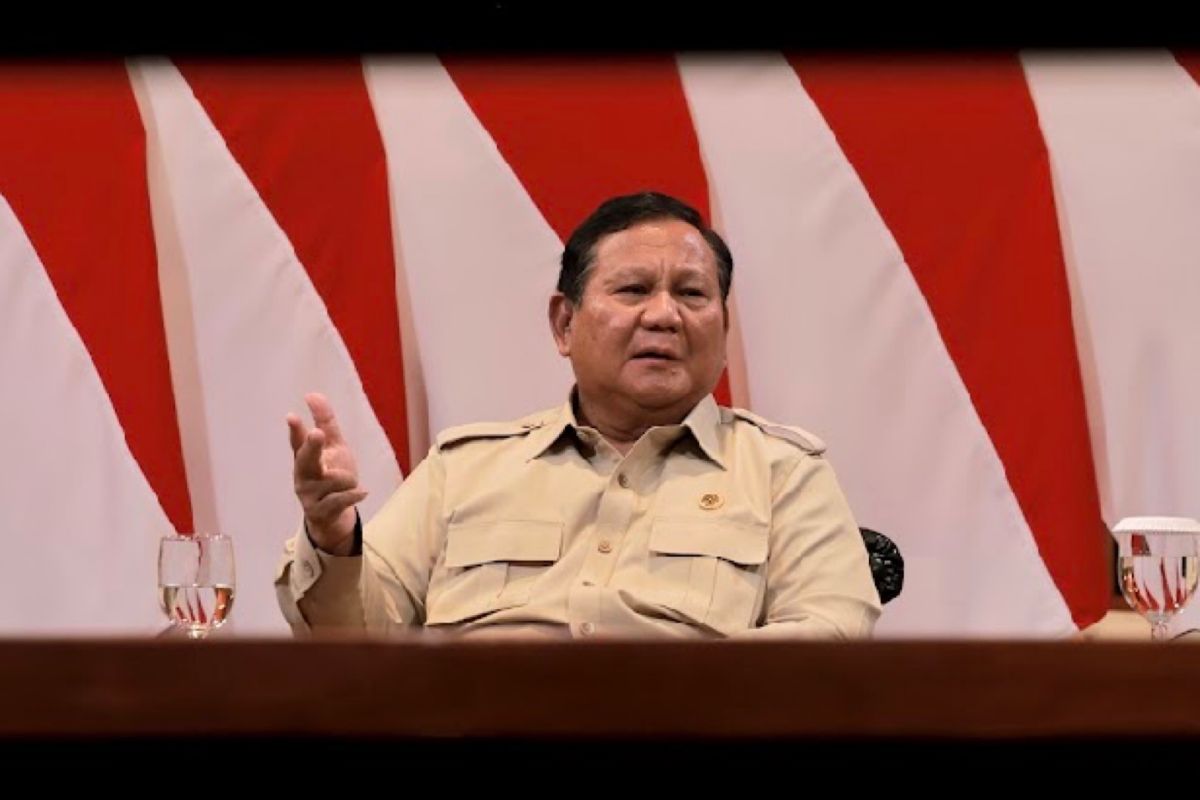
Jakarta (ANTARA) - The President of Indonesia, Prabowo Subianto, stated that the government is currently discussing the possibility of returning the authority for teacher appointments to the central government to improve the national education system.
“Yes, the entire education system must be improved. Starting with teacher recruitment, which is the most fundamental aspect,” said Prabowo during the ‘President Prabowo Menjawab’ programme, as quoted in Jakarta on Wednesday.
Prabowo explained that while decentralisation is part of a well-intentioned spirit of democratisation, the execution of teacher recruitment by local governments presents challenges in maintaining the objectivity and quality of educators.
He stated that the teacher appointment process needs to be based on competence, school requirements, and quality standards, rather than personal connections or political interests.
“If it is left to regency governments or governors, can we be certain of the quality of teacher recruitment? We must speak of reality. Is a regent objective, or do they appoint their relatives or campaign supporters as teachers? This is our dilemma,” said Prablagwo.
To address the disparity in educator quality, Prabowo said the government could implement courses, training, and capacity-building programmes for teachers so they can keep pace with developments in learning methods and educational technology.
Prabowo also positioned classroom digitalisation as a step towards reducing educational quality gaps, including helping teachers improve their teaching abilities and helping students access more engaging learning materials.
“That is why I want to leapfrog. This is a difficulty, which is why I am implementing classroom digitalisation, so that teachers with fewer resources can learn from it, and underprivileged children can be motivated to learn from it,” said Prabowo.
However, Prabowo emphasised that digitalisation cannot replace the role of teachers, as fundamental educational reforms still require quality recruitment and teacher training.
Prabowo also revealed plans for a ‘crash programme’ by recruiting top university graduates from various disciplines to assist in teaching at the most disadvantaged schools.
“One step I am considering to address this issue is a crash programme; perhaps I will recruit the best graduates from all faculties to become teachers. Let us call them emergency teachers that we deploy to schools,” said Prabowo.
He gave an example that the government could initiate this programme at the primary school level by recruiting approximately 30,000 graduates to be placed in the most lagging schools.
Additionally, Prabowo mentioned that the government could involve Civil Servants (ASN) who are currently working to undergo short-term assignments of two to three weeks in schools according to regional needs.
Prabowo emphasised that improving the quality of education must be accompanied by improvements in teacher welfare. “The important thing is that we must improve teacher welfare, and we have already done much in many areas,” he asserted.
He concluded by stating that the government is discussing the possibility of returning teacher appointment authority to the central government as part of an effort to build a more objective and measurable recruitment system.