
Prabowo Deemed Capable of Building Stability Amid Geopolitical Uncertainty
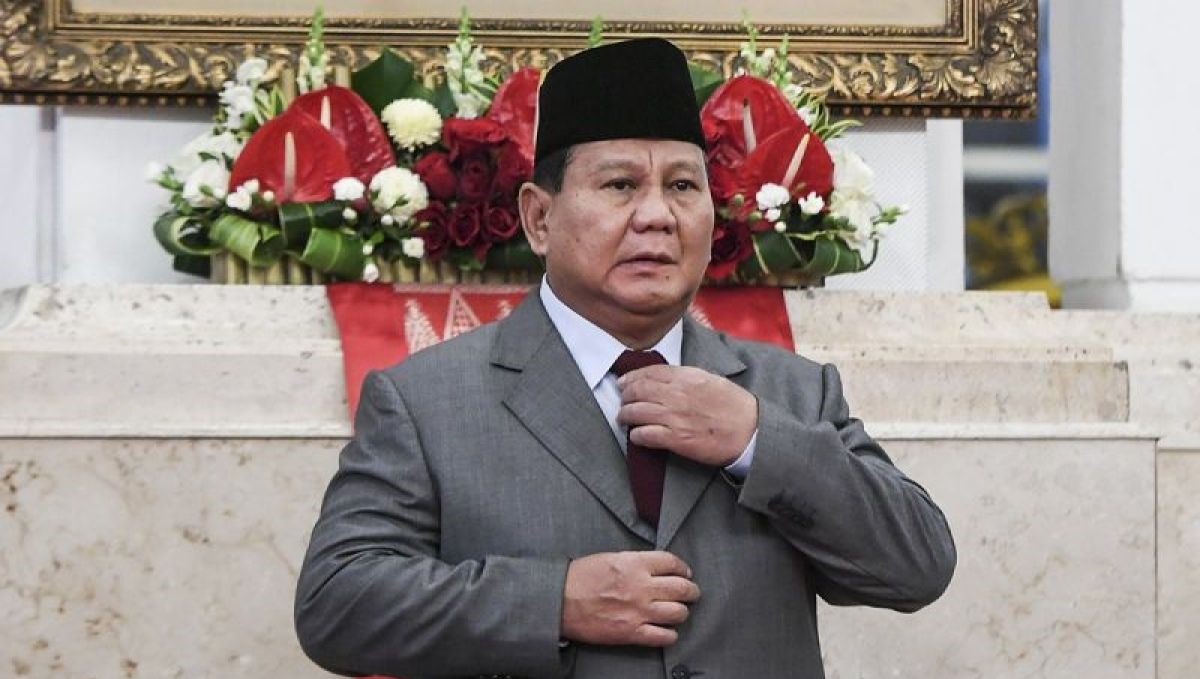
The government faces policy dilemmas with no truly comfortable options.
Amid geopolitical shocks and uncertainties, President Prabowo Subianto is regarded as capable of leading the creation of a conducive national situation. A united, peaceful, and stable national environment, both economically and politically, is an invaluable asset that should be appreciated.
“When the situation in various parts of the world is chaotic or uncertain, it is certainly our moral obligation without exception to maintain that situation for collective safety,” said Haris Rusly Moti, initiator of the 98 Resolution Network, on Wednesday (8/4).
Haris described efforts to maintain unity and ensure a peaceful and stable situation. President Prabowo Subianto, along with Gerindra’s Daily Chairman of the DPP, Sufmi Dasco Ahmad, often engages in dialogues with various groups that hold differing views from the government.
“Dasco even frequently attends formal and informal discussion forums and directly listens to critical views from various groups across different spectrums. It is utterly unreasonable for any party to claim that the government is anti-criticism and anti-dialogue,” said Haris, his familiar nickname.
According to him, both President Prabowo and Dasco do not adhere to the political doctrine of “divide et impera,” which pits society horizontally against each other to strengthen power. Even all forms of engineered horizontal conflict legacies from the past have been quietly addressed by President Prabowo to be halted.
Pancasila, as the philosophical foundation of our nation, indeed guides towards “peaceful management,” brotherhood management, cooperation, and mutual assistance.
“As supporters of the government, we observe and try to understand the criticisms directed at President Prabowo. Some of them can still be excused as they relate to corrections in managing the government’s priority programmes. Such as the management of the Free Nutritious Meals programme and several other programmes, which are seen as potential sources of new leakages that President Prabowo is eradicating,” explained Haris.
He said that such corrections have been heard and accommodated by the government, demonstrated by several improvements in the management of the Free Nutritious Meals programme. President Prabowo has ordered the Deputy Head of the National Nutrition Agency, Naniek Deang, to investigate and has closed thousands of MBG kitchens involved in deviations.
“This is proof that President Prabowo does not turn a blind eye and deaf ear to criticisms and corrections regarding the management of the national nutrition equity programme through MBG,” Haris emphasised.
Haris compared this to several long-running populist programmes such as BLT, Rice Social Assistance, Fertiliser Subsidies, subsidised Gas and Solar, etc., where mismanagement and budget misuse are still evident. Thus, they continue to require improvements in management up to this day.
“Moreover, programmes newly initiated by President Prabowo, which have only been running for over a year. Naturally, we acknowledge they are not yet perfect in implementation and still need improvements at the management level,” he clarified.
Haris also described the situation in many countries affected by geopolitical clashes, experiencing energy crises with people queuing for fuel. Even in some countries, people are forced to walk because transportation is not operating due to lack of energy supplies.
“However, domestically, we thank God that, thanks to President Prabowo’s hard work, he has successfully ensured stable and affordable energy supplies. There have been some points of LPG shortage, but they have been resolved. The government, through the Minister of Finance, has even assured no increases in subsidised fuel prices until the end of the year,” said Haris.
According to Haris, one can imagine if fuel shortages occurred as in several countries. The impact could hinder food distribution, basic necessities, etc. Hunger could afflict our people.
“Those who oppose the government would also be affected if an energy crisis and food crisis occurred; our children and families would also be impacted. We pray to the Almighty God that such disasters do not befall our nation,” he continued.
Haris explained that at the beginning of his administration, President Prabowo had anticipated geopolitical shocks that would impact energy and food shortages. Therefore, several policies were made to keep our nation free from energy and food crises.
“Even before the Iran versus Israel-America war erupted, President Prabowo had instructed to accelerate the food self-sufficiency programme. We can now stand tall without worry of rice shortages, also due to the government’s success in implementing the food self-sufficiency programme. We no longer depend on food imports when many countries in the world are competing for food sources,” Haris asserted.
Haris emphasised that in facing such situations, what is needed is unity to maintain economic stability and ensure supplies of basic needs, so that our people are spared from hunger, and our children’s schooling is not disrupted due to non-operational transportation.
“Stability should not be perceived merely in terms of politics and security. We can imagine if the economic situation is unstable, prices of necessities are out of control, then many factories could close and layoffs occur, harming workers. MSME actors also cannot trade because raw material prices are unaffordable,” explained Haris.
He added that, therefore, without ignoring the constitutional guarantee under the 1945 Constitution for every citizen’s freedom to associate and express opinions, he still calls for prioritising common interests as fellow children of the nation.
“We should be able to struggle together to survive together in facing geopolitical destabilisation.”