
Prabowo Confident in Free Nutritious Meal Programme: Potential to Create 3 Million Jobs
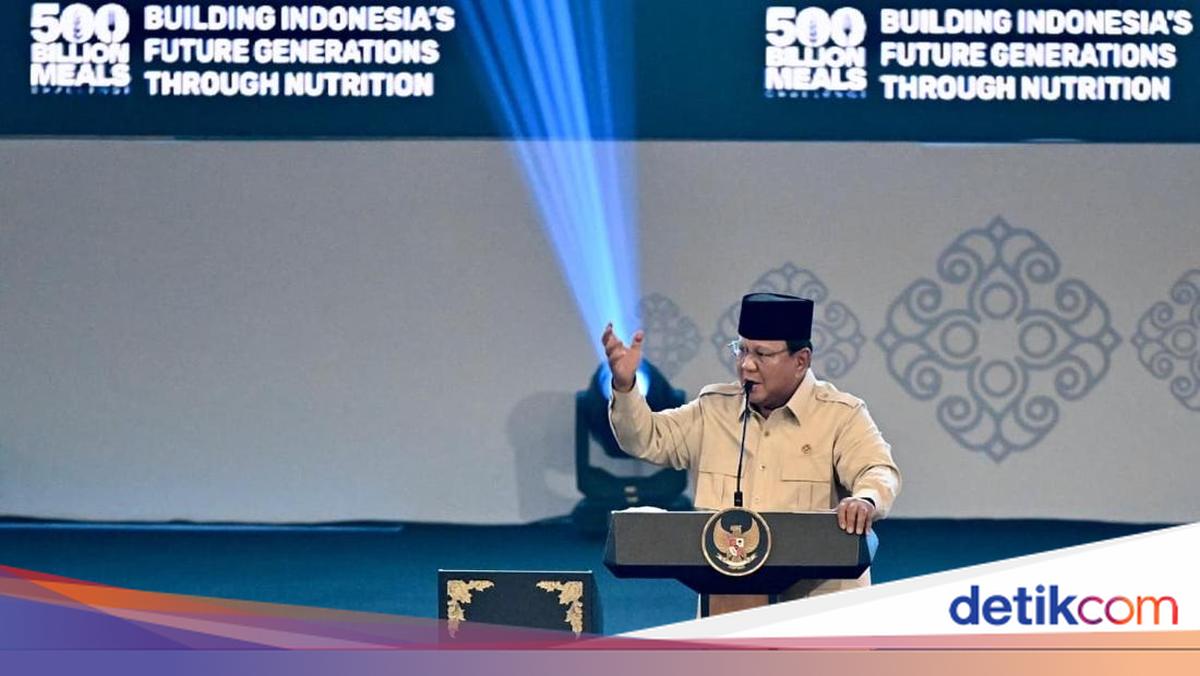
“Once this programme reaches its peak, feeding approximately 83 to 85 million people through 30,000 properly functioning kitchens, we can generate 1.5 million formal jobs and perhaps another 1.5 million real jobs within the rural economy—totaling 3 million jobs. The circulation of money in villages will be substantial. Therefore, my brothers and sisters, I am confident and believe that this programme will succeed,” stated Prabowo during his speech at the ‘Building Indonesia’s Future Generations Through Nutrition’ event at the Sentul International Convention Centre (SICC), Bogor, West Java, on Wednesday (3/6/2026).
Prabowo emphasised that the MBG programme is a government effort to ensure the nutritional needs of Indonesian children are met, while simultaneously improving the quality of national human resources. According to him, the concept of the programme is fundamentally simple.
“The concept of this free nutritious meal is very simple: we have found the reality that some of our children go to school every morning without having had breakfast. In fact, they rarely eat nutritious food at home,” said Prabeway.
The Head of State explained that malnutrition in children can impact their growth and their ability to reach their full potential. According to Prabowo, such conditions are still found in several regions with notably high malnutrition rates.
“There are parts of our country where more than 20 per cent, approaching 30 per cent, of our children are malnourished. What occurs is what is known as stunting, where brain cells, muscle cells, and bone cells fail to develop properly,” he said.
Prabowo noted that the impact of malnutrition affects not only health but can also limit children’s opportunities to develop in both education and future employment. He shared that he encountered these experiences firsthand while interacting with communities in various regions.
“This means, firstly, they will not develop according to their potential as normal human beings, meaning their abilities will be below normal. We find that sometimes they struggle even to graduate from primary school. They might not even be able to take over their parents’ jobs as farmers, daily labourers, or fishermen,” Prabowo remarked.
Consequently, Prabowo emphasised that the National Nutrition Agency (BGN) and the MBG Programme play a strategic role in supporting vulnerable communities and strengthening the quality of the nation’s future generations. Prabowo also noted that several developed nations have implemented similar programmes to enhance the welfare and quality of their human resources.
“Therefore, this programme is very important. And if this programme succeeds, it will trigger significant progress for our economy,” he added.
Beyond the benefits to health and education, Prabowo assessed that the MBG Programme will provide a broad economic impact reaching down to the village level. Through the operation of MBG kitchens, the produce of local farmers and entrepreneurs can be absorbed, thereby increasing community welfare.
Prabowo remains convinced that the optimal implementation of the MBting Programme will reach tens of millions of beneficiaries and create millions of new jobs. He expressed his certainty that the programme will bring great benefits to the people and the progress of the nation.