
Prabowo Compares Indonesian and Singaporean Education, Highlights Geographical Challenges
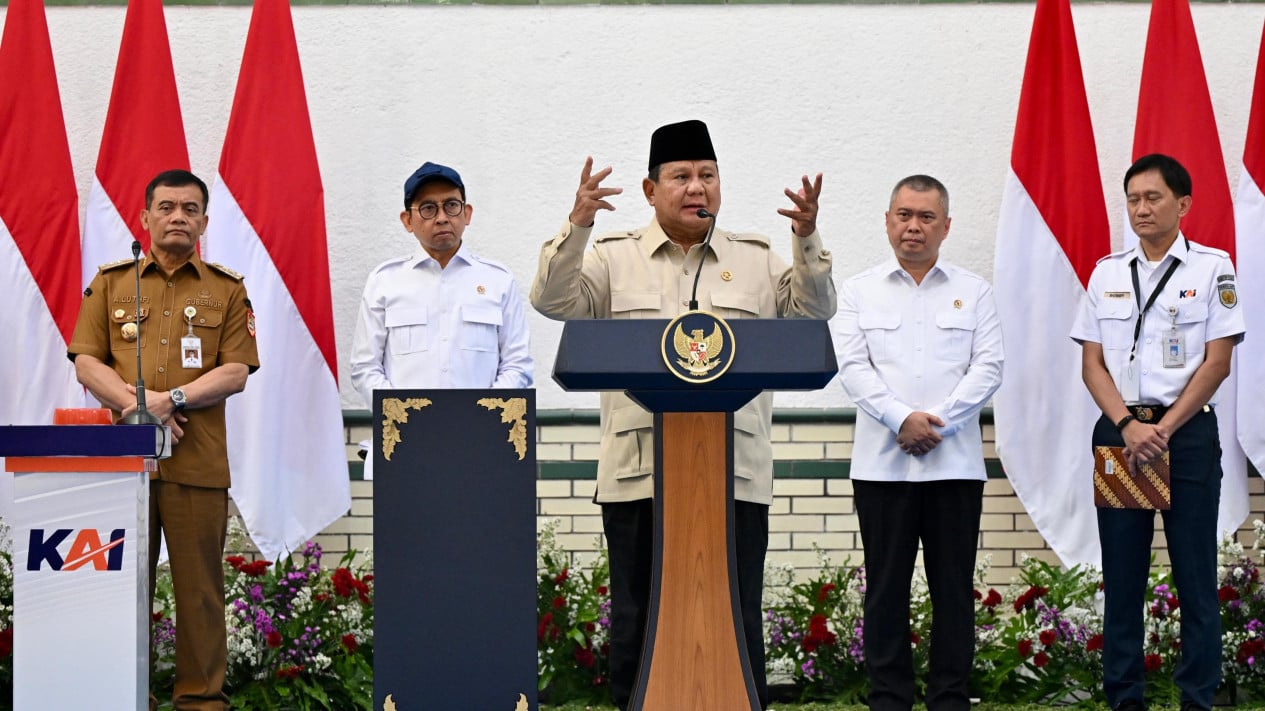
President Prabowo Subianto has acknowledged that the quality of Indonesian education still faces major challenges based on the results of the Programme for International Student Assessment (PISA).
Prabowo said Indonesia’s achievements still lag behind a number of countries in the region as well as the average of developed countries. However, he stressed that this condition must serve as a spur for improvement, not a reason to give up.
The statement was made by Prabowo while giving directives to around 150 researchers from the National Research and Innovation Agency (BRIN) in the courtyard of the Presidential Palace, Central Jakarta, on Thursday, 6 August 2026.
“So sometimes the facts are painful. They say there is now a survey, a survey called PISA (Programme for International Student Assessment), P-I-S-A, which compares the quality of education in various countries. We are not particularly good, yes,” said Prabowo.
He then revealed that PISA results show the reading ability of Indonesian students still lags behind a number of countries, including several in Southeast Asia.
“So the PISA reading score, our score, as you can see there, is only slightly above the Philippines. We are still below Thailand, below Malaysia, below the Netherlands, below Vietnam, below the OECD average, below Japan, below Singapore,” he said.
Nevertheless, Prabowo believes the comparison with Singapore must be viewed proportionally. According to him, the challenge of managing education in Indonesia is far more complex due to the vast territory and the very large number of schools.
“As for Singapore, I am not too, we don’t need to worry too much, it’s only a country of 5 million, one city, right. The Singapore Education Minister actually cannot be compared with the Indonesian Education Minister, right,” he said.
Prabowo explained that Indonesia has around 388,000 schools spread from mountainous regions to the outermost islands. These geographical conditions pose a major challenge in ensuring equitable education quality.
“Indonesia has 388,000 schools if I am not mistaken, it can be checked later. There are those in the middle of mountains, there are those on the outermost islands, so how to provide the best education for Indonesia, let alone Indonesia, perhaps the Head of the North Maluku Education Office or the Head of the North Sulawesi Education Office, how must he check schools in Miangas, on remote islands,” said Prabowo.