
Prabowo Claims the Netherlands Profited This Much from the Colonisation of Indonesia
Jakarta, CNBC Indonesia – President Prabowo Subianto has highlighted how the Netherlands once attained a high level of prosperity thanks to its domination of the Nusantara archipelago during the 1500s to 1800s CE. According to him, the vast wealth accrued by that European nation was inseparable from its success in controlling the region that is now the Republic of Indonesia.
‘Why? because they controlled Nusantara, they controlled the territory that is now the Republic of Indonesia,’ Prabowo asserted in his speech at the 19th Plenary Session of the Indonesian DPR, on Wednesday 20 May 2026.
Prabowo’s remarks seem to remind us of one old historical fact—that the Dutch economic supremacy once rested on the massive exploitation of Nusantara’s wealth.
Although there is no single record that truly counts all profits the Netherlands earned from Indonesia, various periods in history show how substantial the wealth they accumulated from the colonial lands was.
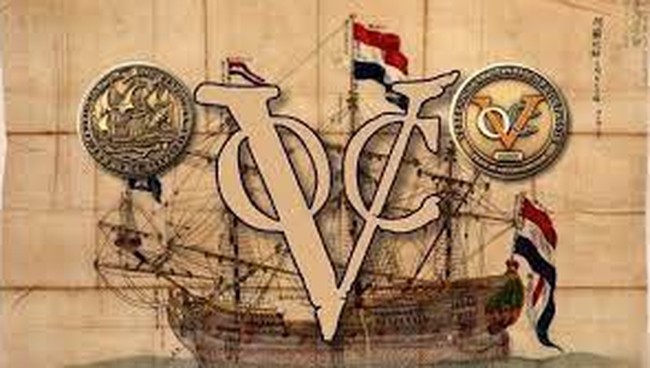
The story began in the early 17th century when the VOC established its first trading post in Banten in 1603. Two years later, the Portuguese handed Ambon to the Dutch, and the area subsequently developed into a VOC trade hub in the eastern region.
By the mid-17th century, the VOC had become a colossal trading power with a base in Batavia. Their fleet consisted of 150 merchant ships and 40 warships. The company was also supported by around 50,000 employees and 10,000 soldiers. The VOC was even known as the world’s first publicly traded company, with an annual dividend reportedly reaching 40%.
The scale of that business illustrates how abundant the profits extracted from Nusantara’s natural resources were.
A Visual Capitalist report in 2017 put the VOC’s value in 1637 at 78 million guilders, equivalent to around US$7.9 trillion today. That figure is said to have surpassed the market capitalisation of modern tech giants such as Apple and Amazon.
However, a different view comes from historian Lodewijk Petram. On his official site, he estimates the VOC’s wealth at around US$1 trillion. Although lower than the earlier estimate, that figure remains very large for the 17th century.
The VOC’s splendour ultimately collapsed in 1799. The trading company went bankrupt due to corruption and mounting debt. Afterwards, the Dutch colonial administration took direct control of power in Indonesia and continued to exploit Nusantara’s natural resources for economic gain.
One example is seen in the period 1864–1938 through the Deli tobacco plantations in North Sumatra. According to historian H. M. Vlekke in his book Nusantara (1943), the proceeds from sales reached 2.77 billion (unspecified currency) or around US$40 billion at the time.
That substantial profit also underpinned development in the Netherlands, including various dam projects to tackle flooding. Yet beneath that prosperity lay colonial practices rife with oppression.
Thousands of local residents were forced to work under tight supervision and with harsh treatment. In Banda, the Netherlands even massacred thousands of residents to dominate the pepper and spice trade.
Ultimately, Dutch colonialism in Nusantara left two contrasting legacies. Great wealth for the colonisers, and prolonged suffering for the people who were colonised.