
Prabowo Calls Yusril to Discuss Redefining Corruption
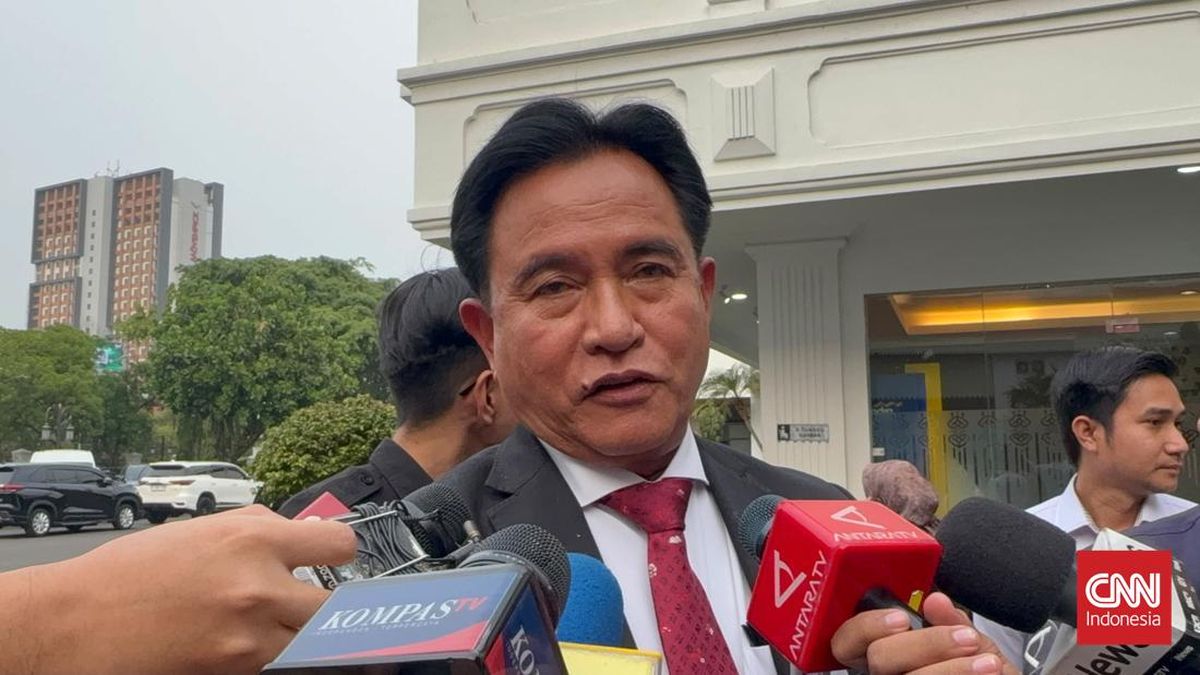
Coordinating Minister for Legal Affairs, Human Rights, Immigration and Corrections Yusril Ihza Mahendra met Indonesian President Prabowo Subianto at the Presidential Palace in Jakarta on Monday (26 October) to discuss redefining corruption.
“It may be related to the definition of corruption currently being discussed by the National Economic Council (DEN), because I have a meeting with the DEN this afternoon to discuss the issue, and I was called in by the President. Perhaps it is connected,” Yusril said at the palace on Monday.
Yusril said that if the Corruption Eradication Law is to be revised, the focus should be on complying with recommendations under the United Nations Convention against Corruption (UNCAC).
He said Indonesia had not updated its anti-corruption law since ratifying UNCAC through Law No. 7 of 2006.
“The legislation on corruption needs to be revised, but this is not about making corruption offences less serious; that should not be misunderstood. We want instead to broaden the scope of corruption and make the enforcement of corruption cases more effective,” he said.
Yusril said UNCAC does not specifically define state financial losses as a category of corruption, as DEN chairman Luhut Binsar Pandjaitan had said recently. Rather, he said, UNCAC leaves it to signatory countries to formulate their own domestic laws.
“There are many actions that are very damaging to the state but are not currently classified as corruption. One example is under-invoicing, which the President often mentions. Someone mines as much as they like, exports, say, 20,000 tonnes, but reports only 10,000,” he said.
He added that large-scale smuggling, tax fraud and other actions are being carried out but are not currently classified as corruption offences.
Yusril also called for a broader definition of corruption, including the trading of positions. He said abuse of authority was already covered by the existing anti-corruption law.
The debate over removing state losses from the definition of corruption arose after Luhut said that Prabowo had approved a DEN study limiting corruption to bribery. Luhut later corrected his remarks, explaining that the DEN’s recommendation to improve the Corruption Eradication Law would not remove state financial losses from the definition of corruption. Articles 2 and 3 of the law, or Articles 603 and 604 of the Criminal Code, would remain in force.
Luhut said the DEN’s recommendations focused on two points: clarifying the elements required for proof to make law enforcement more certain, objective and consistent; and broadening anti-corruption efforts by adopting UNCAC offences that are not yet covered by national law.
UNCAC categories of corruption include bribery of national public officials; bribery of foreign public officials and officials of public international organisations; embezzlement, misappropriation or other diversion of property by a public official; trading in influence; abuse of office or authority; illicit enrichment; bribery in the private sector; embezzlement of property in the private sector; laundering the proceeds of crime; concealment of the proceeds of crime; and obstruction of justice.
Under Law No. 20 of 2001, which amended Law No. 31 of 1999 on the Eradication of Corruption, at least 30 acts are classified as corruption offences. One category concerns state financial losses, as set out in Articles 2 and 3.