
Prabowo Announces Implementation of 50% Palm Oil Biodiesel B50 This Year
Jakarta, CNBC Indonesia - President of the Republic of Indonesia Prabowo Subianto has assured that the government will increase the blending of Vegetable Fuel Oil (VFO) in the form of palm-based biodiesel (CPO) to 50% (B50) in 2026.
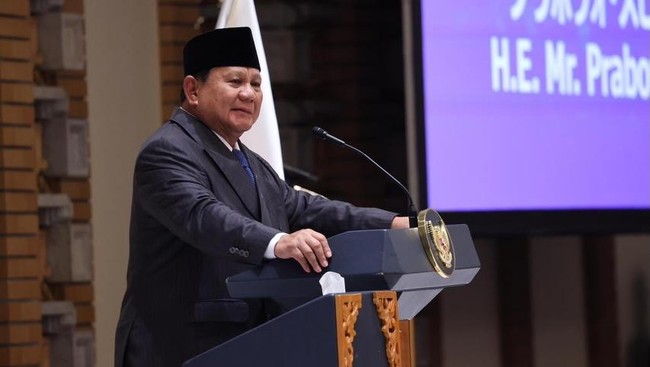
This target was conveyed by Prabowo in front of investors and business actors at the Indonesia-Japan Business Forum in Tokyo, Japan, on Monday (30/3/2026).
President Prabowo explained that the increase in the proportion of palm oil biodiesel is part of Indonesia’s transformation towards green energy self-sufficiency. Currently, Indonesia has implemented a 40% biodiesel blend (B40). The B40 mandate has been in effect since the beginning of 2025.
“This year we will produce diesel fuel from palm oil, and now the proportion is being increased from 40% to 50%,” Prabowo stated in his speech at the Indonesia-Japan Business Forum in Tokyo, Japan, on Monday (30/3/2026).
In addition to biodiesel to substitute diesel, Prabowo also emphasised plans to develop bioethanol as a petrol fuel blend.
The government will optimise domestic natural resources such as cassava, sugarcane, and corn as the main raw materials.
This is primarily due to the uncertainty in the global geopolitical situation, especially conflicts in the Middle East region, which are seen as posing a direct threat to national energy supply security.
“For us, this is more urgent because the geopolitical situation in the Middle East provides strategic uncertainty for our energy security. Therefore, we are determined to maximise what we have and secure renewable energy,” Prabowo asserted.
In addition to vegetable fuels, Prabowo also outlined targets for acceleration in the Solar Power Plant (PLTS) sector. The government has set an ambitious target to achieve 100 Gigawatts (GW) of solar energy capacity within the next three years.