
Prabowo Announces 92% Income Share for Online Motorcycle Taxi Drivers
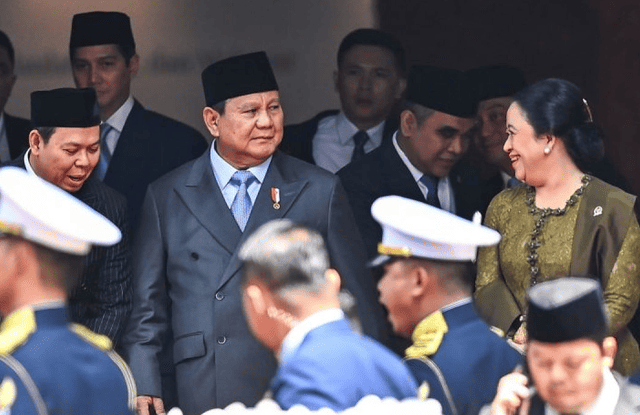
President Prabowo Subianto announced a major change to the revenue-sharing scheme between online motorcycle taxi (ojol) drivers and platform companies during his state address at the 2026 MPR Annual Session and Joint Session of the DPR-DPD RI on Friday (14/8). The policy aims to ensure justice for workers in the gig economy who have long served as the backbone of urban mobility. The President emphasised that the government has issued a recommendation drastically altering the income composition to improve the welfare of drivers across Indonesia.
For years, the prevailing industry standard saw drivers receiving 80% of the total trip fare, while the remaining 20% went to the platform as a usage fee. Under the new policy, however, the driver’s share has surged to 92%. “Previously, ojol drivers only received 80 per cent of their earnings because the platform took 20 per cent. But with the government’s recommendation—I do not want to call it intervention, I use the term recommendation, though it is actually a bit of an intervention—drivers now receive 92 per cent of their hard work,” President Prabowo stated at the MPR/DPR RI Building in Jakarta.
With this change, the commission taken by platform companies has been reduced to just 8%. The reduction in deductions is expected to provide drivers with greater financial leeway to cover operational costs such as fuel and vehicle maintenance. President Prabowo noted that the policy is not merely a figure on paper but has already had a tangible impact on the ground. Based on reports received by the government, many drivers have reported a very significant increase in income since the regulation was implemented.
“Many drivers report that their income has risen significantly. Some have doubled, and some have even said it has tripled,” the Head of State revealed. This increase is driven by the accumulation of higher net income from each transaction, which, when multiplied by the number of daily orders, creates a multiplier effect on their monthly earnings. From a technological and business perspective, the policy challenges platform companies to manage their operational costs more efficiently. With margins squeezed to 8%, platforms are required to innovate in backend systems, optimise matching algorithms, and seek alternative revenue sources beyond trip commissions, such as advertising or other value-added services.
The government views this intervention as necessary to balance the digital ecosystem. Although the term used is ‘recommendation’, the President acknowledged the government’s firm stance to prevent large technology companies from exploiting driver partners who have a weaker bargaining position.