
Prabowo Allocates Rp195.3 Trillion for Food Security, Highest in Five Years
The government has increased the food security budget in the 2027 Draft State Revenue and Expenditure Budget (RAPBN), setting aside Rp195.3 trillion to enhance production, maintain food supply and prices, and support the welfare of farmers and fishers. Finance Minister Purbaya Yudhi Sadewa presented the figure during a press conference on the RAPBN and Financial Note for the 2027 fiscal year on Friday (14/8/2026). Compared to the 2026 outlook of Rp190.9 trillion, the allocation rose by Rp4.4 trillion, or 2.3%. This increase is far more moderate than the 32.7% growth recorded in the 2026 outlook, yet the Rp195.3 trillion allocation remains the highest in at least five years.
The 2027 food security budget is directed at increasing productivity, maintaining supply and price stability, and improving the welfare of farmers and fishers. Production increases will be pursued through intensification, by boosting yields from existing land, and extensification, by expanding food production areas. The government will also work to ensure sufficient supply and stable consumer prices while safeguarding the incomes of farmers and fishers. Food security will be further strengthened to better withstand climate change, as extreme weather and shifting seasonal patterns can affect planting cycles, harvests, and food supply. These policies are designed to gradually support food sovereignty, with the government aiming to meet more of the nation’s food needs through domestic production.
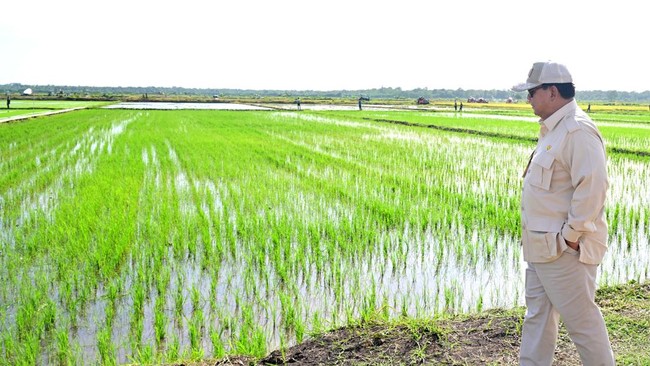
Part of the budget will be used to expand and improve the productivity of agricultural land. The government plans to develop 2.7 million hectares of rice cultivation areas, accompanied by the creation of 100,000 hectares of new paddy fields and the optimisation of 200,000 hectares of existing agricultural land. To support production, 23,528 units of pre-harvest agricultural tools and machinery will be distributed to the food crop sub-sector. Water infrastructure is also a focus, with plans to develop irrigation networks covering 55,765 hectares and to continue the construction of 14 ongoing dams. Beyond agricultural commodities, the budget includes the revitalisation of 616 hectares of salt production land.
Support for the fisheries sector will be provided through facility upgrades in 400 fishing villages, aimed at improving production, storage, processing, and marketing of catches. The government will also distribute food aid to 5,000 individuals as part of efforts to control food insecurity. Meanwhile, the Cheap Food Movement will target 28 community groups, helping to bring supply closer to consumers and maintain food affordability.