
Prabowo aims for Indonesian children to be smart and healthy by 2045
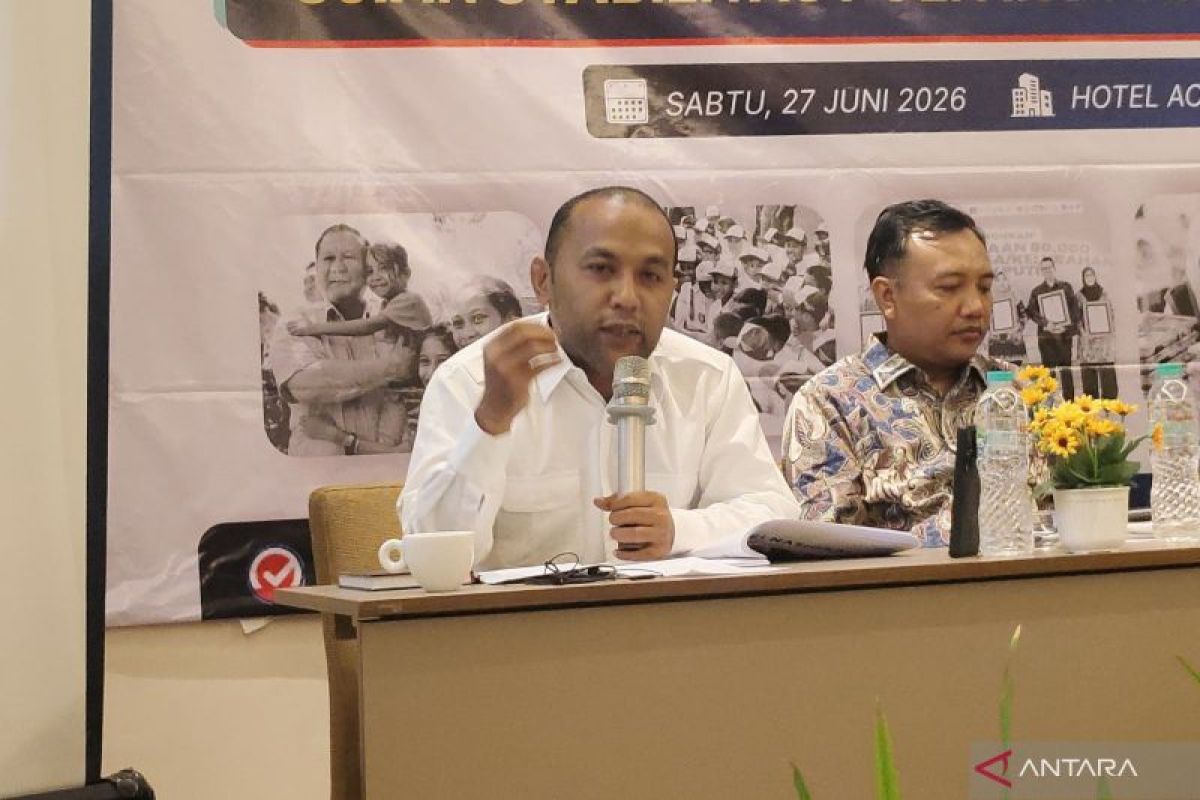
President Prabowo Subianto wants Indonesian children to be smart and healthy by the year 2045, according to Hariqo Wibawa Satria, a senior expert with the Government Communication Agency (Bakom). “Mr Prabowo wants it to be simple. So, President Prabowo wants that in 2045, meaning 19 years from now, Indonesian children are smart, healthy, and able to compete,” he said in Central Jakarta on Saturday. This desire, he noted, is the idea behind government programmes that are currently underway or have been implemented. One such programme is the restriction of social media access for children under 16 through Government Regulation No. 17 of 2025 on Electronic System Governance for Child Protection. “Because this saves 71 million Indonesian children from mobile phone addiction, back damage, obesity, pornography, and kidnapping. This is the first time in history, it has never happened before,” he stated. Another programme is the renovation of damaged schools. Hariqo said that under the Prabowo administration, tens of thousands of schools have been repaired. “In 2025, the government successfully repaired 16,167 schools, and now the Ministry of Primary and Secondary Education will repair 11,000 schools in 2026. But the President did not want that, so it was increased to 71,744 schools to be repaired in 2026,” he explained. In the education sector, President Prabowo also has the Sekolah Rakyat programme, which is completely free of charge. He said that through this programme, schoolchildren no longer need to worry about the cost of uniforms or books. “Entry is free, clothing is free, shoes are free, health checks are free, meals are free, accommodation is free. Then, each child is given a laptop, for free,” he said. The next programme currently in the public spotlight is the Free Nutritious Meals (MBG) initiative. He said a survey by the National Development Planning Agency (Bappenas) recorded a positive impact of MBG on children. “Bappenas’s survey stated that before MBG, the percentage of hungry children has now dropped to 16 percent. Then, children who were full before MBG was 43 percent, now it has risen to 84 percent. Furthermore, fruit consumption rose from 26 to 84 percent,” he explained. Despite some controversies surrounding the programme, he said this is part of improving governance for the better. “Previously, each kitchen was allocated Rp6 million, now it has been evaluated, not all kitchens need Rp6 million, it depends on the number of beneficiaries. Surely some are unhappy. There is evidence that some partners complained yesterday, with the temporary suspension of MBG. But this is the consequence of improvement, and improvement must be carried out,” he said.