
PPU Forms Drought Disaster Response Team Ahead of Extreme El Niño
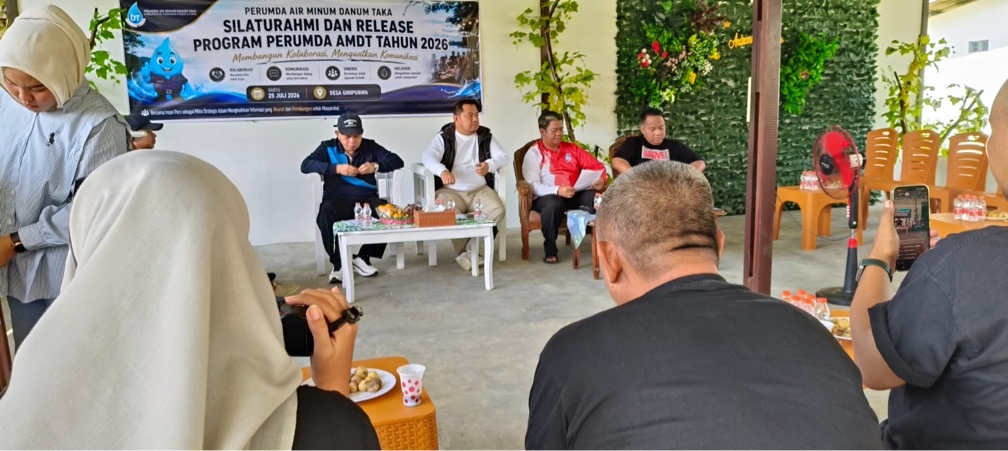
In facing the challenge of the extreme dry season El Nino phenomenon, the Government of Penajam Paser Utara Regency (PPU), East Kalimantan, has formed an El Nino Drought Disaster Response Team involving all relevant agencies, including government elements, the TNI, Polri, state-owned enterprises (BUMN), regional enterprises (BUMD), the private sector and community groups.
This was affirmed by Tohar, PPU Regional Secretary and the team’s person in charge, at a press conference on the Perumda Air Minum Danum Taka (AMDT) programme for 2026, held on Saturday (25/7) in Penajam. Regarding the matter, he said a coordination meeting had recently been held with relevant agencies specifically to anticipate the extreme dry season, which is often marked by the weather dynamics of the Godzilla El Nino.
“The PPU government is currently designing and preparing the determination of an emergency alert status should the natural situation and conditions force it,” he said.
He explained that the determination of the emergency alert status would be based on empirical references in the field, such as declining raw water discharge, rising temperatures triggering the risk of land and property fires, and weather forecasts released by the Meteorology, Climatology and Geophysics Agency (BMKG).
He stated that once the emergency alert status is officially declared by the regional head, the deployment of assistance would not fall solely on the autonomous departments, but would involve all parties with resources, including vertical agencies, the private sector, institutions and BUMN/BUMD.
“All resources in the region, whether from the regional government, TNI, Polri, BUMN, BUMD and the private sector, will be involved in that emergency status,” Tohar asserted.
He revealed that the tactical steps being prepared include identifying all work units, legal entities and private parties that have water tanker fleets, in order to schedule the periodic distribution of clean water to densely populated areas and communal zones.
“The policies being designed are a form of responsibility of the leadership and regional government in responding to the existing situation and field conditions, to ensure the public continues to receive their right to clean water services,” said Tohar.
At the same event, the Director of Perumda AMDT, Abdul Rasyid, said his party, which is also part of the El Nino Drought Disaster Response Team, was committed to supporting the effort, with its primary task being to provide clean water.
Rasyid explained that, based on their mapping, there are only three main areas or locations for clean water supply during the dry season: the first in Sepaku Subdistrict, which can utilise the Sepaku Semoi Dam with the Sepaku intake; the second, a reservoir in Waru Subdistrict; and the last, a reservoir in Maridan.
Meanwhile, he continued, outside those three areas, such as Lawe-lawe, Babulu and Sotek, clean water supplies would not be available. The small reservoirs (embung) in those areas are certain to run dry.
He cited the 2019 dry season, when the water discharge in those areas dropped by almost 80% and the existing pumps were left hanging above the water level.
He said the government had agreed with various stakeholders, including the Nusantara Capital Authority (IKN), relevant agencies, the TNI-Polri and others, that all their transport facilities in the form of tanker trucks would be deployed to handle demand from communities experiencing a clean water crisis.
The mechanism for requesting clean water assistance is coordinated through each urban ward (kelurahan); one example is a request already received from Sepaku Ward. Clean water deliveries to Sepaku use fire engines and are coordinated by the PPU Regional Disaster Management Agency (BPBD).
“The field officer in charge of handling this dry season is the Head of the PPU BPBD Executive, so all letters and handling are directed to BPBD, while our task is to provide the water source,” he concluded.