
PPPK Salary Crisis Evidence of Regional Government Reform Failure
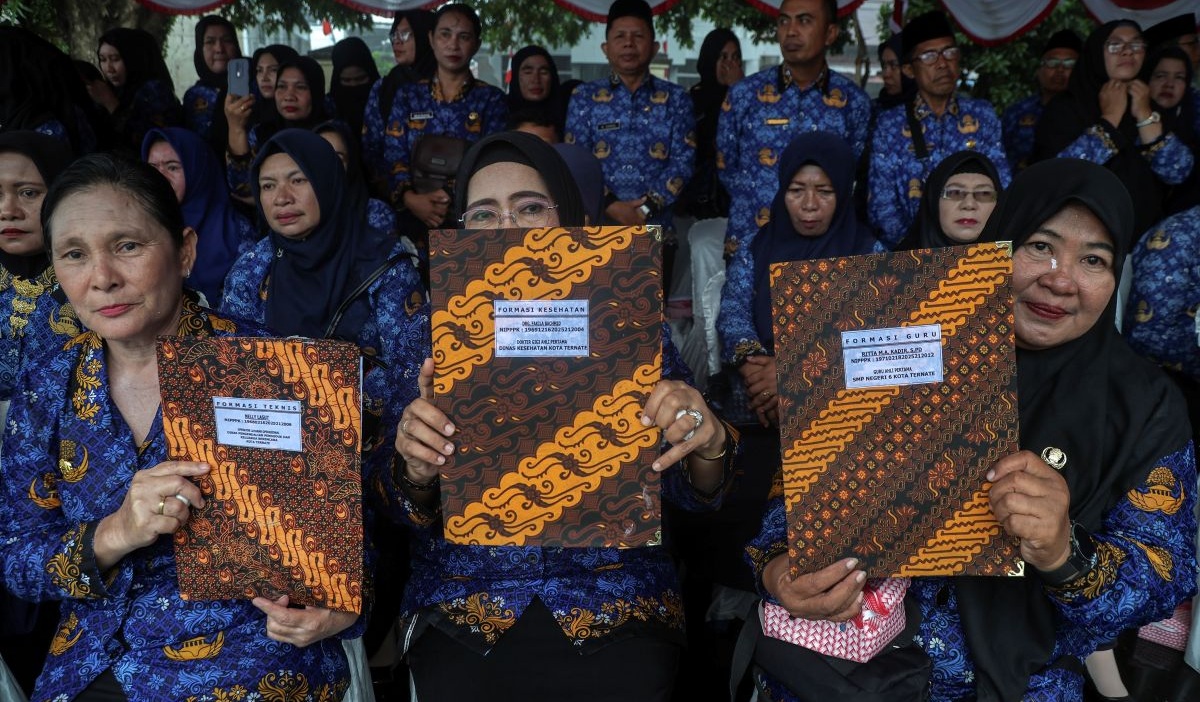
The Evident Institute has assessed that the phenomenon of many regional governments reporting an inability to pay the salaries of Government Employees with Work Agreements (PPPK) is clear evidence of the failure of reform at that level. Executive Director of Evident Institute, Rinatania Anggraeni Fajriani, stated that the complaints from regional governments about budget limitations for PPPK cannot be simplified into a narrative of fiscal pressure from the central government, such as cuts to Regional Transfers or Revenue Sharing Funds. ‘The failure of regional governments to finance PPPK indicates a much larger problem that we have been building slowly over the last 25 years,’ Rinatania stressed in a statement on Monday. Evident noted that in this polemic, one rarely discussed fact is that regional PPPK were recruited based on proposals from the regional governments themselves. In principle, their financing is the responsibility of the Regional Budget. Therefore, when dozens of regions claim they cannot pay, the problem is far more profound than just a reduction in central transfers. In some areas, regional governments even spend more than half of their Regional Budget on personnel expenditure, despite having very limited fiscal capacity. Rinatania considered that a proposal to temporarily relax the maximum limit of 30 percent for personnel expenditure is worth considering as a short-term solution to maintain public services. ‘But relaxation must not become an excuse to repeat the same mistakes. The next step is that PPPK recruitment must be evaluated gradually by taking into account the fiscal dynamics of each region,’ she added. Since the 1998 Reform, Indonesia has implemented fiscal decentralisation, with the central government sending thousands of trillions of rupiah through the General Allocation Fund, Special Allocation Fund, Revenue Sharing Fund, and Village Funds. Regional governments have full autonomy to manage their own policies. Rinatania questioned why, after a quarter of a century of receiving significant transfers, dozens of regions are still unable to pay their own employees. She highlighted an imbalance in interpreting reform, where demands for transparency and accountability are almost exclusively directed at the central government. ‘Every policy decision born in Jakarta is brutally scrutinised by the public. The question is, when was the last time we demanded the same standard of accountability from regional governments?’ she asked. The dependency of Regional Budgets on central transfers remains very high despite fiscal autonomy being granted. Consequently, when the central government implements efficiency measures, regions immediately face a crisis. Evident assesses that the 1998 reform succeeded in distributing authority but failed to ensure the institutional capacity of regions to manage that authority effectively. Beyond capacity issues, Rinatania also touched on the sensitive issue of corruption in the regions. Decentralisation, which was supposed to bring the state closer to the people, has in practice often spawned petty kings with large budget control but weak public oversight. Data from Corruption Eradication Commission prosecutions consistently shows that regional heads are among the groups with the highest rates of corruption involvement. Ironically, many regions still receive an Unqualified Opinion from the Audit Board even after their officials become embroiled in corruption cases. ‘The emergence of the problem of 39 regions unable to pay PPPK is not merely a fiscal transfer issue. For 25 years, we have been too busy demanding reform from the central government, while normalising the failure of reform in regional governments,’ she concluded.