
PPPK Salary Burden Shifts to State Budget, KDS: Good News for Regions
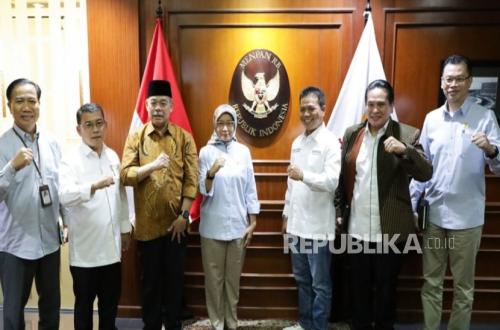
The struggle of the Association of Indonesian Regency Governments (Apkasi) to push the central government to take over the financing of salaries and allowances for regional PPPK through the state budget (APBN) is beginning to show results.
Apkasi Daily Chairman, who is also Bandung Regent, Dadang Supriatna, said the central government has approved the demand. The confirmation was delivered by State Secretary Minister Prasetyo Hadi at the Parliament Complex, Senayan, Jakarta, on Tuesday (18/8/2026).
According to KDS, the policy is good news for district governments that have so far had to bear the burden of PPPK salaries through the regional budget (APBD).
“This is certainly good news for the regions. So far, PPPK financing has been quite burdensome for the APBD and has impacted fiscal space for financing other development programmes,” said KDS in Jakarta on Thursday (20/8/2026).
He said Apkasi has been overseeing the issue through various policy forums. On 13 May 2026, Apkasi held an audience with the Minister for Administrative and Bureaucratic Reform and conveyed the impact of the PPPK salary burden on regional fiscal capacity.
The struggle continued through a Hearing with Commission II of the Indonesian House of Representatives (DPR RI) on 8 June 2026. In that forum, Apkasi presented the condition of regional budgets that are under pressure due to increasing personnel expenditure, including PPPK financing.
KDS said the struggle has actually been carried out by Apkasi since 2018 through various dialogue forums with the central government, including conveying regional aspirations directly to the President.
“Alhamdulillah, Apkasi’s long struggle is beginning to bear fruit. This certainly provides new hope for the regions,” he said.
According to KDS, if the financing of PPPK salaries and allowances is fully borne by the APBN, district governments will have greater fiscal space to finance regional development needs.
That fiscal space, he said, can be directed towards strengthening infrastructure, poverty alleviation, education, health and other public services.
“Our hope is that with this policy, the APBD will no longer be overly burdened so that regional governments can focus more on financing programmes that are directly felt by the community,” he said.
KDS also assessed that the policy provides better certainty for PPPK workers, particularly teaching staff who have long been an important part of public services in the regions.
He stressed that Apkasi will continue to oversee the policy until its implementation truly provides certainty for regions and PPPK workers.
“The most important thing now is how this policy is immediately realised in a clear mechanism so that regions and PPPK workers have certainty,” said KDS.