
PPLI Calls for Logistics Strengthening to Mitigate Dry Season Impact
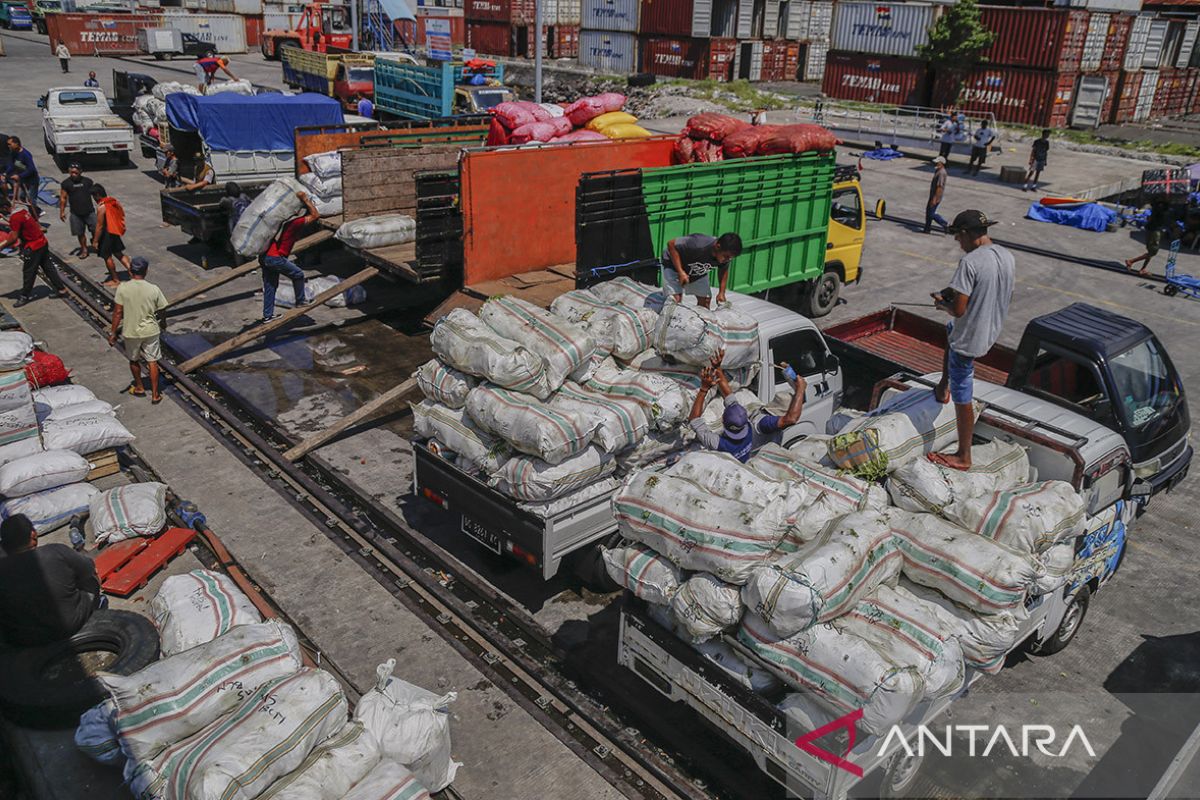
The Indonesian Logistics Association (PPLI) has assessed that mitigation of drought impacts on horticultural supply and prices needs to be carried out in an integrated manner through strengthening distribution logistics, production data, post-harvest technology and cold chain infrastructure.
PPLI Head of Cold Chain Tejo Mulyono said extreme weather can reduce production when it causes harvest failures, thereby affecting the availability of horticultural products.
“During extreme weather, there is certainly a supply shortage due to harvest failure; in aggregate, the national production level will decline if extreme weather occurs,” Tejo said when contacted by ANTARA in Jakarta on Wednesday.
The Meteorology, Climatology and Geophysics Agency (BMKG) predicts the peak of the dry season will take place from July to September 2026, with the largest coverage in August encompassing 369 season zones or 48.84 percent of Indonesia’s land area.
According to Tejo, strengthening the cold chain can help maintain quality and extend the shelf life of horticultural products after harvest, although it is not the only determining factor for price stability.
“Cold chain development only plays a role in maintaining product quality and long shelf life,” he said.
However, he said most fruit and vegetable distribution still uses conventional transport without cooling. Handling also differs for each commodity, such as chillies which spoil quickly and shallots which require dry storage.
Thus, Tejo said food loss has the potential to occur from the harvesting, packing, transporting and storage processes through to trading.
A study by the Ministry of National Development Planning/National Development Planning Agency (PPN/Bappenas) estimates that food loss and waste in Indonesia during 2000–2019 reached 23–48 million tonnes per year, with potential economic losses of Rp213 trillion to Rp551 trillion per year. The data covers all types of food.
According to Tejo, production centres and distribution hubs need strengthened packing houses, processing facilities, cold storage and refrigerated vehicles to reduce post-harvest losses.
“Wholesale markets need cold storage for storing large traders’ stock. Refrigerated vehicles are still very much needed to reduce food loss,” he said.
In addition to infrastructure, he emphasised the importance of real-time production and price information down to district and city level so that supply can be mobilised more quickly from surplus regions to areas experiencing shortages.
“There needs to be real-time information on production volumes and commodity prices in every city/district. With price data per region, if high prices occur in one area, commodities can be dropped from surplus production areas,” Tejo said.
He also encouraged strengthening post-harvest technology and downstream processing to extend shelf life. Chillies, for example, can be processed into paste and tomatoes into sauce so that part of the output does not depend solely on the fresh produce market.
According to him, price stabilisation and food security can be strengthened through closed-loop partnerships between farmers and processing industries or exporters, accompanied by the presence of aggregators to help collect produce, control quality and strengthen farmers’ bargaining position.
Furthermore, the development of cold chain infrastructure itself is still considered to face economic challenges.
“The biggest challenge in building (cold chain) infrastructure is the high cost of electricity and the seasonal nature of products, which causes high operational costs,” Tejo said.
Meanwhile, the Ministry of Agriculture (Kementan) is preparing 56,000 water pumps in 2026 as part of drought mitigation to maintain food production.
The government is also carrying out mapping of drought-prone areas, strengthening irrigation, retention basins, piping, accelerating planting and using drought-resistant varieties.
Kementan said the potential rice production for January–August 2026 is 25.28 million tonnes, an increase of 0.05 percent compared with the same period the previous year. Potential production for June–August is estimated at 8.42 million tonnes, so drought mitigation is needed to maintain production achievements during the dry season period.
Source: jawawa.id (https://jawawa.id/newsitem/ppli-calls-for-logistics-strengthening-to-mitigate-dry-season-impact-1786510449)
Originally published by Antara (Indonesian) (https://www.antaranews.com/berita/5690367/ppli-nilai-perlu-mitigasi-dampak-kemarau-lewat-penguatan-logistik), translated from Indonesian