
PPIT: Indonesia Must Learn Chinese Work Culture to Avoid Becoming Merely a Market
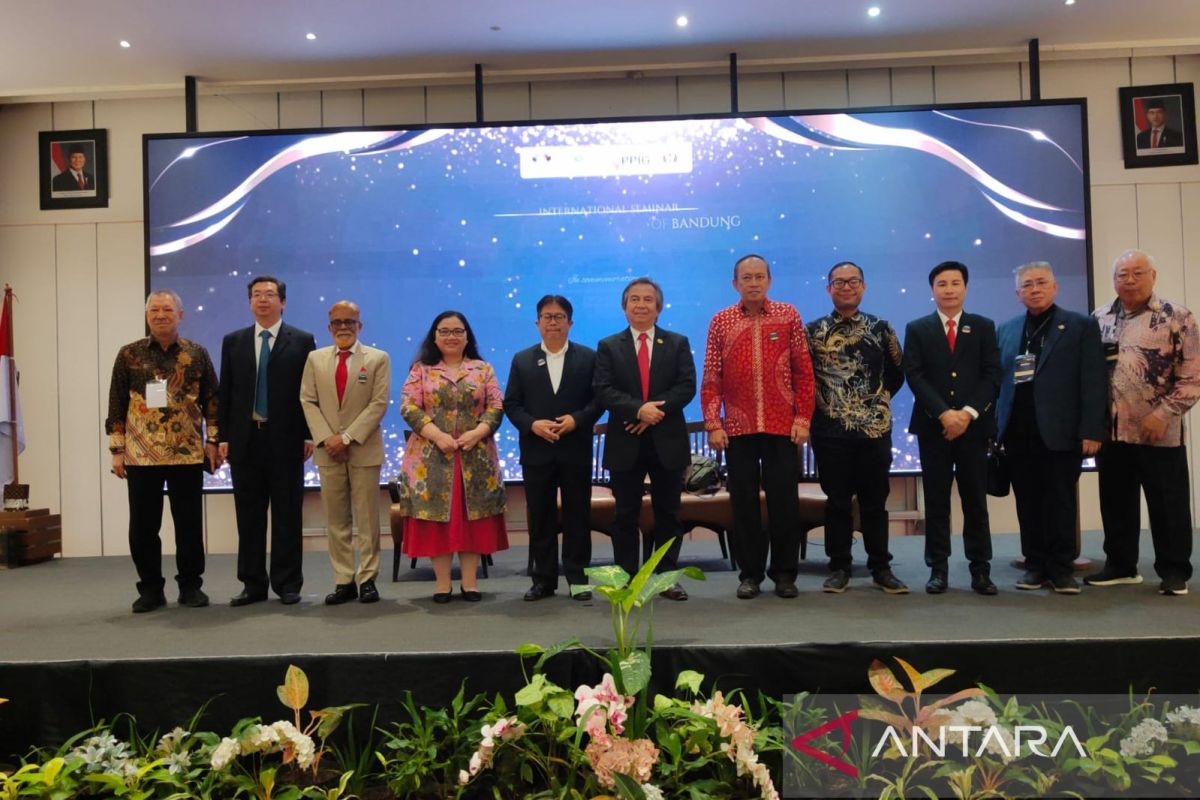
Bandung (ANTARA) - The General Chairman of the Indonesia-China Friendship Association (PPIT), Al Busyra Basnur, has emphasised that Indonesia’s younger generation must adopt the work ethic and hard-working culture of the Chinese people across various fields, including research, to avoid perpetually serving as a global market.
The former senior diplomat stated that the accelerated economic progress achieved by China in recent decades is inseparable from the high level of discipline and competitiveness of their human resources in the workforce.
“We need to study the work culture of the people in China. They are hard workers who never waste time, and their time discipline is very high. The productivity and competitiveness of our youth must be further increased,” Al Busyable said during an interview in Bandung on Tuesday.
Al Busyra, who possesses a diplomatic track record spanning nearly four decades across various regions including the Philippines, Italy, the United States, and Africa, assessed that Indonesia possesses significant capital to become a global economic power. This potential includes economic reserves such as the availability of raw materials, international networks, and the quality of education.
However, this vast potential has not been optimised due to a lack of competitiveness in terms of work ethic. Therefore, he warned that if this improvement in work mentality is not undertaken immediately, the dominance of foreign economies will be difficult to stem.
“Indonesia’s potential is very large. But for national economic progress, we need to observe, learn, and strengthen ourselves by emulating many countries in the world, including China. Learn from them how to work,” he said.
Furthermore, Al Busyra highlighted the education sector, which reflects how language and skills manifest as guarantees for future professions. Currently, proficiency in Mandarin has become a professional magnet because it promises premium income in the domestic labour market.
“I have received information that Indonesian workers who can speak Mandarin and work in Chinese companies in Indonesia earn much higher salaries than employees who cannot,” said Al Busyra.
An imbalance is also evident in student exchange flows. Currently, the number of Indonesian students studying in China has reached nearly 20,000 due to significant scholarship stimuli from the local government. Conversely, the number of Chinese students studying in Indonesia remains very minimal.
Responding to this reality, Al Busyra affirmed that PPIT is committed to continuing to bridge people-to-people connectivity, including encouraging a balance in the provision of language scholarships for students from both countries.
“To be honest, there is still much for Indonesia to fix, not only from the economic side but also from the educational side. This serves as a momentum for us to reflect and improve ourselves,” said Al Busyra.