
PPIH Refines 'Murur' Scheme for Elderly and High-Risk Pilgrims
Makkah (ANTARA) - The Hajj Organising Committee (PPIH) in Saudi Arabia is refining the ‘murur’ scheme to ensure the safety and comfort of Indonesian pilgrims who fall into high-risk categories, as well as elderly pilgrims, ahead of the peak of Arafah, Muzdalifah, and Mina (Armuzna).
Through this scheme, high-risk and elderly pilgrims, along with their companions, will be transported directly from Arafah to Mina after performing the Wuquf ritual, without having to descend and stay overnight in Muzdalifah.
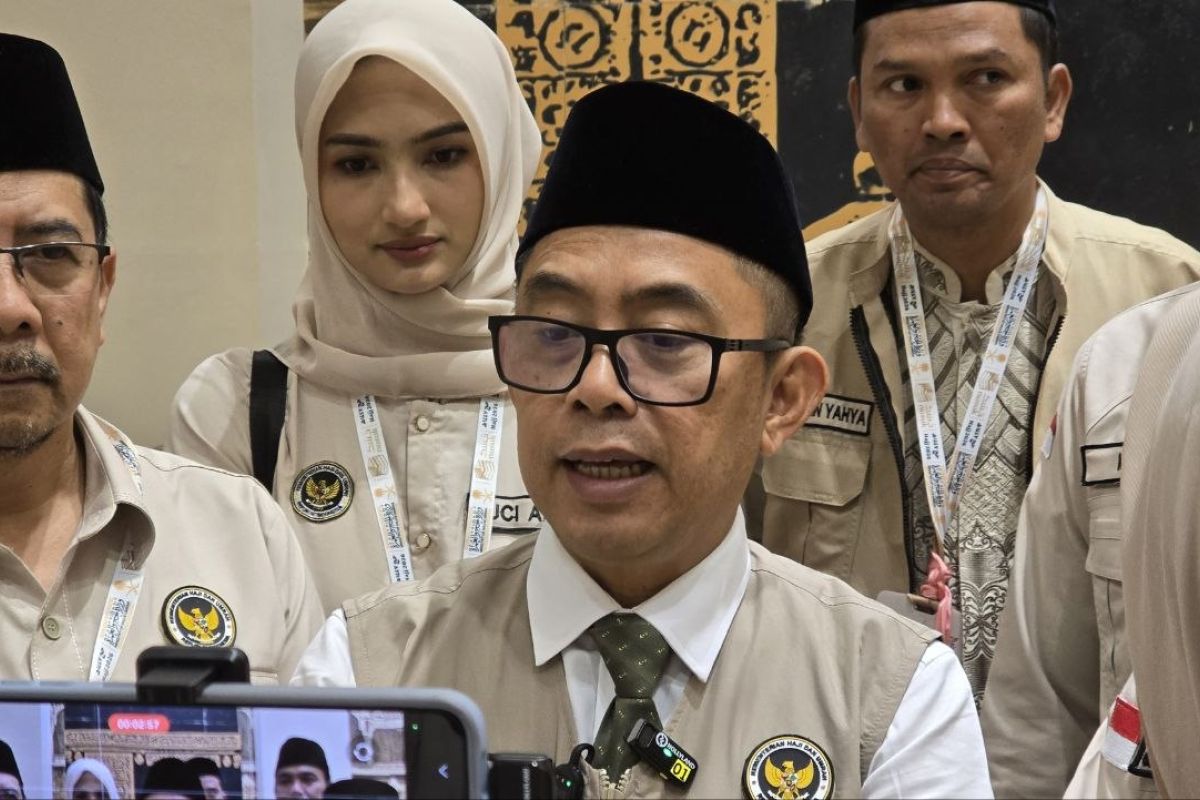
The Director General of Hajj and Umrah Organisation at the Ministry of Religious Affairs (Kemenhaj), who is also Deputy Head II of PPIH Saudi Arabia, Puji Raharjo, said that this proactive measure is being taken to reduce congestion in Muzdalifah while also protecting the health of vulnerable pilgrims.
“Due to limited space in Muzdalifah, some of our high-risk and elderly pilgrims, those with comorbidities, and their companions will be transported directly to Mina,” said Puji in Makkah on Saturday.
He explained that pilgrims who fall into the ‘murur’ category will board buses from Arafah to Mina immediately after performing the Wuquf ritual.
Meanwhile, pilgrims who are in good physical condition will still stay overnight in Muzdalifah before being transported to Mina after midnight.
Currently, PPIH Saudi Arabia together with the Armuzna Operations Unit are finalising the technical mechanisms, division of pilgrims, and Standard Operating Procedures (SOP) for the implementation of ‘murur’ and ‘tanazul’.
Intensive coordination is also being carried out with cluster leaders, religious guides, health workers, and Hajj and Umrah Guidance Groups (KBIHU).
“We hope that all pilgrims can participate in the peak of the Hajj pilgrimage normally, in good health, and without any obstacles,” he said.
In addition to preparing the ‘murur’ scheme, PPIH will also deploy personnel earlier in Arafah and Mina. Several personnel are even on standby specifically in Mina before the peak of the Hajj begins to assist the arrival of pilgrims and ensure that they can occupy their tents properly and comfortably.
On the other hand, PPIH is still preparing a special ‘safari wuquf’ service for elderly and disabled pilgrims with around 300 to 400 participants.
This number is designed to be more selective compared to last year, which reached 525 people, in line with the increasingly stringent health checks and monitoring of pilgrim conditions since they arrived in their home country.
Ahead of the peak of the Hajj, Puji appealed to all pilgrims to always maintain their physical condition and not force themselves to do strenuous activities before performing the Wuquf in Arafah.
“The peak of the Hajj is in Arafah. Don’t let them run out of energy before that time,” said Puji.